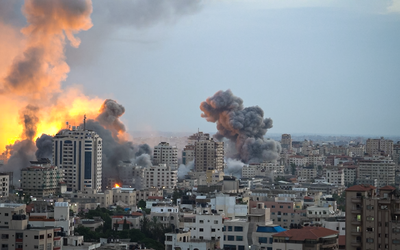

Opaque smoke creeps into the confines of the screen, its chalky plumes swirling and billowing until it obscures any view of the crowd below it. Wafting from the stocky French tanks that dot the scene, it impedes their attempts to subdue the frenzied Algerian masses, striking and blinding them. As the smoke gradually clears, so too do the faces behind it, revealing an impassioned crowd, fervent with the anger accumulated over decades of oppression. It is this smoke that encapsulates how The Battle of Algiers (1966) depicts imperialism. By portraying the actions and ideological assumptions of the French settlers in full transparency, the film exposes how the hypocrisies that sustain imperial power blind its agents and enable their own downfall.
Hierarchies in frame
Produced in 1966, The Battle of Algiers is a black-and-white film directed by Italian director Gillo Pontecorvo that follows the genesis and escalation of the Algerian War of Independence (1954 to 1962). With its stark cinematography — stylistically reminiscent of war documentaries — the film has been widely acknowledged as one of the most consequential cultural productions on revolutionary warfare and guerilla combat ever made.
Much of the film’s instructive capacity lies in Pontecorvo’s cinematographic choices, which help the viewer to trace the progression of the war by providing an understanding of how imperial order itself was actively constructed. For instance, one of the opening scenes frames a tortured prisoner (who is a member of the Algerian revolutionary party the Front de Libération Nationale) seated at the centre of a French barrack and encircled by soldiers towering over him. This instantly establishes a physical hierarchy in the shot which parallels the broader social hierarchy imposed on Algiers. Later on in the film, Pontecorvo stages an unraveling of that hierarchy by depicting Algerian women disguising themselves as French colonists to smuggle explosives past checkpoints. The ease at which a change of dress allows them to pass exposes just how easily manipulated and flimsy the imposed hierarchy really was.
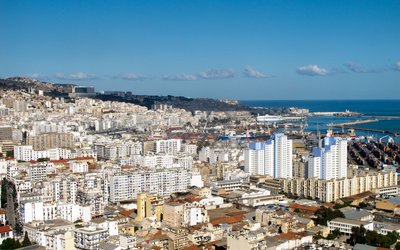
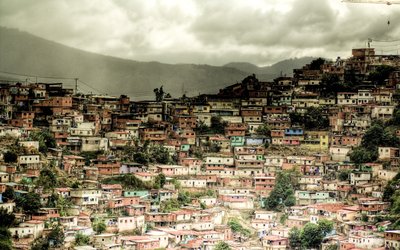
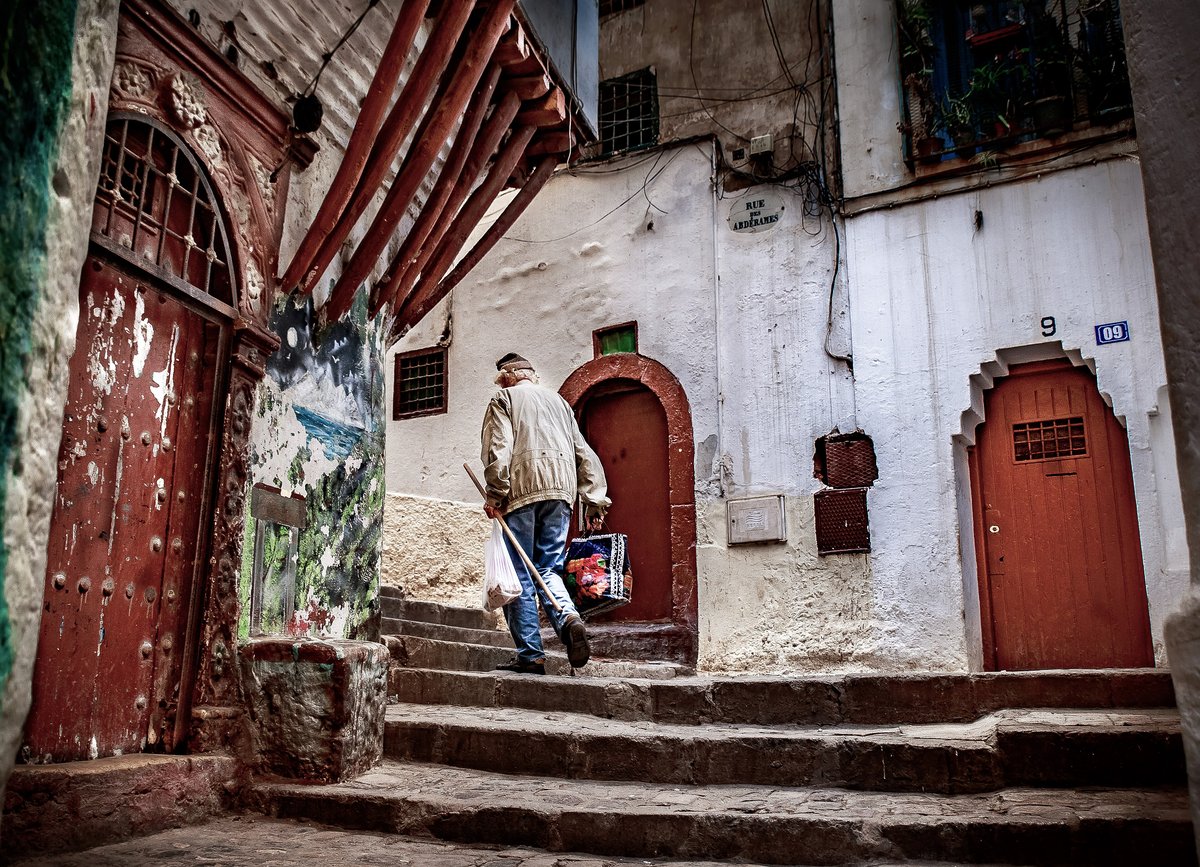
Pontecorvo further demonstrates how imperialism impacted every aspect of Algerian society by portraying how it extended into Algiers’ material layout and spatial composition. Many segments of film display its dichotomous arrangement, contrasting the European’s uniformly structured neighbourhood with the Casbah’s more neglected, but intricately layered, exterior. French sociologist Henri Lefebvre's theory of social space offers one way of understanding this intentional divide; Lefebvre theorised that space is not passive nor a mere backdrop to social interaction, but rather a social product constructed by its respective society’s ruling class or state.
Seen through this lens, The Battle of Algiers portrays the quarter redesigned by Europeans with wide boulevards and architectural uniformity that reflect a spatial order designed for visibility and surveillance. Conversely, the Casbah’s narrow alleyways and labyrinthine passages represent a lived space that resists navigability. While the colonial power attempted to impose its order within this spatial arrangement by installing checkpoints and varying methods of policing, the Casbah’s layout still proved to be a constant impediment for the soldiers who pursued revolutionaries. The settlers imposed their own spatial arrangements in the Algerian city under the pretence of needing to modernise a place they considered dilapidated, yet Algerian architecture actually generated the conditions for their resistance and imperialism’s eventual undoing.
Pontecorvo employs this technique throughout the rest of the film, rendering it so that The Battle of Algiers remains, to this day, one of the few Western cinematic productions that exhibits the transgressions of colonial occupation unflinchingly. Its account on the construction and deconstruction of a colonial empire has proved to be both durable and applicable to the fraught relationship between the two nations, well after the credits have rolled.
A reckoning deferred
To this day, the smoke has never fully cleared, but rather drifted across the Mediterranean. Remnants of Algeria’s turbulent colonial legacy continue to permeate its diplomatic relations with France, which have further deteriorated in recent years. In July 2024, Algeria recalled its ambassador from Paris after France backed Morocco's autonomy plan for Western Sahara. By December, it was summoning the French ambassador again, this time over accusations that French intelligence had carried out hostile provocations on Algerian soil. The following spring brought a reciprocated expulsion of 12 diplomats on each side, incited by the arrest of an Algerian consular official in a kidnapping case, wherein both countries recalled their respective ambassadors.
Although many of these exchanges were encumbered by broader geopolitical forces, the sustained animosity underlying them cannot be divorced from the same imperial contradictions that The Battle of Algiers lays bare. Sixty years on, the two nations remain deeply embedded in the very dispute Pontecorvo illustrated between the revolutionaries and the French officials: over whose account of the past gets to define the present.
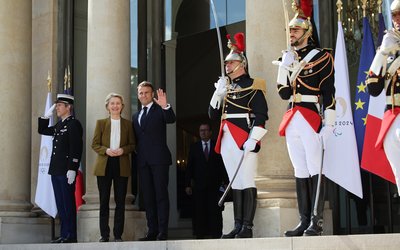
Despite Emmanuel Macron's 2017 statement during his presidential campaign that French colonial rule constituted “a crime against humanity,” France has persistently resisted a comprehensive admission to the systemic torture and massacres of the war. In December 2025, the Algerian parliament passed a bill declaring the French colonization of Algeria a state crime, which was met less than warmly as the French foreign ministry called it a “manifestly hostile” move. France has also been reluctant to return the historical documents Algeria says it requires for any honest reckoning, including archives pertaining to the Algerians that disappeared during the war and others outlining the torture enacted by the French. In the same 2017 visit, Macron voiced a desire to seek a 'reconciliation of memories' between the two nations, but for Algeria, reconciliation without restitution of documents and full accountability evidently registered as rhetoric rather than repair.
The recurring diplomatic skirmishes between the countries reveal how decades later, the war's legacy is still being contested at the level of the state. Amongst the people who lived it, however, that legacy is felt differently. Having visited Algiers earlier this year, I was not merely able to behold the Casbah’s sinuous alleyways and winding streets that were so vividly depicted in the film, but also to listen to the sentiments expressed by Algerian locals. Resentment towards France remains acutely tangible within daily Algerian discourse, something I immediately noticed through the inhabitants’ determination to phase out the instruction of French in the home. Conversing with taxi drivers, waiters, and tour guides made it clear that those whose parents and grandparents participated in the revolution carry visceral memories of the struggle they were fortunate enough to not inherit. They passionately recount the stories of familial resistance to justify their refusal to pass on the French language, and even described that many families congregate to watch The Battle of Algiers together every year.
Yet this same pride is something the Algerian state has learned to harness. Similarly to how French settlers built their authority on a story about who Algerians were, the Algerian state has built much of its own legitimacy on a story about the war it won, one in which the anti-colonial struggle functions as a founding basis. Pontecorvo's smoke never fully cleared, but rather moved from the screen to the streets I walked in Algiers, and now looms over the embassies in Paris and Algiers alike. Over half a century later, both nations remain more invested in their own depiction of the story than in reckoning with it fully, as Pontecorvo once dared to.