
Hannah Arendt once wrote of the “existence of a right to have rights… and a right to belong to some kind of organized community.” Her point is not that rights are imaginary unless a state grants them, but that they become precarious when the political order that recognizes and enforces them becomes unstable. What ultimately matters is not only the recognition of rights, but the durability of the institutions that enforce them. Constitutional crises and regime changes can, of course, destabilize the frameworks that protect rights. But rights can also be weakened more subtly, via legal interpretations and administrative decisions.
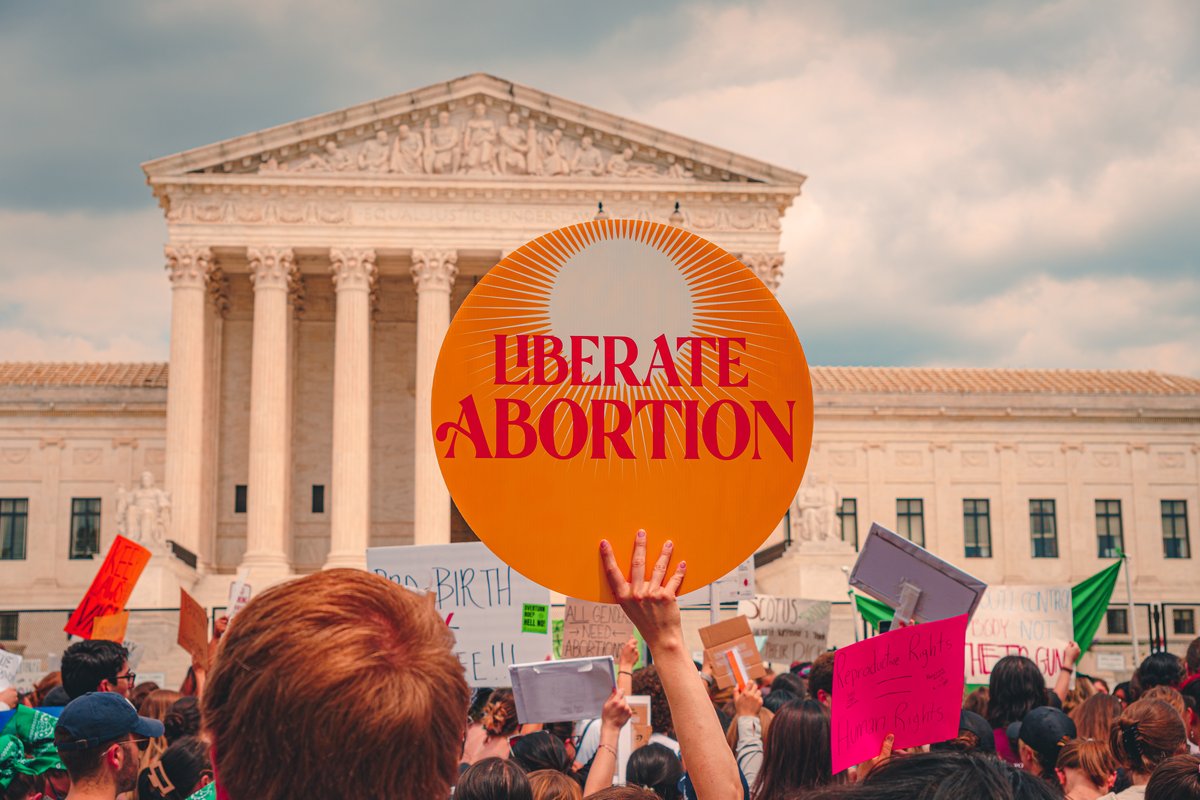
This idea became salient to Americans when the U.S. Supreme Court overturned Roe v. Wade. For a country referred to for so long — somewhat ironically — as a “beacon of democracy” by the majority of its presidents, the withdrawal of a long-standing constitutionally recognized right signals how contingent some liberties are; a freedom that shaped women’s legal and social autonomy for nearly fifty years has now become conditional on state borders, clinic availability, and the ability to absorb legal and financial risk.
Erasing fifty years of progress
On June 24th, 2022, the Court decided 6–3 to overturn Roe v. Wade and Planned Parenthood v. Casey in Dobbs v. Jackson Women’s Health Organization to uphold Mississippi’s 15-week abortion ban from 2018. The majority ruled that, since the Constitution does not explicitly mention abortion, a decision had to be made on whether or not it could still be protected as an implied right. To do so, the judges used a test formalized in Washington v. Glucksberg. First, they asked whether the right is deeply rooted in the nation’s history and tradition. Second, they questioned whether the right is implicit in the concept of ordered liberty. The Court concluded that abortion did not meet that test.
Roe and Casey were not statutes passed by Congress; they were constitutional interpretations grounded in the Fourteenth Amendment’s substantive due process liberty. Roe recognized a national right to terminate a pregnancy before viability. Casey reaffirmed Roe’s “essential holding” but replaced Roe’s framework with the “undue burden” standard. This meant Casey allowed regulation up to the point that it created a “substantial obstacle” to abortion. Dobbs rejected that liberty and overruled both.
In doing so, the Court acknowledged the doctrine of stare decisis — the principle that courts should generally follow precedent — but held that adherence to precedent is not absolute. Roe and Casey were “egregiously wrong” from the start and, therefore, warranted overruling.
The majority’s stance is destabilizing as it subjects modern constitutional liberties to a backward-looking test that many of them cannot satisfy. Many protections central to women’s autonomy and equal citizenship were only recognized in the twentieth century, and if applied consistently, the Court’s methodology places the following rights on uncertain footing: access to contraception (Griswold v. Connecticut; Eisenstadt v. Baird), protections against forced sterilisation (Skinner v. Oklahoma), parental decision-making authority (Troxel v. Granville), sexual privacy (Lawrence v. Texas), and marriage equality (Obergefell v. Hodges).
The majority insisted abortion was different from these cases because it involved “potential life”; that distinction is central to their reasoning. However, critics argue that this line is not as clear or limited as the Court suggests, and they worry the same historical test used in Dobbs could still be applied to other rights not explicitly mentioned in the Constitution. For instance, Justices Stephen Breyer, Sonia Sotomayor and Elena Kagan, in their dissent, warned: “Either the mass of the majority's opinion is hypocrisy, or additional constitutional rights are under threat. It is one or the other.”
Their dissent may prove to be accurate. Justice Thomas has already argued in his concurring opinion that the Court should reconsider substantive due process for some of the aforementioned precedents. Although the majority disagreed, the ruling demonstrates that constitutional rights grounded in judicial interpretation may remain vulnerable to shifts in the Court’s composition and interpretive philosophy.
This is not to say that invoking stare decisis is always a bad idea. The Court most famously overturned precedent in Brown v. Board of Education, when it rejected Plessy v. Ferguson and ended legal racial segregation in public schools, extending constitutional protections. Dobbs, however, is different — the Court withdrew a widely relied upon constitutional protection, rather than extending it.
Pregnancy under strict surveillance
Dobbs’ ruling did not bring about one national abortion regime but fifty. As of April 2026, thirteen states have total abortion bans in effect, and 28 have bans based on gestational duration; protection is now geographically dependent.
In states enforcing abortion bans, physicians report uncertainty about what is legally permissible in miscarriage management and obstetric emergencies, particularly where statutes are vague or penalties severe. A 2025 JAMA Health Forum analysis found increases in Emergency Medical Treatment and Labor Act (EMTALA)-related complaints and enforcement concerns following abortion policy changes, especially in states without clear health exceptions. In practice, legal risk is now embedded in routine medical judgment, often shaping outcomes before anything else.
Access also depends on institutional capacity. Clinic openings and closures, plus funding disruptions, have placed low-cost contraception and preventive services at risk. Population-level data reflects measurable consequences: JAMA research concluded that roughly 22,000 excess births and about five hundred excess infant deaths from 2021 to 2023 in affected states were due to recent bans.
Criminal law has now become a central mechanism for regulating pregnancy in the U.S. Two hundred and ten pregnant people faced criminal charges in the year after Dobbs for conduct associated with pregnancy, abortion, pregnancy loss, or birth. In one such case, Nebraskan Jessica Burgess was sentenced to prison after giving her teenage daughter abortion pills. She pleaded guilty to charges that included providing an abortion after 20 weeks of gestation and tampering with human remains.
The illusion of democratic return
This is perhaps the central paradox of post-Dobbs federalism. To supporters of the ruling, returning abortion to elected representatives corrected what they saw as weak constitutional reasoning and restored democratic self-government. That argument does deserve to be taken seriously, but in practice the issue has not been meaningfully taken up at the federal level: political gridlock has stopped Congress from legislating. Regulatory authority has defaulted to the states, meaning American women now face unequal legislation and resources alongside significant legal uncertainty.
Arendt’s “right to have rights” depends on institutions that enforce legal protections. In a post-Dobbs world, that enforcement requires clear statutes, stable healthcare infrastructure, reliable public-health data, and limits on the extent to which criminal law is used to police pregnancy and reproductive decisions.
As a dual-French citizen, I find the contrast with America instructive. In 2024, France amended its Constitution to explicitly guarantee the freedom to access abortion, while leaving its conditions to be determined by law. The American model relied on judicially-inferred liberty under substantive due process; the French model placed the freedom in constitutional text while still leaving its details to legislation. So the difference here is not just political; Dobbs showed, with unusual clarity, that a right inferred by judges is more vulnerable to reversal than a freedom inscribed in constitutional text. At the end of the day, Dobbs should not be read only as an abortion case, but a case about constitutional vulnerability: about what happens when liberty depends less on text than on interpretation, and when interpretation changes.