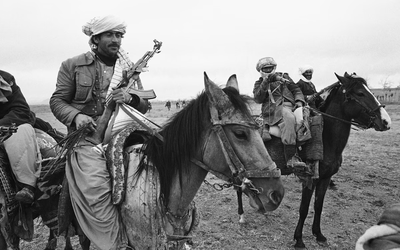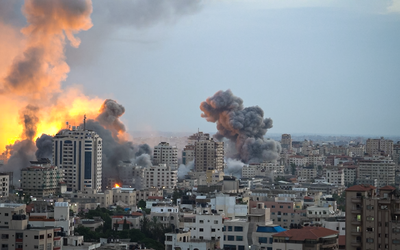


On September 27th, 2020, the Armenian people entered 44 days of terror and anguish when Azerbaijan launched an attack on their border, a period marked by constant fear and uncertainty, of waking up every morning and checking phones to make sure another friend had not died. Azerbaijani forces, supported by Turkey, launched an assault on Armenian positions and the population of Nagorno-Karabakh, deploying artillery, rockets, drones and combat aircraft. This sudden attack immediately led to civilian casualties as well as the destruction of homes, turning the situation into a humanitarian crisis. A report by Human Rights Watch and Amnesty International documented multiple strikes on homes and populated zones. Young men barely out of school faced the possibility of being drafted, teachers volunteered to protect their homeland, and mothers cried as military officials delivered the harrowing news of their fallen sons. It is a time Armenians remember for its pain, sacrifice, and their strength.
As an Armenian myself, I still get asked why our country speaks so passionately about this topic, despite the recent ceasefire agreement negotiated under the Trump administration. It is because the struggle for Karabakh is not a distant political issue; it is a deeply personal one for Armenians.
The facade of the ceasefire
The conflict between Armenia and Azerbaijan’s roots stems from the early twentieth century, when the Soviet Union sought control over the South Caucasus.When the Bolsheviks took control of the South Caucasus, they recognised Armenia, Azerbaijan, and Georgia to "stabilise" the region. By 1921, Nagorno-Karabakh was under Armenian rule, but, under pressure from Stalin, was reassigned to Azerbaijan, disregarding the large ethnic majority of Armenians which populated the region. There was promised autonomy to Nagorno-Karabakh's Armenian inhabitants, which was framed as an effort to maintain peace and preserve economic ties. The 1923 creation of the Nagorno-Karabakh Autonomous Oblast gave Azerbaijan political authority and Armenians limited cultural autonomy, a compromise that didn't satisfy either side.
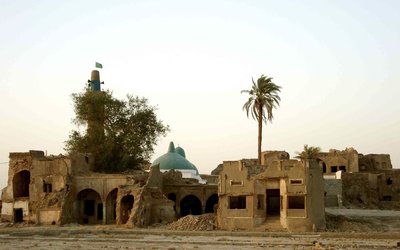
Armenia and Azerbaijan have undergone several different ceasefires, typically acting as smokescreens for what continues to happen on the ground. Despite the 2020 ceasefire, Azerbaijan has continued to demolish ancient Armenian churches that have stood for centuries — long before the state of Azerbaijan itself even existed. With Armenia being the first nation to adopt Christianity in 301 CE, this destruction strikes at the heart of Armenia's cultural and religious identity. As Azerbaijani forces continue to erase over 5000 Armenian khachkars (cross gravestones that remain uniquely Armenian cultural markers), alongside monasteries and sacred sites, Armenia continues to endure the loss of its art and history. In fact, by analysing satellite imagery, Cornell University’s Caucasus Heritage Watch has described the destruction as one of the largest acts of cultural cleansing in modern Europe. Not even the Amaras Monastery, a UNESCO-recognised heritage site built in the 4th century, and an enduring proof of Armenian spiritual and cultural life in Nagorno-Karabakh, has been spared. Behind Azerbaijan's image of progress and modernisation lies a regime of cultural erasure, as their forces continue to remove crosses from churches and erase religious inscriptions. For Armenians, such acts are assaults on centuries of history, faith, and a culture deeply interlinked with Christianity.
Armenians question whether this reflects a distinct form of racism. Whilst Azerbaijan maintains peaceful relations with other Christian minorities, the destruction appears to specifically target Armenians as both an ethnic and Christian group. For this reason, the term “Armenophobia” has been coined by the Lemkin Institute, defining the ideology as a “hatred of and discrimination against Armenians”.
From unfair elections and censorship to legal restrictions and a dynastic line of presidents, Azerbaijan functions as an authoritarian state. The state attempts to project democracy, but power remains in the hands of the Aliyev family — Freedom House gave Azerbaijan a 6/100 for its Freedom in the World Score, a score 27 points lower than it had 20 years ago (Armenia scores at at 54/100 in 2026, an increase of 13 points in the same time frame.) During the 2020 war, foreign journalists were banned from entering Azerbaijan, for reasons as minor as having an Armenian-sounding last name or travelling to Nagorno-Kabash without their explicit permission, as reported by Reporters Without Borders. Access is open solely to state-approved Azerbaijani and Turkish media loyal to the regime. Many major social media platforms (WhatsApp, Skype, TikTok) were shut down to prevent citizens from accessing uncensored information in order to control the flow of news.
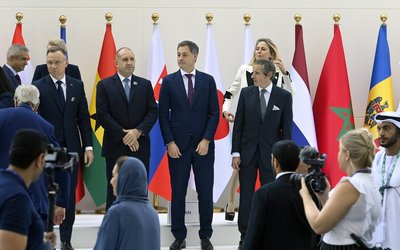
Any attempts to fix this conflict remain fairly unsuccessful and limited amongst the international community. US President Donald Trump’s attempt to broker a ceasefire may look promising, but behind it lies inconsistencies and latencies. The deal brought positive developments, such as the TRIPP infrastructure project, a transit area connecting mainland Azerbaijan to Nakhchivan through Armenia, an initiative which could strongly boost inter-regional trade. While it may sound great in practice, the strength of the deal has been contested, as the U.S. delegation visit meant for last week has already been postponed to a later date following the breakout of its war with Iran. Despite having signed the deal, Azerbaijan continues to pressure Armenia to amend its constitution by requesting them to remove any historical claims to Karabakh before any final treaty is signed. Simultaneously, humanitarian concerns are growing as these agreements appear to omit the provisions for the “right of return” for the thousands of Armenians displaced from Karabakh.
Hate is taught
Azerbaijan's nationalist propaganda exemplifies the fragility of deals such as TRIPP. In schools, children are taught to portray Armenians not as rivals but as enemies. They are taught to mock fallen Armenian soldiers and celebrate their deaths through state-approved curricula and public monuments. One of the most disturbing examples of this propaganda is Baku’s “War Trophy Park”, where the helmets of fallen Armenian soldiers can be found displayed alongside deformed mannequins depicting Armenian captives. This deep-rooted hatred originates from the country's leadership. President Aliyev continues to amplify his father’s words by referring to Armenians using offensive language like “we chased them out of our lands like dogs,” pertaining to the thousands of Armenians forced to flee their homes in the 2020 Nagorno-Karabakh War.
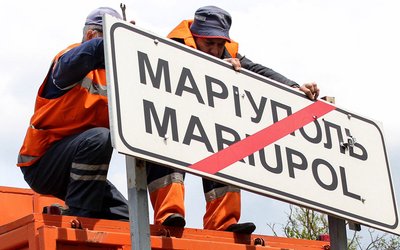
Additionally, the effort to “get rid of Armenians” after the 2020 war has been supported by linguistic and cultural manipulation. Today, Azerbaijan aims to wipe out Armenian identity and rewrite regional history by calling modern day Armenian land “Western Azerbaijan”. Cities like Shushi (Շուշի), which hold Armenian ancestral roots linguistically and historically, have been renamed in the Azerbaijani language to assert dominance and fit it into their national story. Armenian civilisation in Karabakh and surrounding regions goes back centuries and can be supported by documented classical sources, inscriptions and medieval architecture.
So where do Armenians stand today? I’m sure people may believe that we are finally at peace after the recent peace treaty. The sad reality is that Armenians still wake up every day in fear that Azerbaijan is planning another attack. Leaked documents reveal Azerbaijan’s presidential administration ran a state-led “Western Azerbaijan” campaign targeting Armenia’s sovereignty. Framed as humanitarian, it uses media and conferences to legitimise potential territorial claims.
With this reality, can Armenia truly be considered at peace? How can there be peace when its people and sovereignty remain under constant threat, and its history continues to be systematically erased?