
Ramadan is a central month in the Islamic calendar, marked by fasting, prayer, charitable giving and spiritual reflection. In Kyrgyzstan, where the majority of the population is Muslim, the holy month brings a visible increase in charitable activity. Donations collected through religious institutions rise, while student-led and grassroots initiatives attract more volunteers and support for families in need.
Alongside zakat — one of the five pillars of Islam — Muslims also give fitr-sadaqah, a form of alms given at the end of the fasting month for people in need. The scale of this giving during Ramadan is reflected in fitr-sadaqah collections: according to the Spiritual Administration of Muslims of Kyrgyzstan (SAMK), in 2023, fitr-sadaqah collections reached about 51 million som ($580,000), rising to some 75 million som ($860,000) in 2025. Tolkunbek Zhumanov, head of the Financial and Economic Department of the SAMK, explains that “Ramadan holds special spiritual significance in Islam...during this period, Muslims strive to do more good deeds and help those in need.” The funds raised are directed primarily to low-income families, large families, orphans, the elderly, and people with disabilities.
Young volunteers expand charitable support
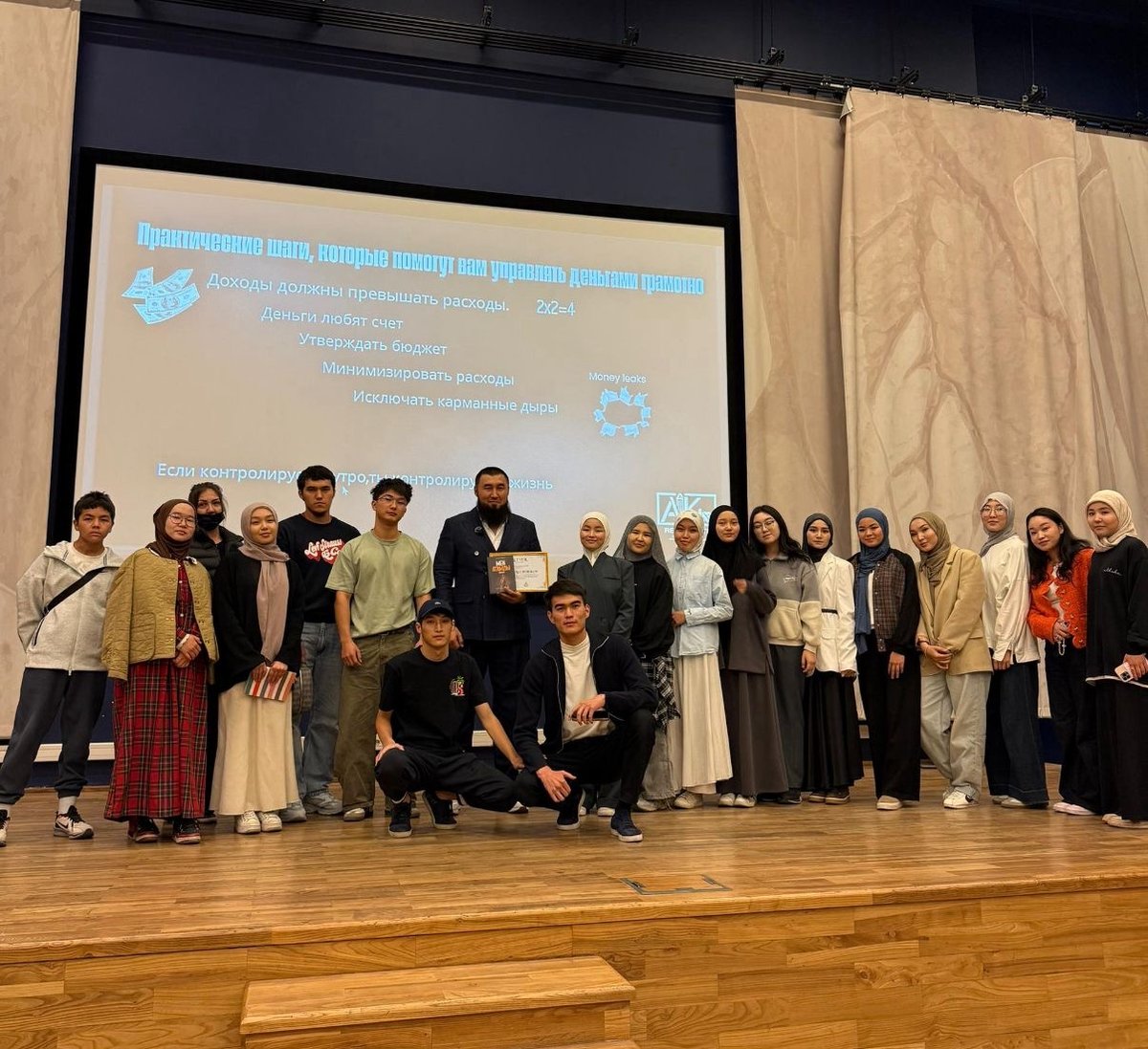
Charitable activity during Ramadan also extends beyond donations collected through religious institutions. The Muslim Community, a student-led initiative established in 2023 by American University of Central Asia (AUCA) graduate Amanda Kadyrbekova, is one youth-led group providing support to those in need.
After participating in an exchange program in the United States, Kadyrbekova decided to create a space for Muslim youth at AUCA. “Every university there had a Muslim Students Association. The people I met there completely changed my understanding of Islam and the importance of the environment. When I returned, I realized that there was a huge need for this,” she says.
Today, the community has more than 500 members, and a core team of 14 volunteers under the age of 25 coordinates charitable activities. The organisation later expanded beyond AUCA, and students from other universities began to join.
“Students from different universities started writing to us. We saw a big request and thought: why not open up to all the youth of Bishkek and Kyrgyzstan in general,” says Kadyrbekova. Their work is based on three principles: sincerity, sustainability, and transparency. “We keep a report for every penny. This is people's money, and we have to approach it responsibly,” she says.
The organisation’s charitable activities are coordinated by Ainazik Kalbayeva, the Charity Manager of the Muslim Community. She communicates with families, analyses their financial situation, distributes funds and organises visits by volunteers.
“We strive to help throughout the year, but during the month of Ramadan, people become more active both in donations and in volunteering,” Kalbayeva notes. In a normal month, the Muslim Community raises about 50,000 som ($570) in two or three days. During Ramadan, the amount of aid can double. In the first two weeks of Ramadan in 2026, the organisation provided more than 180,000 som (US$2,000) in assistance.
Today, the community provides regular support to more than 25 families. Among them are 10 families in extreme need in Sokuluk and 15 single mothers in Bishkek. Assistance includes paying rent, buying groceries, medicines, paying for medical treatment, and emergency expenses. Among those who receive assistance are Salkyn and Shirin, (whose names have been changed for privacy); both women raise children alone and face serious life difficulties.
Support beyond financial aid
For Salkyn, a 31-year-old mother of four children, the community’s support has become vital. After her divorce, she was left to raise her children alone, without stable work or financial help. She cannot leave the children during the day, so she works part-time at night and takes on any job.
“If it weren't for the Muslim Community, I might have been left homeless. When I was already being evicted from my apartment, I called Ainazik and asked for help. She immediately said: ‘Okay, we'll solve this issue,’” Salkyn recalls. The community assisted Salkyn with moving, repairs, home improvement, and providing regular grocery deliveries. Salkyn now lives in a rented apartment, which costs 18,000 som ($200) per month.
“They don't just help with money or food. They keep asking how we're doing. To be honest, even my ex-husband wasn't that interested,” she shares.
Shirin is raising two sons, 17 and 4 years old. She contacted the Muslim Community about a year ago when she was looking for support to pay for her son's college tuition. Shirin grew up in an orphanage and has chronic health problems. Both of her sons also need constant medical supervision.
“People have become angry, and there are very few who are caring, kind and open these days. I always thank their parents for raising such kind-hearted children,” Shirin said. When the volunteers visited her, Shirin did not even immediately realise that they were students. “When they come, they're so polite, so humble, I didn't even know they were students!” she says. The volunteers emphasise that they pay special attention to the privacy of families. They do not publish the faces and personal data of their beneficiaries to ensure their safety.
A broader reality in Kyrgyzstan
The financial difficulties faced by Salkyn and Shirin exist within a broader reality in Kyrgyzstan. According to the National Statistical Committee of the Kyrgyz Republic, the poverty rate reached 25.7 per cent in 2024, meaning that roughly one in four people lived below the poverty line.
UNICEF’s generation 2050 in Central Asia interim regional report also notes that Kyrgyzstan has the highest national poverty rate among the Central Asian countries included in the study. Although the country’s social protection system reaches many households, UNICEF notes that assistance for low-income families with children remains limited.
The rise in fitr-sadaqah donations reflects a greater engagement in religious charitable practices during Ramadan, and it also highlights the importance of community-led initiatives. In Kyrgyzstan, where one in four people lives below the poverty line, charities such as the Muslim Community have become an important source of support. Although they cannot replace the social protection system, their work demonstrates how acts of solidarity can make a tangible difference.