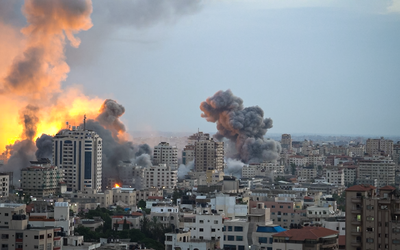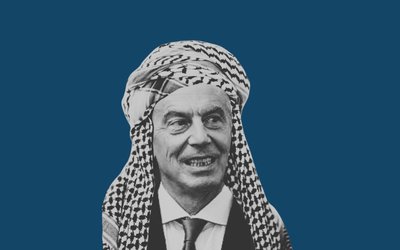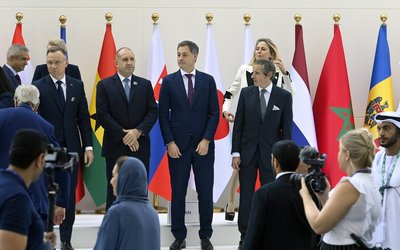


Of all the speeches delivered at the World Economic Forum in Davos at the start of this year, few were showered with more acclaim than the Canadian prime minister’s. In what may have been the most assertive projection of Canada’s foreign policy since its mid-century Golden Age, Carney summoned a coalition of middle powers to resist the creeping re-feudalisation of the international order. Citing Thucydides, he rejected the reborn logic that “the strong can do what they can, and the weak suffer what they must.” The reception was rapturous. But just weeks later, news of the U.S.-Israeli bombing of Iran left Washington’s closest partners — including Canada — as blindsided as the general public. Beyond a delayed EU emergency briefing, there was little visible coordination. If Carney claims the age of U.S. unipolarity is over, why is this incident so reminiscent of it?
The unipolar moment
The world Carney has inherited is starkly different from the one he entered in, at Goldman Sachs in the late 1980s. At its peak, Pax Americana, the era of relative stability underwritten by American hegemony after 1945, was deeply embedded within the postwar institutions Washington had constructed: the Bretton-Woods system anchored the dollar at the centre of global finance and NATO guaranteed U.S. presence across the Atlantic. In fact, as Francis Fukuyama famously prophesised, liberal democracy was supposed to mark the “end of history”. Confident in its unrivalled position, the U.S. sought to not merely preserve this liberal order, but also export it at gunpoint. That order is now buckling. Chronic debt, rising China, and withering domestic interest at remaining the world’s policeman have all but hollowed it out from within; whilst globally, approval of U.S. leadership fell to 31 per cent in 2025, its lowest since Trump’s first term (Figure I). For Canada, the consequences of this shift have been stark. The Trump administration’s sweeping tariffs have reduced the United States-Mexico-Canada Agreement — the trilateral pact responsible for nearly $2 trillion in annual trade — to a “zombie agreement” that is now only used by Washington to extract bilateral concessions from Ottawa and Mexico City.
The president has no clothes
In Carney’s vision for a multipolar world, the greatest rupture from the old order was semantic, a flat rejection of the “pleasant fiction” that the rules-based order had ever been rules-based. Carney believed that the soft power language of freedom and liberalism, long used to dress up American interest, should be retired in favour of pragmatism. Despite historic grievances with China over alleged foreign interference, Carney has eagerly pursued better ties with Beijing, securing landmark visa and trade deals. Even more controversially, in March this year Carney flew to New Delhi to sign a landmark $2.6 billion uranium supply deal with Modi. Relations between the two countries have been frosty since 2023, when Justin Trudeau accused Indian government agents of involvement in the killing of Sikh separatist Hardeep Singh Nijjar on Canadian soil; New Delhi suspended visas for Canadians and both nations expelled diplomats. By Carney’s calculations, middle-power solidarity to ensure Canadian trade diversification is worth more than past grievances and risk being “on the menu” otherwise. Indeed, his band of brothers is taking shape: Carney is currently spearheading a trade bridge between the EU and the 12-nation CPTPP bloc, a multilateral framework spanning 39 countries and 37 per cent of global trade. Washington is completely absent from the table. The U.S. — much to its frustration — has learnt that international institutions can be more than voiceboxes for the powerful.
The morning after Davos
Unlike earlier episodes of American isolationism, Carney confronts an America First that remains curiously invested in multiple world theatres. Trump has taken swift, and successful, revenge on his enemies when he has chosen to. The removal of both Nicolás Maduro and Ayatollah Ali Khamenei this year has yielded results that, legitimate or not, are difficult to dismiss. His shameless interference in the Gaza conflict, namely his motley Board of Peace, a committee of sycophants claiming to rebuild the strip, is a naked money grab (its memberships cost $1 billion) that is meant to dismiss concerns from his enemies on the left.
Whatever its relative decline in other domains, America’s capacity for military coercion endures, especially when it chooses not to consult others. That is the danger in Carney’s rhetoric: as warned by former Australian diplomat Sandy Hollway, declaring the rules-based order a “fiction” may do little more than licence the hegemon. Indeed, a president already musing about Canada as the 51st state needs little encouragement. Just as Bush invaded Iraq without UN sanction in 2003, so too was Carney caught off guard when Tehran was struck. Worse still, the joint statement he issued with Foreign Minister Anita Anand stopped short of critiquing its legality. In a move that undermined his push for honesty, the statement endorsed action to “prevent Iran from obtaining a nuclear weapon”, without questioning Trump’s dubious claim that the threat was imminent, defaulting to Canada’s old subordinate doctrine. Moreover, for all the talk of diversification, the U.S. still absorbed 71.7 per cent of Canada’s exports in 2025, a dependency felt most keenly with emerging Albertan separatists as they head towards the October referendums.
The Canadian prime minister is not wrong to hedge his bets. Ottawa says it hit NATO’s 2 per cent-of-GDP spending target this year and has pledged 5 per cent by 2035. Meanwhile, a majority of Americans, 54 per cent according to Carnegie, now say their country is becoming less powerful. Nonetheless, whilst a multipolar world may indeed be emerging, it is marked by the growing status of China and assertiveness of middle powers such as India and Brazil, not by Canada’s rise. Carney must prove coherence within his coalition beyond shared irritation at Washington, but most importantly must decide whether he is building an alternative order or merely a bargaining option in the current one. His response to the Middle East crisis earlier this year all but confirms the latter.
There is little doubt that America’s leadership has grown ever more erratic. Yet recent realist relapses underscore a persistent truth: however frayed the rhetoric of the liberal order or energised Europe’s rearmament drive has become, U.S. defence spending still exceeds the following six countries combined, and the greenback still comprises the majority of global reserves. For any Pax Canadiana to succeed, it must therefore recognise that a hegemon in decline does not equate to a hegemon ready to be replaced. Until then, Thucydides seems to have followed Carney home from Davos.