
On 28 July 2025, Brazil was removed from the UN Hunger Map, two years after President Lula took office and made the eradication of hunger a priority through the introduction of Brasil Sem Fome, the “Brazil Without Hunger” programme. According to a 2024 UN report, severe food insecurity dropped by 85 per cent, from 8 per cent of the population facing food insecurity to just 1.2 per cent. While Brazil is far from solving this issue — which still affects millions of Brazilians today — a far-reaching range of social and economic policies has lifted Brazil from a historically extreme level of hunger. As the September 2025 announcement of Brazil’s second Intersectoral Strategy for the Reduction of Food Loss and Waste in Brazil suggests, the country is firm in its commitment to eradicate food insecurity.
Lula’s terms in the 2000s showed the world that ending hunger requires political change before all else. As the cost of living increased, many Brazilian families were unable to afford basic food items. Brazil’s ‘Zero Hunger’ strategy involved financial aid for poor families and the ‘Bolsa Familia’ programme transferred wealth to low income families to improve financial access to food. Particularly in urban areas, more state-subsidised low-cost restaurants were set up, and access to free school meals widened significantly. Increases to the national minimum wage also helped. By 2024, the proportion of people unable to afford a healthy diet declined from its 2021 peak of 29.8 per cent to 23.7 per cent. By addressing Brazil’s extreme economic inequality directly, rather than tackling hunger as an isolated issue, many families that previously had little access to affordable food are no longer going hungry.
A rapidly growing issue that Brazil must face now is the undernourishment of many, particularly in rural communities, because of overconsumption of processed foods. Patricia Gentil, a director at the Ministry of Social Development and Fight Against Hunger, describes the issue as “food swamps”. Brazil is therefore aiming to address unhealthy eating by investing in popular producers’ markers. This is why the Alimenta Cidades initiative, launched in 2023, focuses on food insecurity in urban areas, with a focus on peripheral and vulnerable communities. This multi-dimensional strategy includes modernising food banks, improving healthy eating in schools, waste reduction programmes and the development of digital tools to connect consumers and producers.
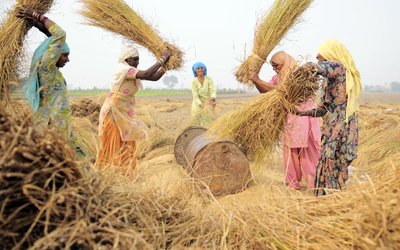
While Brazil is a country in which healthy eating is increasingly accessible, specific communities are not benefitting from these policies as much as others. José Graziano da Silva, director-general of the Fome Zero institute, has emphasised that marginalised groups in Brazil, such as indigenous peoples, family farmers, women and black and mixed-race populations remain disproportionately impacted by food insecurity. The Amazon region has the highest levels of hunger, where agribusiness farming based on monocultures dominate. The complicated relationship with small-scale farms and agribusiness, and the vastly varying economic and geographic characteristics of Brazil makes adopting a one-size-fits all approach impossible. The current Brazilian government aims to support family agriculture as a part of its fight against hunger, such as through the Food Acquisition Programme and rural credit systems. Yet the dominance of agribusiness and the continued struggles of small-scale family farms remains unassailable.
As much as Brazil has shown that innovative policies are capable of significantly decreasing food insecurity, its last few decades exemplify how quickly this progress can be reversed when political change takes place. Bolsonaro, Lula’s predecessor, exacerbated hunger with policies that saw reduced investment in eradicating hunger. One such policy involved eliminating seven government ministries including the National Council on Food and Nutritional Security. Bolsonaro also closed food stocking warehouses for public facilities, shrinking their number from 349 in 1991 to 92 in 2021. Many believe that Bolsonaro losing to Lula in 2022 was largely due to the significant increase in food insecurity under his rule.
Throughout Latin America, we are seeing an increasing number of leaders who adopt a similar approach to Bolsonaro, an ultra-individualistic stance that views hunger as an individual weakness, not a problem to be solved by social policies adapted to different regions. Take Argentina for example, which under Milei’s leadership is seeing increasing rates of food insecurity at the same time as he is closing soup kitchens, cutting subsidies and suspending infrastructure projects, with no policies to combat hunger — all during a time of intense inflation.
Brazil’s anti-hunger policies are in many ways limited, and are benefitting certain communities far more than others. Nevertheless, the progress being made in Brazil after a period of increasing food security is hopeful, and is encouraging discussions around the world about what solving hunger really looks like. While agricultural output and international economics impact a country’s ability to distribute food to its citizens, Brazil has proved that, often, it is the will of policy-makers that defines whether people go hungry or not. As climate change increasingly threatens food insecurity and processed food becomes normal in many parts of Brazil, one can hope these strategies are able to continue developing in the right direction, and perhaps that other countries will follow.