
An education reform aimed at erasing Russian from the Latvian school system is negatively impacting Russian-speaking Latvian youth. To what extent can language be perceived as a political tool without causing harm to those who consider it their home? Speaking to young Latvians, I set out to better understand the effects of language politics on identity and community.
Latvia’s relationship with its neighbouring Russia is reflected in its relationship with the Russian language. For more than fifty years (1940-1991), occupation by the Soviet Union meant an imposition of Russian in all public spheres, including the education system. Mass immigration from mainland Russia decreased the share of the ethnic Latvian population, making it easier for the Soviet government to enforce Russification policies on all inhabitants, irrespective of their ethnicity.
Immediately after its independence from the USSR in 1990, the Latvian government strived to curb the Soviet occupation’s negative consequences, and Latvian was re-introduced as the nation’s official language. It was ambitious of the Saeima to try to dissolve the Russian language, especially considering that many senior citizens were not fluent in Latvian and had raised their children to be Russian speaking — a 2017 government survey estimates that around thirty-seven per cent of Latvians have Russian as their mother tongue, and many schools kept their curricula in Russian to accommodate that.
Language is a highly politicised topic and a powerful ideological tool, one that Russia’s Putin uses to justify his imperialist ambitions. Putin’s narratives create a direct link between Russian speakers and Russia itself, pledging to protect those who speak the language by freeing them from oppression. When Russia launched its full-scale invasion of Ukraine in 2022, Latvia’s vulnerability to Putin’s discourse became all the more apparent. That same year, the Latvian government decided to accelerate its transition towards a fully Latvian-speaking country, with a reform that called for schooling to be led exclusively in Latvian. This reform aimed not only to create a symbolic ideological barrier to Putin’s dangerous rhetoric, but it also set itself the goal of forming a fully Latvian-speaking generation, one whose ties with Russia and the USSR would be erased.
This legislative change was quickly flagged by experts from the United Nations Human Rights Committee (UNHRC) as potentially constituting discrimination, since it limited the rights of minorities in the country, especially those of children who did not speak it. As a response to UNHRC’s claims, the Latvian government assured that the reform had been planned to introduce a gradual transition, and that ample support measures had been provided for members of the educational staff as well as students.
During my time in Latvia, I was able to delineate how the reform affected the Russian-speaking youth. I spoke to many Russian-speaking Latvians from a broad range of ages, with the goal of understanding how Latvia’s new language policies had affected them. Their testimonies shed light on how the reform had been carried out, on its successes and flaws, but also, more generally, on how it feels to speak Russian in a time of conflict and uncertainty.
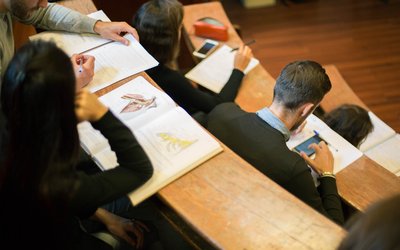
Although most respondents were diplomatic — understanding the necessity behind the government's reforms — all of them felt it was too expeditive and poorly executed. Teachers who had always taught in Russian were forced to re-adapt their entire curriculum in a language they were less familiar or completely unfamiliar with, which negatively affected teaching quality. The reform constituted an additional difficulty for Russian-speaking students, who found themselves having to tackle both the Latvian language and the challenges of their studies. As a result, their academic success was compromised, as they lost competitiveness to their Latvian-speaking peers.
Many also highlighted the complicated changes which the reform brought for younger children in pre-school or elementary classes. With the need to adapt very quickly, it was clear to see that younger children would not only struggle to learn Latvian but also suffer a steady decline in the quality of their Russian grammar. This not only had detrimental effects on the children’s educational advancements, but from a sociological perspective, the reform was also seen as a source of bullying and mockery in schools.
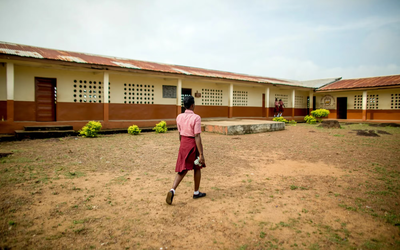
The evidence collected throughout the interviews indicated that although the reforms had theoretically changed the educational system, the Russian language had far from disappeared, continuing to be spoken in class, especially in formerly “Russian” schools. Contrary to what the reform stipulates, teachers revert to Russian when a student does not understand a concept, and a respondent said she was even allowed a translator in class — showing the weakness of the reform. In formerly “Latvian” schools, however, there is less tolerance. A sixteen-year-old student reported that the walls in her high school were placarded with posters reminding the students to speak only in Latvian, and other respondents confirmed that small children could be punished for using Russian within the confines of the school.
Respondents expressed their anger at this form of language policing, perceiving it as “blatant discrimination”. When asked about their relationship with the Russian language, all respondents associated the latter with their childhood, their family, and their friends, and even with their “authentic self”.Very few of them linked Russian language with Russian culture, choosing instead to see Russian as a means of communication. Indeed, although they speak Russian, they all perceive themselves as Russian-speaking Latvians, and not, as is often assumed, Russians. A nineteen-year-old university student explained: “It offends me that I am not accepted, even if I have a Latvian passport, if I know Latvian, and if I adhere to customs and think of myself as Latvian, not Russian.” Thus, what the government mandated as a means of decolonisation was perceived by the Russian-speaking youth in Latvia as a form of alienation, whereby their Russian-speaking upbringing cannot coexist with their Latvian nationality.
According to Milana, 26, and Maria, 17, the reform has only served to pit Latvian-speaking Latvians and Russian-speaking Latvians against each other, by demonising Russian as the “language of the enemy”. Alex, 16, stated: “Language does not belong to a single country. Russian doesn’t belong to Russia, just like English doesn’t belong to the United Kingdom.”
Even if all respondents said that discrimination of Russian-speakers was rare, all confirmed it existed, especially in the public sphere and amongst the older generations, where sometimes speaking Russian could feel uncomfortable or conflictual. If the idea behind the reform was to strengthen Latvia’s national identity, it seems one of its unintended consequences was instead a social fragmentation between the Latvian-speaking and Russian-speaking populations.
Language is a weapon used to both attack and defend. No matter what the end goal is, weaponisation always affects those who use the language itself. Only time will tell whether the language reform in Latvia will be successful but perhaps this calls for a reconsideration of the link between language, ideology and identity. Is banning the Russian language not just buying into Putin’s narrative? Listening to young Russian-speakers, it became obvious that the way we view language must be more nuanced than a simple struggle between good and evil. Recognising the danger of the Russian language should not mean conflating its use with Russian identity, and even less so a pro-Kremlin position. Although there is no obvious solution to these complex language dynamics, it seems the answer is not restriction of language use, but rather more open communication about the meaning of language and its impact on identity.