The right to have rights after Roe
June 10, 2026
What happens to women’s rights when their protection depends on the interpreter? The U.S. shows us that it's safe to say nothing good.
Maë Panzani
Since its founding in 2025, Agorà International has become the leading forum for serious discussion of governance, policy, and global affairs from student perspectives worldwide.
More about us →June 10, 2026
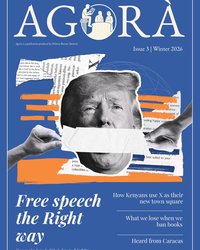
As this edition is being put together, women's rights are facing some of their most severe reversals in decades. In 2024, nearly a quarter of governments worldwide reported a backlash on women's rights, and no country has yet to be seen reaching absolute gender equality. According to the World Economic Forum, one in three countries made no progress on this front since 2015, and at the current rate, it will take another 131 years to reach gender parity worldwide.
Nowhere is this regression more visible than in Afghanistan. Since the Taliban takeover in August 2021, dozens of directives have stripped women and girls of their rights in education and employment, in freedom of movement, and so much more. Girls are banned from secondary school; women are barred from universities and most jobs. In December 2024, the Taliban banned women from training in nursing and midwifery, closing one of the last remaining doors into the workforce. The UN Special Rapporteur has described it as “an institutionalised system of discrimination, segregation, and exclusion.”
It was these events that brought this edition into being. Our board and editing team, a majority of who are women, jumped on the occasion.
Women's rights are too often treated as a recurring grievance, something that has been spoken about for too long. This realisation was such a disappointment, especially at an institution like Bocconi where women are educated, present, and extremely hardworking. It felt like a duty to complete this edition, because somewhere in the world, a woman with equal intelligence and drive as us does not have the platform or opportunities that we constantly live with.
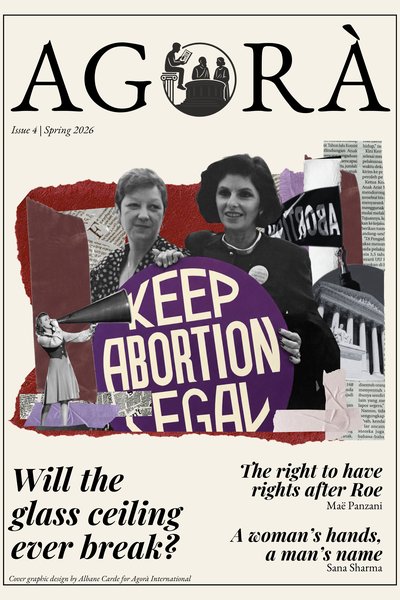
Will the glass ceiling ever break?
We started working on this in March, and our team was pursuing pieces on extremely different topics: sex trafficking in Asia, the underfunding of women-specific medical research, forced child marriages, women’s role in sports, and much more. What you are reading is, in many ways, an incomplete answer to a question too large for any single publication. Partly, too, because searching for women willing and able to write about their rights is — in some contexts — itself a reminder of how limited those rights remain.
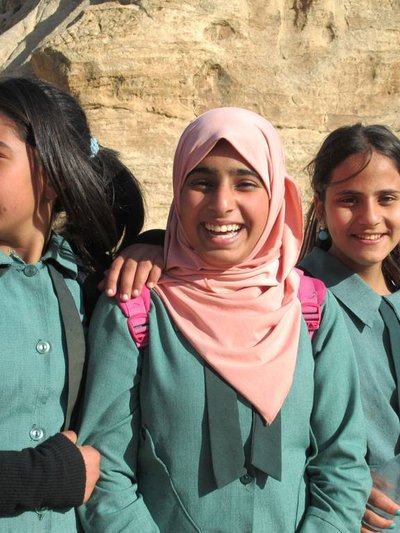
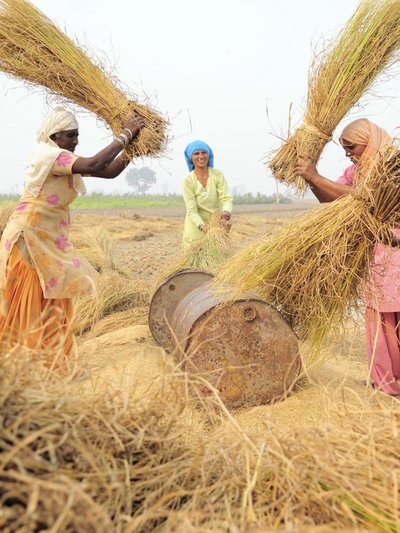
Our three featured articles take specific angles on a global problem: land rights and invisibility in Indian agriculture, the constitutional fragility of reproductive rights in the United States, and the gap between progress and reality in Jordan.
We hope this edition stays with you.
Sincerely,
Maë Panzani, Managing Editor