

Once every five years, the Chinese Communist Party (CCP) issues a so-called Five-Year Plan (FYP), an outline of priorities and goals regarding economic and social developments in the country. The fifteenth FYP was approved on March 12 after the annual Two Sessions of the National People’s Congress and the National Committee of the Chinese People's Political Consultative Conference.
Similar to its previous iteration, promoting high-quality economic growth, strengthening national security, advancing agricultural and rural modernisation, and accelerating the green transition were among its main objectives. Arguably the CCP’s most important goal, however, is the push towards greater technological self-reliance.
The technological revolution
Over the past decades, China’s tech sector has experienced huge growth, and is now one of the world’s leading nations in the industry. Looking at the Global Innovation Index — an annual ranking of countries based on their innovation capabilities — China has been one of the fastest climbers among middle-income economies since 2013. This development is primarily driven by heavy subsidies and large public investment. The central government’s budget for expenditure on science and technology is 426.42 billion yuan (61.7 billion USD) this year, representing a ten per cent increase from 2025.
Whilst Chinese tech companies are not quite at the level of their American counterparts yet, their recent growth cannot be ignored. China’s Big Tech, represented by the BATX companies — software and e-commerce juggernauts Tencent and Alibaba along with search-engine and hardware enterprises Baidu and Xiaomi — have consistently been innovating and expanding their presence in China and beyond. Over the past ten years, they have posted a collective annual revenue increase of roughly twenty-two per cent and are now playing a major role in the global tech sector. Another example is BYD, the EV-maker that has recently overtaken its main rival, Tesla, as the world’s largest seller of electric vehicles, with 2.26 million vehicles sold in 2025 compared to Tesla’s 1.64 million. The list goes on.
This surge in innovation has made the race for tech dominance between the U.S. and China increasingly more competitive. “China is nanoseconds behind America in AI,” stressed Nvidia CEO Jensen Huang in late 2025. Historically, the U.S. generally held the first-mover advantage in the sector, but Beijing has placed extraordinary resources into catching up. According to the Information Technology & Innovation Foundation, China has already overtaken the U.S. in most critical technology fields, with the sector showing no signs of slowing down.
These efforts are also starting to pay off. In January 2025, the Chinese company DeepSeek shocked the world by releasing R1, its large-language model (LLM) that managed to score similarly to top U.S. LLMs on various tests, despite American export controls on chips that were expected to greatly hinder Chinese LLM capabilities. More impressively, R1 was also developed for supposedly a fraction of the cost of its American competitors. Some drew this down to the lack of private sector investment via venture capital in China, unlike the U.S., which propelled Chinese startups to operate in more cost-efficient ways, accelerating the speed of their innovation.
An eye for an eye, a tooth for a tooth
Despite recent advancements, challenges remain. Among the most important are political rivalries. Both Washington and Beijing want to keep their assets and markets for themselves, which leads to mutually beneficial exchanges being cut off.
One has the materials, the other the technology. China currently controls the vast majority of rare earth processing, materials critical in the production of key technologies. On the other hand, the United States has huge bargaining power through companies like Nvidia, the $5 trillion chipmaker producing some of the most advanced chips in the world.
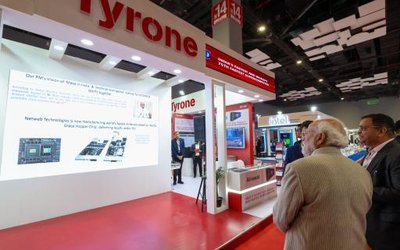
American export controls on technologies such as Nvidia’s advanced Blackwell chip have certainly dampened China’s tech boom, but Beijing is already adapting its strategy. In an unlikely response, the Chinese government is increasingly restricting imports of advanced chips, largely to boost domestic manufacturing. Since the implementation of Western export controls, Chinese manufacturers have significantly boosted their market share in semiconductor equipment, now making up about 35 per cent of the domestic market compared to just ten to fifteen per cent a few years ago, according to the Center for Strategic and International Studies. Chips like Huawei’s Ascend series reportedly already beat some restricted Western alternatives in terms of computing power.
A new Great Leap Forward?
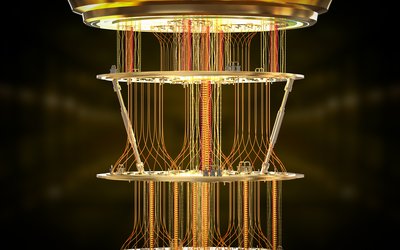
Beijing sets high goals for itself and lacks no confidence that they will be met. A major focus of the 15th FYP is becoming the global leader in emerging technologies such as artificial intelligence, quantum computing, and biotechnology. By 2030, China wants to integrate AI into at least ninety per cent of its economy, keep its Research & Development (R&D) government spending growth at seven per cent annually, and aim for its “core digital economy” to reach 12.5 per cent of GDP.
Historically, results have been mixed. Analysing the objectives of the 14th FYP, for example, the goal of achieving seventy per cent semiconductor self-sufficiency by 2025 has been substantially missed. On the other hand, China outperformed in the Electric Vehicles market by reaching its 2035 goal of fifty per cent EV sales ten years early.
Whether Beijing can preserve momentum and truly achieve self-reliance by 2030 will largely depend on how it can cope with challenges facing the industry. Its domestic technology market is already strong, but overcoming Western refusal to fully open markets for Chinese technology will be a major hurdle for its rapid expansion. Additionally, integrating technologies like artificial intelligence into large parts of the economy can be an issue for domestic employment. And whether Beijing can truly find long-term alternatives for Western technologies will be predominantly decided by whether it can keep pouring money into the industry to promote innovation.
“The dream lofty, the journey long — bold strides will get us there” declared Chinese President Xi Jinping in his 2026 New Year message. The coming years will show whether he is right.