
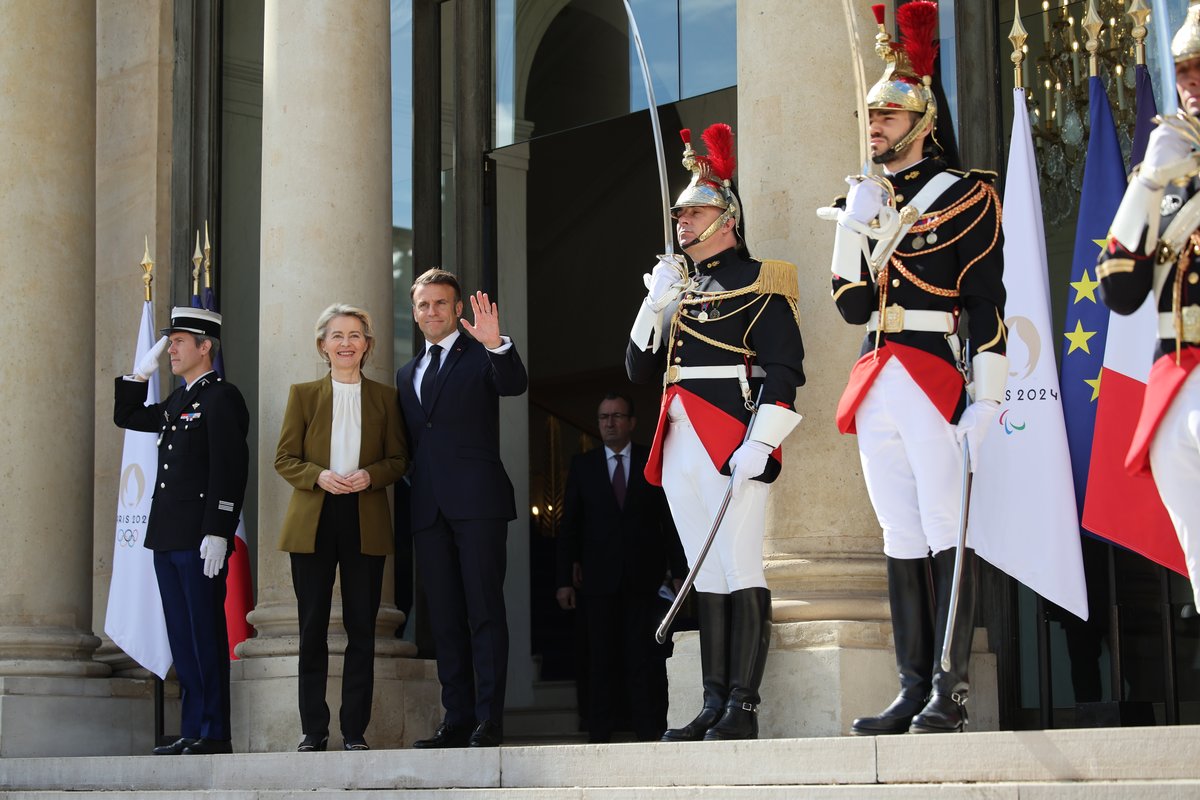
Each month, another page is torn from calendars around the world, and another candidate emerges for the new French prime minister, with subsequent bets placed on the longevity of their rule until their imminent abdication. President Macron’s latest appointee for the role, Sébastien Lecornu, has been reappointed following his resignation mere hours after establishing a new government, completing the list of four other PMs who have seen themselves out of the parliamentary chambers since the beginning of 2024.
This revolving political spectacle, founded on promises of resolving the deepening domestic economic crisis, has only exposed France’s economic fragility that decades of political instability have allowed to fester, drawing the gaze of international audiences that can no longer look away. Worrisome signals from the International Monetary Fund (IMF) emerged this summer in the form of a formal warning over France’s deficit levels, raising the prospect of France requiring an IMF bailout. According to European Commission projections, France’s debt-to-GDP ratio could rise to 1.29 by 2030 — well above the Maastricht threshold — from its current level of 1.17. As each year passes, France’s debt continues to weigh on the government’s handling of the economy.
This combination of crises raises an important question: how does France’s political turbulence intertwine with the IMF’s threats, and what does this mean for France’s future economic stability?
A history of fiscal strain
The news of a bailout should come as no surprise to Paris, given the steady deterioration of its public finances. As the EU’s second-largest economy — accounting for almost seventeen per cent of its total GDP, based on World Bank and European Union data — France’s instability raises concerns across the EU’s higher political and economic bodies.
Financial instability is no news to the République: from budget overruns in the 1980s to persistent budget deficits since the financial crisis of 2008, France has long stood the line between fiscal fragility and collapse. Crisis after crisis, this strain, fueled by expanding public debt and sluggish growth, has intensified during periods such as the COVID-19 pandemic, when public spending sustained consumption and businesses, and the Russia-Ukraine war, which sparked a prolonged energy crisis.
Despite the warning signs, France is also witnessing a surge in spending reminiscent of the excesses of the Versailles era. France has become a global reference point for many evolving democracies as a model for utilising public spending to maintain social and political stability. We see now, this approach carries long-term risks.
The IMF’s looming presence
The IMF, often described as the world’s lender of last resort, has been closely monitoring France’s situation. In 2024, the IMF’s Fiscal Affairs Director, Vitor Gaspar, warned about France’s rising debt burden as a significant threat to the Fifth Republic's global financial credibility, stating:
“We recommend in the case of France not only fiscal adjustment but fiscal adjustment that is appropriately frontloaded to enable France to credibly put public debt under control and inside the European framework.”
The IMF typically rejects loans if repayment is deemed unlikely, requiring countries to adopt policies such as tax increases, reduced investment, and cuts to consumer spending — measures that bring the prospect of austerity closer to the parliamentary chambers. In France, such measures would likely face strong public resistance, given the country’s already-high tax burden.
This creates a dilemma: pursue an IMF-backed adjustment or risk testing the patience of the nation known for mass protests?
Threats amplified through France’s political economy
The world’s political landscape has grown increasingly unstable. France’s political crisis is impacted by both global pressures, such as tariff threats set by Trump, and domestic factors, mostly seen in the lack of trust in Macron, whose approval rating has fallen to around twenty per cent.
To fend off the far right’s rise in France, Macron has taken a political gamble: betting all his chips on his personal political capital. His notorious dissolution of the National Assembly after the National Rally’s sweeping victory in the 2024 parliamentary elections have had the opposite effect to what he intended, stripping his party of its majority and deepening the fragmentation he sought to resolve. This polarising decision has heightened disapproval within parliament, now largely composed of opponents. This has further limited the government’s ability to implement measures to curb the growing public deficit - and the consequences are already visible in the French economy. Markets have reacted to the political instability, with stocks and bonds plummeting alongside each new prime minister’s turnover. Since the National Assembly’s dissolution, the CAC 40 has lost 10% as French stocks witnessed discounts rarely seen in developed markets and bond yields rose to levels not seen since the eurozone debt crisis of 2012. A weaker euro has also made imports more expensive, which, accompanied by current global inflationary pressure, has undermined France’s attractiveness to investors. All these market signals have further eroded investor confidence, as shown by private investment’s negative impact on France’s 2024 GDP. To make matters worse, any projected recovery has been moderate, unable to bounce back to pre-crisis levels. Such uncertainty further deepens economic stagnation and reduces consumer spending, reinforcing a never-ending cycle of instability.
What now?
France now faces a critical decision, one that will shape both its position within the G7 and its credibility in the eyes of the frustrated public. Over the years, different movements against the current administration have emerged, but none as destructive to France’s political credibility as the Gilets Jaunes, a wave of mass protests against government policy and economic inequality that shook France in 2018 and 2019. While it started as a reaction to increasing economic burden on the population, the movement had much greater social implications, namely by exposing cracks in the democratic legitimacy of Macron’s administration and cementing his reputation as a president governing for the elite rather than the broader French population. With a foundation of broken promises of economic prosperity post-revolt, the current situation may trigger a new wave of similar movements, this time with a government unable to shelter itself from the weight of its long trail of perpetual crises.
The first proposed approach is one of austerity, a common response to France’s current economic turbulence. By accepting fiscal constraints, the divided Parliament will be forced to work as one to implement policies with shared compromises aimed at restoring long-term stability and safeguarding France’s economic position. Such measures would signal renewed commitment to fiscal discipline, potentially restoring the confidence of investors, and lowering borrowing costs. These effects could expand beyond France, stabilising European and international markets that depend on French economic strength.
Yet, this change would be met with short-term consequences, primarily affecting the average citizen: reduced public spending would dampen opportunities — particularly in the labour market — and weaken consumer confidence, leading to greater economic slowdown. Austerity could, in theory, rebuild France’s financial credibility in the eyes of the world while posing short-term risks to the domestic economy, a dilemma that the government must navigate carefully. This raises the prospect of renewed social unrest at the Élysée, a sense of déjà vu that could signal the resurgence of the Gilets Jaunes.
An alternative would be relying on external support while delaying fiscal adjustment, to first stabilise politics, and avoid immediate austerity. Some argue that the introduction of new players, such as the European Central Bank, which may be more lenient, could provide more support in a crisis. This potential safety net could, however, reduce the urgency for reform, further prolonging the political deadlock and instability within Parliament. If reforms are meant to increase investor confidence, defiance would only raise their skepticism. Higher yields on government bonds would then be required to attract investors, increasing borrowing costs and further tightening fiscal pressures. As time goes on, investors will shift their focus towards countries with both safer and more lucrative prospects.
The threat is clear: France is caught in a perfectly elaborate trap, where political crisis fuels an economic crisis, and any solution guarantees a greater political disaster than we have seen thus far; a Prisoner’s Dilemma is at play. And the players? No one stands to lose more than the French population, left at the mercy of its government’s decisions.