


Over the past decade, women have become increasingly visible in India’s startup ecosystem. They appear on conference panels, in media features, and in government reports that celebrate female founders. Entrepreneurship itself has been positioned as both a national priority and a marker of modern India. Within this narrative, women are no longer framed as marginal actors but as central players.
At first glance, this appears to be steady progress. More women are registering companies. More are applying for institutional credit. More are part of formal networks that did not exist at scale fifteen years ago. According to The Economic Times, as of late 2025, India has over 200,000 government-recognised startups, and nearly half include at least one woman director or partner. This trend suggests that formal inclusion is expanding in measurable ways.
Designing inclusion
Yet participation does not automatically translate into structural equality. This raises a question that feels both economic and political: if doors are formally open, does everyone experience the freedom to walk through them in the same way?
India’s policy direction makes clear that the expansion of women’s entrepreneurship is intentional. Initiatives such as Startup India, Stand Up India, the Women Entrepreneurship Platform, and the Pradhan Mantri Mudra Yojana have been designed to widen access to finance, skills, and markets. Startup India alone has recognised over 73,000 startups with a female director as of late 2024, as reported by Moneycontrol, highlighting the growing role women play in the formal ecosystem. Mudra loans, which extend small credit to micro- and small enterprises, account for over 52 core sanctioned accounts since inception, with women comprising about 68-70 percent of beneficiaries, figures reported by the Economic Times.
These measures form part of a broader shift towards financial inclusion. Entrepreneurship is presented as an individual aspiration and a strategy for national growth. Women are addressed as economic contributors. As Kiran Mazumdar-Shaw, founder of Biocon and one of India’s leading biotechnology entrepreneurs, has argued, women must be seen not as dependents or passive members of society but as equal contributors to economic growth. Inclusion is embedded within a growth model that values productivity and formal participation, rather than simply satisfying mandatory state quotas.
This shift matters because access to credit and registration has historically constrained women’s participation.
Credibility and constraint in women’s entrepreneurship
It is one thing to have the ability to register a company online or apply for a government-backed loan. It is another to feel unquestioned in that decision. When a woman I know describes her business plans, the responses she receives are shaped by routine caution. Questions about stability tend to appear quickly. Is there a more secure alternative? What happens if it fails? These are practical questions, but they are not always distributed evenly across gender.
Risk, in theory, is celebrated in entrepreneurial culture. In practice, formal recognition from the state does not automatically override social perception. Ambition may be encouraged but subjected to extra scrutiny. Discussions often turn into questions of stability, safer alternatives, and long-term security. Ideas that are seen as bold in one context are, in another, treated as impractical or even risky. Credibility sometimes feels conditional, as though seriousness must be demonstrated repeatedly.
Such friction is far from theoretical; it represents the lived reality of navigating a landscape where institutional progress meets cultural persistence. Vineeta Singh, co-founder of Sugar Cosmetics, said: “Once, an investor refused to hold a meeting just with me. He wanted to have the business talk with a ‘man’.” While these encounters are rarely captured in formal datasets, they illustrate how professional legitimacy remains a conditional resource, frequently subjected to the very biases that policy frameworks attempt to bypass.
Beyond questions of credibility, structural constraints operate in less visible ways. Issues such as family expectations shape how much time and mobility women can devote to their work, while safety concerns influence how and where work takes place. Access to informal capital, often crucial to early stages, depends heavily on networks of trust, which are not equally extended. Even where institutional credit is available, the social permission to take economic risk is uneven. Economic inclusion can be legislated, but cultural normalisation is a slow process. This distinction is important because public discourse often merges the two.
The path from visibility to legitimacy
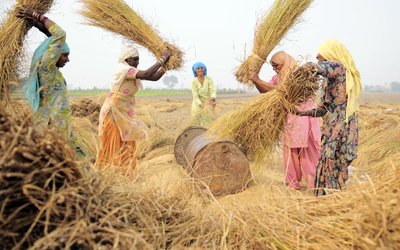
Geography further complicates the picture. In metropolitan centres such as Bengaluru, Mumbai, and Delhi, the startup ecosystem is visible and dense. Incubators, venture capital firms, and networking events create a sense of momentum. Female founders in these spaces are increasingly recognised. Their visibility feeds into the broader narrative of progress, but outside major cities, the story is different. Many women operate small enterprises connected to self-help groups, local markets, or microcredit systems. These ventures may not appear in high-growth startup statistics, yet they represent economic activity and independence. In Uttar Pradesh, The Times of India reported last year that there were more than 18,500 active startups, with around 8,000 being women-led.
Despite these challenges, there has been some progress towards cultural normalisation. Digital infrastructure has expanded access to information, markets, and role models. Young women today grow up seeing founders online; they follow product launches, funding announcements, and entrepreneurial journeys through social media.
This slow improvement is visible in funding patterns as well. In 2024, women-led startups in India raised around US $930 million across 136 deals, nearly doubling from the previous year, according to The Economic Times CFO. This sharp increase reflects not just greater participation but also growing investor interest.
Possibility, in fact, does feel more visible than it did a generation ago. It suggests that ambition amongst women is less exceptional. The aspiration to start something of one’s own is increasingly part of mainstream conversation, including within universities and professional circles. That shift in mindset may prove as significant as policy design in the long term.
However, the conversation about women’s entrepreneurship in India needs to move beyond counting beneficiaries or schemes. The more difficult question concerns legitimacy. Are women seen as full economic actors whose ambition requires no special justification? Does entrepreneurship become ordinary rather than symbolic when undertaken by women?
India has made substantial progress in constructing institutional pathways. Access to registration, credit, and digital platforms has expanded. Yet the deeper measure of inclusion lies in whether risk-taking, leadership, and growth are interpreted as gender-neutral traits. When ambition no longer invites surprise or scrutiny but is treated as routine, inclusion will move from policy language into everyday reality. That transformation is quieter than a scheme announcement. But it matters more.