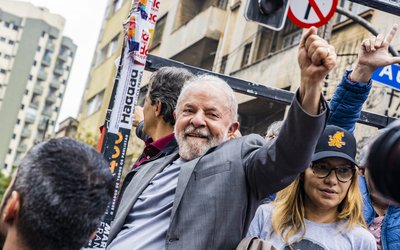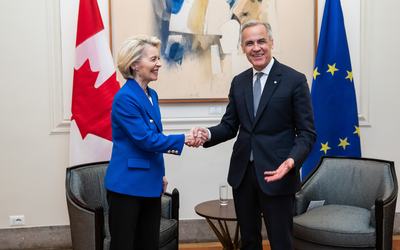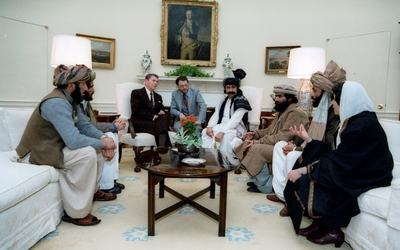

Most people consider speech as merely talking. A closer look at history reveals something puzzling: major sociopolitical changes, historically, did not follow battles or laws — they began with words. In front of the United Nations, a teen vocally supported girls’ education. On the stairs of the Lincoln Memorial, a minister talked about a dream he had. World leaders were told by a young climate activist that they behaved like children. Malala, Martin Luther King Jr. and Greta Thunberg created global change because their words had power.
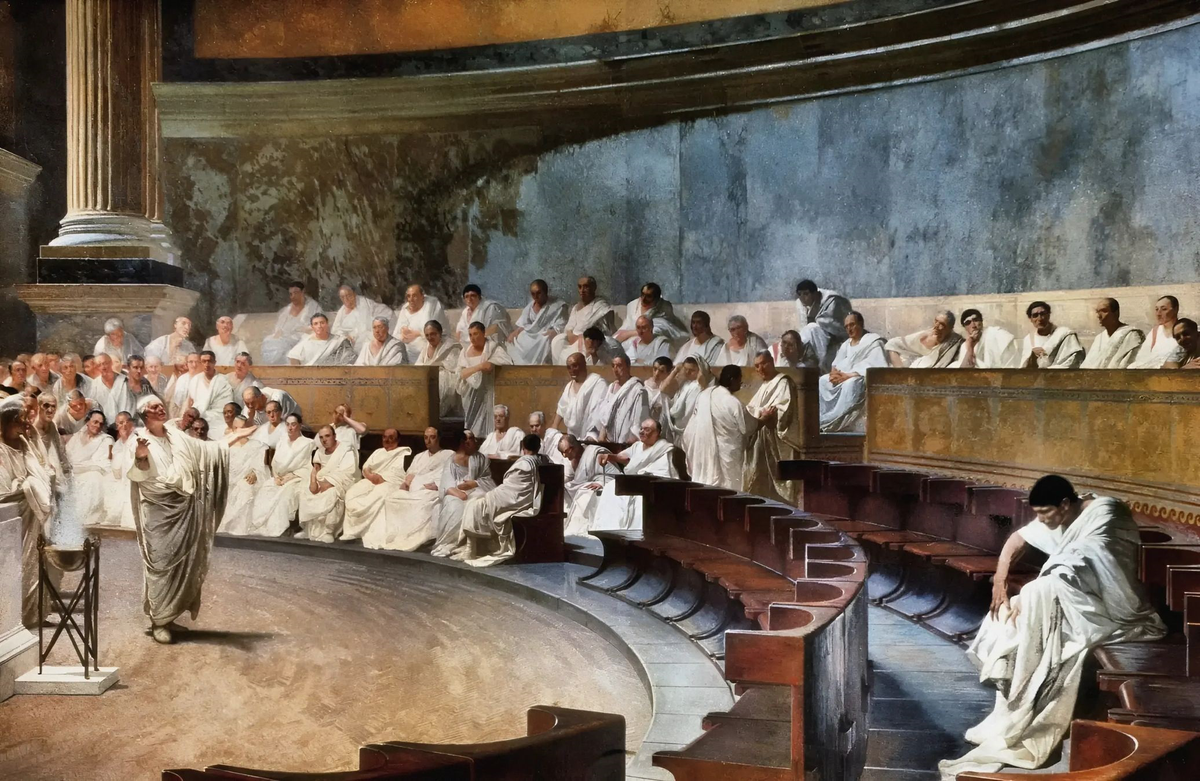
Speech is one of the oldest of human tools. Even before writing, governments, or anything resembling our world today, people communicated their ideas through language. Through what historians refer to as oral tradition, stories, laws and beliefs were passed from one generation to another. For example, in Ancient Greece, epic tales such as Homer’s Iliad or Odyssey were not originally written texts but verses, recited aloud by traveling poets known as bards, and later by performers called rhapsodes. Oral tradition, throughout history, has been the most enduring way to share knowledge Today, despite all our forms of communicative technologies, speech still remains one of our most powerful tools. What makes it so remarkable?
One of the first things that separates a memorable speech from a forgettable one is not how loud the speaker is or the number of difficult words they use; it comes down to clarity. Every great speech has one single concept at its core. When Martin Luther King Jr. delivered his speech in 1963, the entire world recalled his dream. Greta Thunberg’s line, “How dare you?” addressed to the UN, was the sentence everyone talked about in 2019.
Yet clarity alone is not enough. What moves an audience goes beyond the mind and into the heart through emotion. Research shows that feeling, not information, is what humans respond to first. According to a study from the Emotion Review (2009), people who listen to emotional stories are almost twice as likely to remember them as abstract arguments. For this reason, when leaders talk, they share their personal experiences, with the goal of connecting to their audience. In 2012, Malala Yousafzai was shot by the Taliban for opposing restrictions on female education. After hearing her famous speech delivered at the United Nations Headquarters following her recovery, the whole world was profoundly moved. No rhetorical device could have been more powerful than the raw truth of her story, and it was the emotion behind her words that carried her speech.
Rhythm, beyond clarity and emotion, also shapes the way a speech is felt. Research by scientists Fujii and Wan (2014) has shown that rhythm is a powerful medium for stimulating communication and social interaction, owing to what scientists call strong sensorimotor coupling. In other words, our brains are wired to respond to pulse and pattern. Fujii and Wan, in their Sound Envelope Processing hypothesis, argue that sound amplitude and intensity, synchronised with a pulse, can activate the brain networks that underlie human communication. In speech, this means that a short sentence can land like a drumbeat — clear, sharp — which makes the message feel more direct and powerful. Or longer sentences can be used to immerse listeners into the moment. Barack Obama and Nelson Mandela were well known for this.
Above all else, authenticity and honesty are what matter most, because you cannot teach a person to care. When a speaker is not convinced of what they are saying, people can see it straight away. Joe Biden playing Despacito at the 2020 campaign rally is a clear example. His gesture was intended to show appreciation for Latino voters, but it came across as the opposite. People want to feel seen and understood. For this reason, the majority of political speeches do not succeed. Regardless of how refined they sound, they often lack substance.
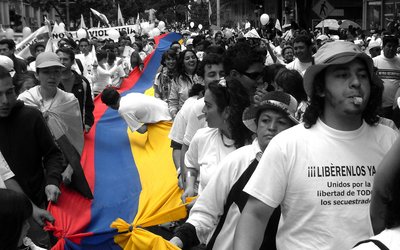
If anything, in our fast-paced world, speaking matters more now than it ever did. Social media has made talking easier and being heard harder. But if you can break through the noise, messages can travel more quickly than ever before. The speech of an individual at a protest, via a short video, might reach millions before the end of the day. A speech given in a moment of uncertainty can change the way someone sees what lies ahead. A single sentence, if it touches the right nerve, can move millions of people.
Ultimately, this is the point: speech is not about sounding perfect. It is about transferring something from your mind to somebody else’s. It could be a feeling, an idea, a warning, or a hope. When you take everything away, the art of speech is essentially the art of connection. Perhaps this is why the art of speech keeps its power; because it is one of the very few things any person, regardless of who they are, can do. What you need is a message and the bravery to support it. If that is the case, then your words are more than just a medium of air. Throughout history, the world has been shaped by those who understood one simple truth: you do not have to be the loudest person in the room to be the one everyone remembers. All you have to do is say something worth remembering.