
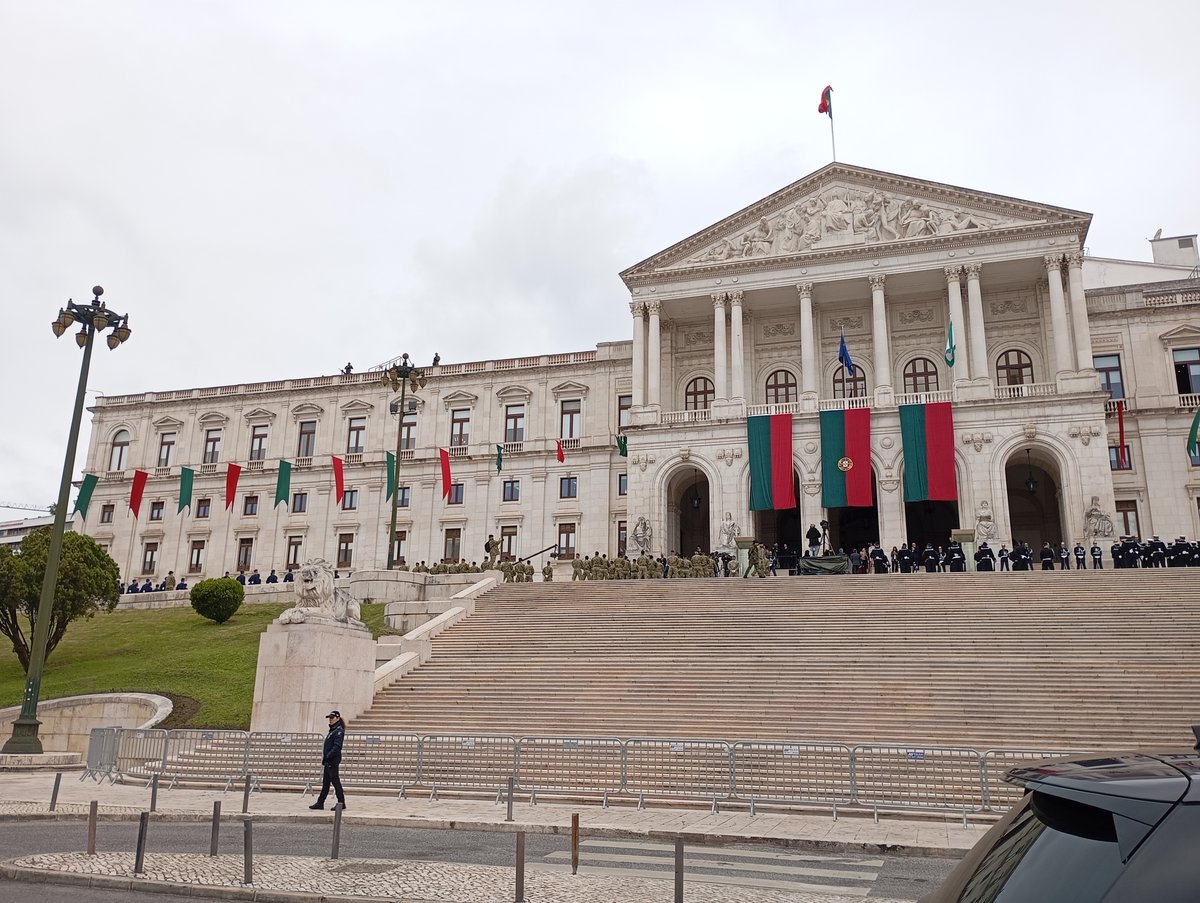
In a decisive second round held on 8 February, the Portuguese went to the urns to elect António José Seguro as their new President, earning 67 per cent of the vote, defeating far-right opponent André Ventura. In several municipalities severely affected by Storm Kristin, voting was postponed until 15 February, a disruption that underlined the already unstable political space.
The record-breaking election emerged amid a (perhaps all-too-familiar) turbulent political cycle in Portugal. It follows the resignation of former Prime Minister — and now President of the European Council — António Costa, and the rapid ascent of the far-right party Chega — or Enough – which has been reshaping the way politics is conducted in the country.
After a very contested first round in which no candidate was able to secure an outright majority, the run-off became a head-to-head between two vastly different visions of and for Portugal: one rooted in traditionally centre-left constitutionalism and the other in populist nationalism. In the country's semi-presidential system, where the head of state holds constitutional powers, the stakes were larger than beyond symbolism.
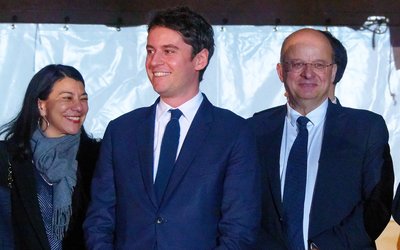
The Winner: António José Seguro
The President-elect must have spent the past few weeks with a sense of disbelief, as he seems to have done the impossible. The former leader of the Socialist Party (PS) began the presidential race polling as low as 6%, yet managed to secure a historic win by being the candidate to have the most votes in Portuguese democratic history, surpassing the record previously held by Mário Soares in 1991. In contrast, André Ventura received fewer votes in the second round than Seguro had in the first.
And yet, Seguro may be wise not to grow too comfortable. Having pledged to be the President of 'all, all, all'—echoing Pope Francis—he now faces a new ambiguity: was this a real endorsement of his leadership and political skills, or mainly a mobilisation against his opponent? Nonetheless, these results still serve as a form of vindication: a decade after losing to António Costa in the PS primaries, Seguro seems to have returned from what some assumed was political irrelevance.
Although he only formally took office on March 9th, Seguro was already putting on the tone of a head of state, moving swiftly to show support to the victims of the Kristin storm—which took the country by surprise in early February—positioning himself as a figure of national unity even before entering Belém Palace.
The Real Winner: André Ventura
Although André Ventura decisively lost the presidency, for the far-right leader, this race was never simply about reaching the Palace of Belém. Rather, Ventura and Chega have been executing a longer-term strategy that has been unfolding since 2019: normalising the far right within Portugal’s political system while steadily expanding its electoral base. By focusing on policies targeting corrupt elites, the spread of Islam in the country, and the implementation of harsher criminal sentencing, Ventura has positioned himself as arguably the most important voice on the Portuguese right.
The main goal was to outperform his centre-right counterpart, the Democratic Alliance (AD) currently leading parliament. In percentage terms, he succeeded in doing so, securing 33% of the vote, despite falling short in absolute numbers. Still, in doing so, he succeeded in something that may be more consequential than the presidency at this point: symbolic leadership of the right. The question now is whether Chega's popularity has peaked or is still ascending.
The Loser: António Costa
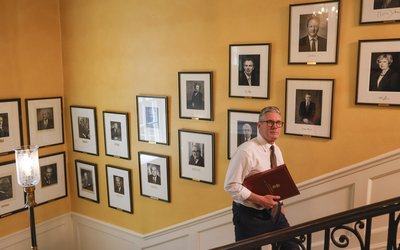
This election also feels like the closing of a political landscape in Portugal that has Costa's name all over it. More than a decade ago, Costa defeated Seguro and went on to control Portuguese politics, leading Portugal in what was Europe’s “Iberian exceptionalism,” immune to the far-right surge reshaping the continent. As it goes, PS and its coalition with other left-leaning parties turned the page on austerity, through policies focused on restoring incomes, promoting social protections, and overseeing an unexpected economic recovery.
Nonetheless, his resignation in 2024, caused by corruption investigations, shattered that clear dominance. PS lost its absolute majority, the centre-right returned to power, and Chega consolidated itself as an unshakable force in the country. This election serves as the last nail in the coffin; in a great act of political irony, the man Costa once sidelined now holds a record-breaking presidential election. Despite Costa leaving Lisbon for Brussels, at home, the political scene he was responsible for has been fundamentally altered, and not in his favour.
The Biggest Loser: Democratic Alliance
If Ventura can claim a victory despite his defeat, the same cannot be said for the Democratic Alliance, the centre-right led by Luís Montenegro. The coalition made up of PSD (Social Democratic Party) and CDS-PP (Democratic Centre Party - People's Party) comes out of this election politically diminished and vulnerable. Concretely, this race reveals that the centre-right struggled to consolidate its electorate behind a single political figure.
In addition to this, the government’s (mis)handling of Storm Kristin risks deepening the hole they are in. While Montenegro announced an ambitious national recovery plan, the delays in emergency legislation, as well as uncertainty around financial support, have weakened the government's claim to decisive leadership and concrete action. Any perception of administrative incompetence may create an opening, one that Ventura is now very well positioned to take advantage of.
AD thus finds itself between a rock and a hard place, challenged by a far right claiming ideological leadership, and overseen by a centre-left President with record-breaking legitimacy.
The one yet to be decided: Democracy
André Ventura's increase in popularity is, of course, not a newly observed phenomenon. Across the western world, far-right leaders have gained traction by presenting themselves as anti-system disruptors, with policy proposals targeted at challenging the foundations of liberal democracy for the sake of 'the people' or sovereignty. As external pressures rise—such as Trump's geopolitical threats on Greenland and the ongoing war in Ukraine—politicians like Ventura highlight how Europe now faces a crucial decision between creating their own anti-status quo strongmen or consolidating a common democratic front against internal and external forces.