No Colombian is exempt from having been touched by the events of the country we call home. As unique as our life stories may be, they are all permeated by the turbulent history of our nation. But this impact does not have to be one-sided. Just as we are deeply affected by the historical events we experience, we too, as autonomous individuals and responsible participants in democracy, have the power to impact others and contribute to changing social reality. My mother’s life story can be narrated to reflect on its connection with Colombia’s social and political reality. It demonstrates how we can each contribute to transforming the social reality of our country, and how I yearn to see that change occur in Colombia.
My mother was born in Cali in 1966. There, she spent her childhood and adolescence, accompanied by her older sister, mother, and father, until she graduated from high school. She remembers her childhood fondly and highlights the importance of the education she received at Liceo Benalcázar, a feminist, non-religious girls’ school that emphasised the development of intellectual abilities and autonomy.
A turbulent adolescence
Her early childhood took place during the Frente Nacional (National Front), between the presidencies of Guillermo León Valencia and Carlos Lleras Restrepo. This anomalous historical period resulted from an agreement between conservatives and liberals to alternate presidential power over four administrations (1958–1974), following the dictatorship of Rojas Pinilla. Fundamentally, its main goal was to preserve the power of the traditional parties and end bipartisan violence, according to historian Jorge Orlando Melo. However, the political exclusion of other parties during this era led to the rise of numerous guerrilla groups: in 1964 the Revolutionary Armed Forces of Colombia (FARC) appeared, in ‘65 the National Liberation Army (ELN) emerged, and the Popular Liberation Army (EPL) was formed in ‘67. In ‘73 guerilla activity reached its pinnacle with the formation of the April 19 Movement (M-19). Although my mother’s political awareness was limited by her young age, it is possible that having been born and raised in such an anti-democratic environment from early on influenced the “normalisation” of instability and violence, which would only intensify in the coming years.
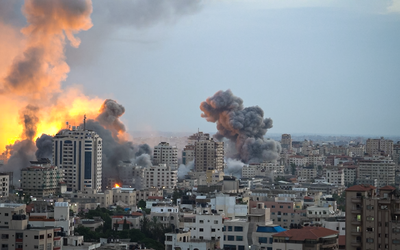
The first milestone that marked my mother’s life was her experience living in Bogotá from 1983–1989, where she studied psychology and worked. There, she witnessed the violence of the ‘80s and felt it was everywhere: “We were all exposed to it and lived it firsthand, as cannon fodder.” My mother recalls that one day upon arriving at her apartment, she saw her window had been cracked by the impact of a bullet. She recounts that explosions were common at the time, and remembers, specifically, seeing a mushroom-shaped cloud of smoke rise from the building of the Administrative Department of Security (DAS) through her bedroom window during the attack against General Maza Márquez. Her roommate once told her she had been “thrown into the air” in her car by another bomb explosion. Attending a lecture at her university she heard the blast from the Palace of Justice siege, where her uncle, former president of the Council of State, was held hostage. He would later die from respiratory illnesses contracted that day.
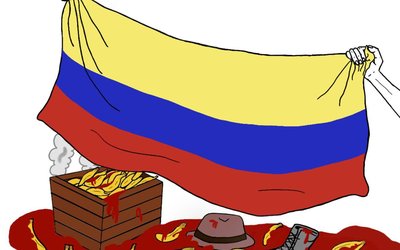
This milestone coincides with the historical ‘peak’ of drug trafficking in Colombia. During this decade, the government of Julio César Turbay (1978–1982) was characterised by the emergence of paramilitary groups as a response to guerrilla attacks on landowners and local politicians. His successor did not fare much better; during Belisario Betancur’s presidency (1982–1986), negotiations with guerrillas were accompanied by a drastic increase in violence: homicide rates tripled from 1983 to 1988, according to Tina Rosenberg from The Atlantic. Virgilio Barco’s government (1986–1990), was the last of this era with the extermination of the Patriotic Union (UP), the disarmed political group of the FARC.
The period after the National Front was just as painful, especially for my mother. “That’s when I became an adult,” she says, as she had to face violence and the transition from adolescence to adulthood simultaneously, in an unfamiliar and increasingly dangerous city, all while studying. It was perhaps the greatest challenge she has ever faced. Nonetheless, the violence that surrounded her became somewhat normalised, as she and her social circle felt there was “nothing to be done about it” and that they should focus on their studies instead. This desensitisation to violence stemmed from the years of continuous hostility that my mother’s generation had witnessed since childhood. Violence was the rule, not the exception.
How we change society
The second major milestone in my mother’s life was her move to London to pursue graduate studies between the ages of twenty-six and twenty-seven. This drastic change of environment opened her eyes to what a more “civilized society” could be like: collective respect for laws, safety, a good quality of life for all, cultural respect, and clean public spaces. Moreover, her master’s studies transformed her understanding of knowledge. Her undergraduate experience had convinced her that her contributions were worthless unless they came from prestigious sources. In London, she recalls that the wisest people she met spoke to her with complete humility. Many aspects of English culture left a deep mark on her, both professionally and personally, demonstrating the profound impact one’s environment can have.
Her time in London coincided with the presidency of César Gaviria, shortly after the new Constitution of 1991 was enacted. Her decision to leave the country was not due to politics but her personal desire to pursue graduate studies abroad, aided by a scholarship. Even so, I think leaving Colombia for a few years must have been a relief after Bogotá’s “high voltage”. My mother finally returned to Cali in 1995 and settled there with her husband, my father. They had a son in 1997, and a daughter (me) in 2005.
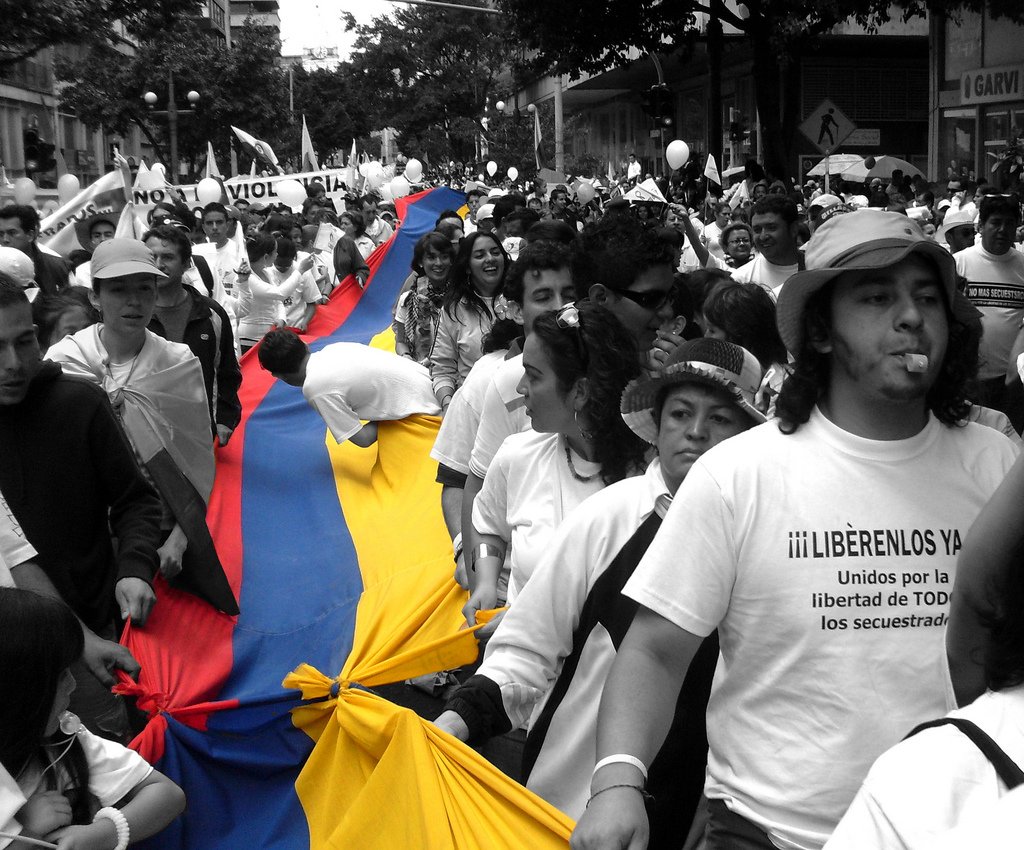
At the end of our conversation, my mother and I agreed that the change we would most like to see in Colombia is the end of the endemic violence phenomenon. Both in my mother’s youth and in mine, there has been widespread violence affecting all sectors of society. My mother experienced guerrilla violence during the National Front era, and I have grown surrounded by the violence caused by drug trafficking, though shielded by my privilege. Ending this chain of violence is the key to ensure the prosperity of our future generations in a more peaceful society.
I believe that the key to transforming social reality has two components. On one hand, it is essential for every person to put their skills and knowledge at the service of the community, regardless of the profession or “scale” of one’s work. As a psychologist my mother works with specific people, but the impact of her work goes beyond the individual level; she knows that impacting her patients’ lives also impacts their relationships with others around them. In the field of law, which I hope to pursue, the scope for using the profession to improve the social reality of the country seems even broader, through practices such as strategic litigation.
Nevertheless, regardless of one’s profession or vocation, it is equally important to fulfil the second component of transforming social reality: active and responsible participation in regional and national democratic processes. Informed participation, directed toward electing realistic, community-oriented projects led by committed people, is a key pillar that our country has lacked profoundly. “Everything begins with education,” my mother says. I aspire to a future in which all Colombians have access to quality education that allows them, on one hand, to cultivate critical thinking and become autonomous, responsible citizens; and on the other, to freely explore their passions and interests in order to give back to the community out of genuine desire. This, I believe, is the way to achieve the change we wish to see in our country, so that future generations no longer have to live under the terror and sorrow of the violence that still haunts us.