
To the casual observer scrolling through X, Kenya appears to be a beacon of unbridled expression in East Africa. Through the domination of the hashtag #KOX (Kenyans on X), nationals and expats join to fire away messages in a chaotic mix of biting satire, political memes, and direct accountability that spares no one, not even the President. Yet, beneath this vibrant veneer lies a darker, more precarious reality. As 2026 gets underway, the air in Nairobi is heavy with an uncomfortable truth: while the platform for speech has expanded, the cost of using it has become existential.
The trajectory of free speech in Kenya is not a straight line towards liberty; it is, rather, a pendulum swinging violently between constitutional idealism and the brutal reflex of state repression. To understand the "silence of the cell" that haunts us today, we must first understand the noise that preceded it.
The colonial hangover
The question of whether free speech existed in Kenya prior to the 2010 Constitution requires a nuanced answer. Whilst earlier constitutional arrangements formally acknowledged civil freedoms, the legal environment was suffocated by colonial-era legislation limiting free discourse. Statutes like the Official Secrets Act and public order regulations were not merely dormant laws, but active weapons inherited from the British and sharpened by post-independence regimes.
In the 1980s and ‘90s conditions only worsened, with the state possessing expansive discretionary authority. Journalists, academics, and activists operated in a "constrained space" where speech was possible but persistently precarious. The courtroom offered little refuge; without a robust bill of rights, judicial review often deferred to vague claims of "state security" and "public order".
The new constitution of 2010 was widely celebrated as a substantive turning point. It acted as an exorcism of these ghosts, articulating clear guarantees for freedom of expression, entrenching media independence, and enhancing access to information. For a decade, it felt as though the walls were finally coming down.
The power of hashtag politics
The real test came in 2024 with the passing of the finance bill, a piece of legislation seeking to introduce a series of taxes on essential goods; bread, sanitary products, and digital services in an economy already keeling, overwhelmed by a cost-of-living crisis. Introduced barely a year after the contentious 2023 Finance Act and its mandatory housing levy, the 2024 bill was viewed by many as an act of economic warfare against the poor.
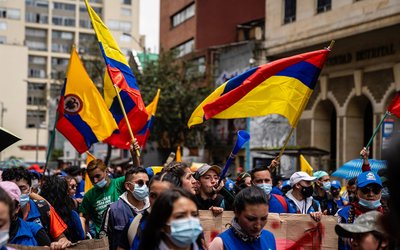
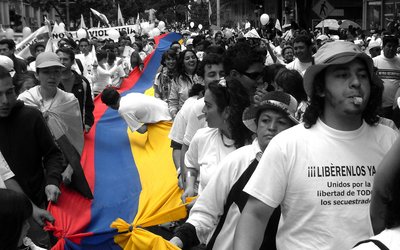
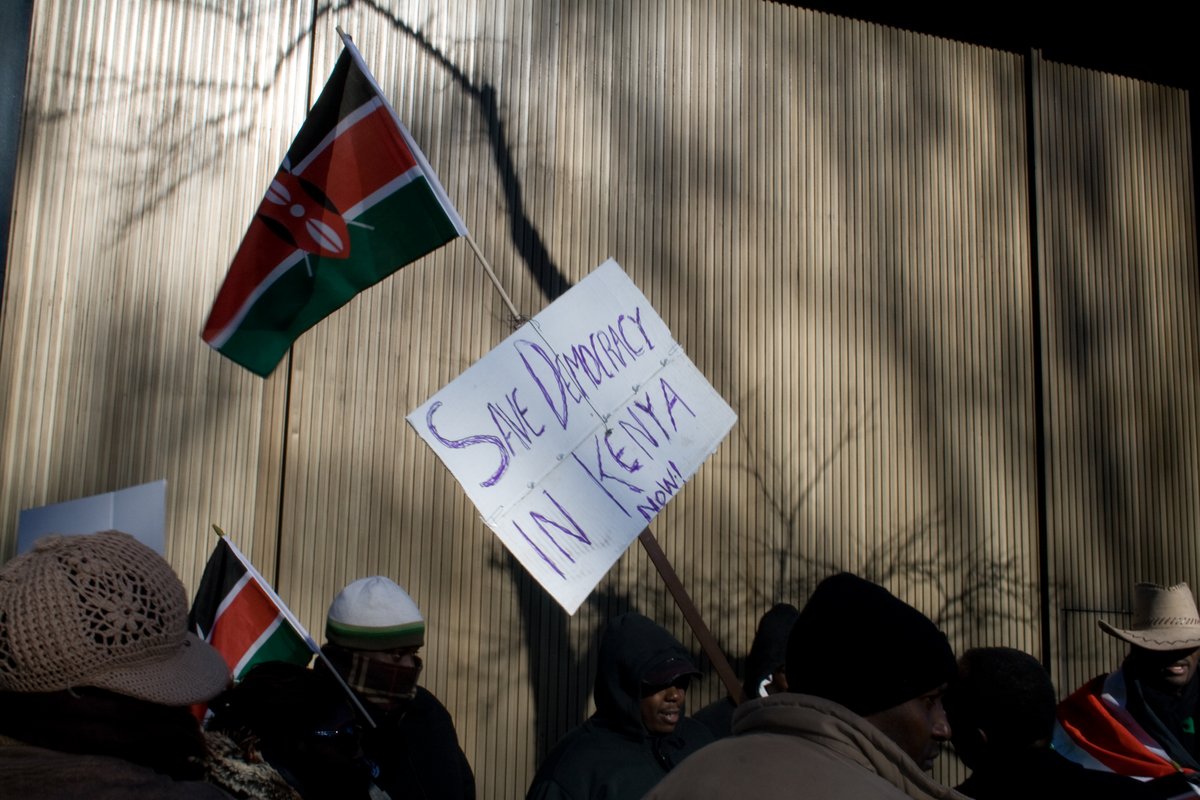
What followed was a textbook example of civic disobedience, led not by veteran opposition figures but by Gen Z. Dismissed by the political class as apolitical "dot-coms", young Kenyans weaponised technology with startling efficiency. Social media was employed masterfully to subvert educational and logistical obstacles. TikTok broke down complex tax clauses into everyday jargon, X Spaces — livestream video podcasts on the platform — transformed themselves into virtual town halls, and Instagram was used to coordinate medical aid.
The government’s initial response was dismissively archaic. Senior officials characterised the dissent as "online noise", seemingly unaware that the digital square had become the new parliament. By mid-June 2024, that noise had transformed into the thunder of thousands rallying under #RejectFinanceBill2024 and #OccupyParliament. It was bottom-up, organic, and nationwide. It proved that free speech in Kenya was no longer just a right written on paper, but a tool capable of shaking the foundations of power.
The digital guillotine
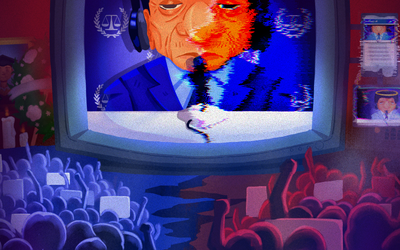
To regain control, the state turned to the Computer Misuse and Cybercrimes Act. Designed ostensibly to curb digital fraud and cyber-terrorism, the act became a modernised version of the colonial sedition laws. It grants the state the power to criminalise anything which relates to "false publications" and the "misuse of computer systems", carefully worded vocabulary deliberately vague enough to encompass almost any form of dissent which causes trouble. This pivot from physical censorship to digital lawfare was effectively censorious, demonstrated by the tragic case of Albert Ojwang, a 31-year-old teacher and blogger. On June 6th, 2025, Ojwang was arrested in Homa Bay and taken into custody at the Central Police Station in Nairobi. A few hours after his arrest, Ojwang was dead. He was not a violent insurgent. Ojwang’s alleged crime was a social media post that "insulted" and "defamed" Deputy Inspector General of Police Eliud Lagat, linking the official to corruption and nepotism within the service. The response to this digital slight was disproportionately analogue and brutal.
The police narrative was instant and rehearsed: they alleged he had injured himself by hitting his head against the cell wall. In a pre-digital era, this story might have held. But by 2025, the cover-up crumbled under scrutiny. An independent autopsy revealed fatal injuries consistent with severe physical assault and strangulation, shattering the self-harm narrative. The aftermath was explosive. The hashtag #JusticeForOjwang reignited the streets. Under immense public pressure, Inspector General of Police Douglas Kanja appeared before the Senate. In a rare moment of institutional contrition, he retracted the earlier police account.
"I tender my apology on behalf of the National Police Service for that information," Kanja told a stunned Senate committee.
It was revealed that the defamation complaint had indeed been filed by Deputy IGP Eliud Lagat. The revelation was chilling: a high-ranking state official had allegedly used the machinery of the Albert Ojwang was dead. Not because he committed a crime, but because he exercised a constitutional right in a country where the police force often operates above the constitution.
“Free” speech
Legal experts have pointed out a disturbing pattern. Any activist who exposes corruption in county governments, any journalist who may highlight an issue within public departments, or any citizen mocking national leadership is routinely picked up on charges of "computer misuse". The law, intended to protect the digital infrastructure from hackers, is being used to protect the reputations of the corrupt from the truth.
The 2010 Constitution promised that freedom of expression would only be limited by the rights of others from defamation that were meant to be settled in civil courts, not in police cells. By criminalising defamation and "insult" via the Cybercrimes Act, the state has effectively criminalised speech itself.
The legacy of the Gen Z protests prove that Kenyans have a voice The death of Albert Ojwang in 2025 proves that the state still has the hands to choke it. Kenya offers a brutal lesson: a constitution is a promise, not a shield. Rights are not static trophies to be admired, but active territories to be defended. Ultimately, true freedom of speech is not achieved when we can tweet without fear of a ban, but when we can tweet without fear of a cell.