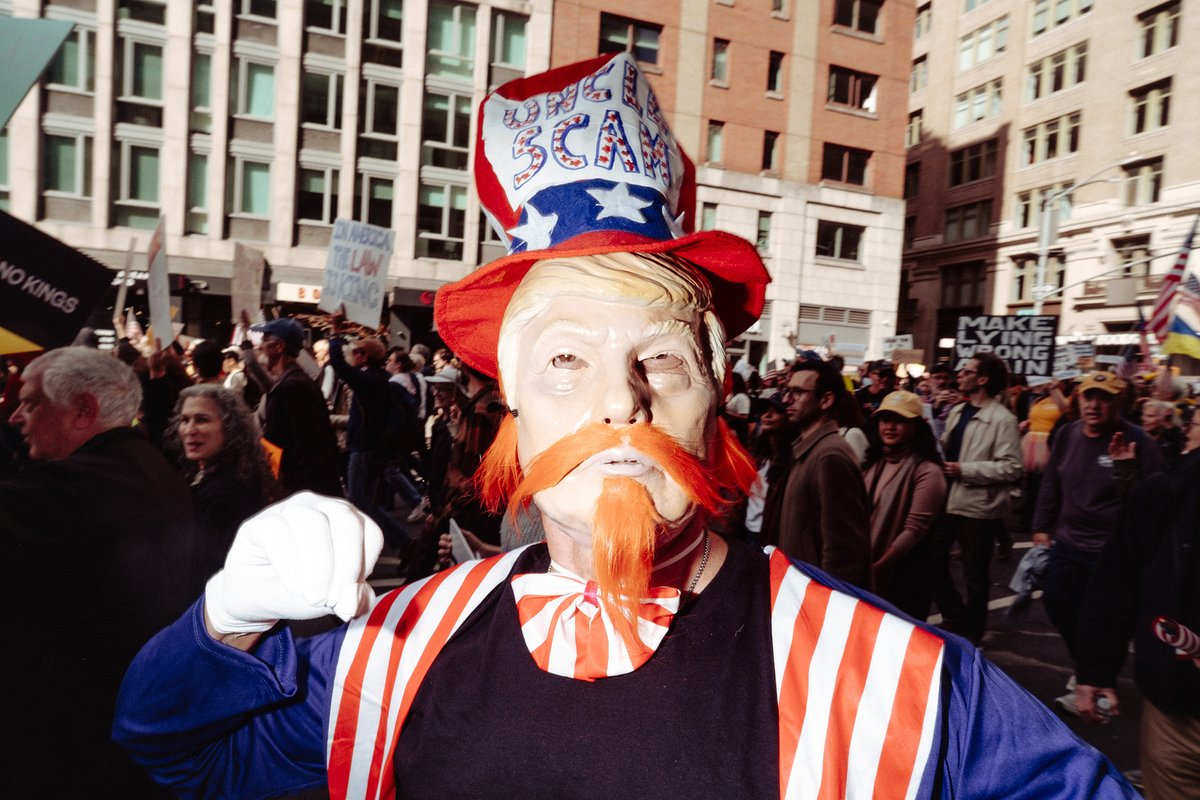
Across school districts in the U.S. books that deal with race and “divisive” topics are disappearing from shelves. Book banning in the U.S. has surged in the past few years; conservative backlash regarding discussions around race, LGBTQ+ issues, and diversity being taught in public schools has fuelled it. Restricting access to books is a form of censorship which has implications that extend beyond a title’s removal. The act of banning a book will often be referred to as an appropriate “removal” or “withdrawal” of material. This sounds far less threatening than “censorship”, but they ultimately have the same effect.
The topic of censorship correlates with the notion of freedom of speech, as discussed in utilitarian theory which supports liberal democracy. This freedom is politically charged, and restrictions upon it amounts to political censorship. Democratic societies are built upon a foundation of civil liberties; whilst censorship in the arts and culture may sometimes be justified in rare cases, racial book bans are different. Do these efforts genuinely protect students, or do they mask a discomfort with confronting historical truths? John Stuart Mill’s text On Liberty (1859), provides some wisdom.
Project 2025 v The 1619 Project
Ever since President Trump’s first mandate against school curricula, many initiatives have been focused on book bans in the U.S. What began as a local effort to instigate community-level backlash against public schools in 2020 has since escalated into a widespread political focus.
Modern book banning efforts can be traced back to The 1619 Project, a journalistic anthropology by Bikole Hannah-Jones in the New York Times. The project aimed to recentre the contributions of Black Americans in the shaping of U.S. history. It was met with extreme backlash; Trump argued that the piece taught students to “hate their own country” and conservative advocacy groups labelled the project “revisionist propaganda”. Since then, right-wing politicians have used what they call “anti-American” literature as a campaign talking point, using it to stoke fears that books are “indoctrinating” students with progressive values, turning book banning into a conservative rallying cry. Critics accused the project of “racial division”, while some activists organised public protests and petition drives to punish districts that taught similar content, illustrating how the controversy grew into a national flashpoint that lawmakers felt compelled to address; Republican lawmakers vowed to ban the work in schools. Several state legislatures introduced bills condemning The 1619 Project as historically inaccurate: Florida’s “Stop W.O.K.E. Act” (2022) prohibits the teaching of racism, directly targeting such materials. School boards across the country faced coordinated pressure campaigns demanding the removal of any curriculum that referenced it.
This is not the first instance of a book ban on the basis of race in America — take Toni Morrison’s The Bluest Eye (1970), which has repeatedly been banned for its portrayal of racial trauma and sexual violence, uncomfortable realties that are critical to understanding the Black American experience — but this new wave may be the worst. As Jonathan Friedman, the managing director for PEN America’s U.S. free expression programmes, says: “Now, in 2025, we’re seeing these efforts not only continue at the state level but also being discussed for implementation at the federal level.”
Mill’s warning revisited
Book banning is not just a matter of content regulation, it strikes at the core of democratic freedom. It restricts both the rights of authours and the rights of readers to access and evaluate diverse perspectives. By shielding young individuals from challenging or unfamiliar ideas, we hinder their intellectual autonomy and growth. Mill argues that this kind of suppression weakens society’s ability to reason collectively, engage in meaningful deliberation, and air perspectives that may ultimately be true or necessary for progress.
Mill strongly defends freedom of speech, insisting that even deeply unpopular or offensive ideas deserve protection, because — despite being unpopular — certain opinions could reign true. His second point, that even false ideas serve a purpose, applies in deepening our collective understanding around race. Without this engagement, truth risks becoming stale dogma, accepted uncritically. Mill’s framework reminds us that truth is dynamic and must be tested in open dialogue. Racial book bans do not only silence marginalised voices; they impoverish society’s capacity to think critically, understand historical injustices, and pursue genuine equality.
Book banning in educational spaces tends to misunderstand the purpose of education itself. Education should not solely be about maintaining comfort, but about provoking thought and preparing students to face a complex, pluralistic world. Physical safety is essential, but there is no guaranteed right to intellectual comfort. By shielding students from controversial materials, we rob them of the opportunity to sharpen their reasoning skills. As Mill suggests, “the best way to combat a harmful idea is with a better one.”
Debunking common justifications
Moreover, students should not be made to feel guilt or discomfort about race. This current wave of censorship reveals a deeper societal struggle in America: our inclination to suppress uncomfortable truths about race, rather than confronting and engaging with them. In attempting to shield students from America's history of racial injustices, schools risk distorting reality and stunting civic education, repressing the complexity and nuances of race in 2026. Liberal democracy requires citizens to be informed, reflective, and capable of grappling with uncomfortable truths. “Appropriateness” must be determined transparently and professionally. Decisions about curriculum and reading materials should be guided by educators and scholars, not politicians.
While some critics defend book bans by citing concerns about parental control, student discomfort, or perceived divisiveness, these objections fail to justify the broader harm that censorship inflicts on democratic education. Parental rights do not override democratic educational values. Public schools are accountable to the broader community and democratic norms, not just individual ideologies. Whilst parental input matters, it must be aligned with the public mission of education in a diverse society. Books that confront racism push students to think critically about injustice, history, and their own role in shaping the future by exposing them to challenging but essential opposing views. Recent survey research conducted by the National Education Association and ASO Communications between September and October 2021 found that “everyone across demographics agree” that removing history from curricula and banning books are tools that politicians use to control a political narrative. Such widespread agreement reinforces the significance of the issue, demonstrating that book bans are broadly understood to harm educational quality and distort democratic learning environments.
A spiral downwards
The current insurgence to ban books, often led by political groups, fails to engage with the content of these works in any meaningful way. Rather than challenging the ideas through reasoned critique, these bans attempt to erase them completely from public discourse. This is not just censorship; it is a failure to uphold the democratic principles that Mill so fervently defended.
We should be more concerned. What has started as a series of book banning regulations risks derailing into an assault on media institutions — an attack on free speech, wholesale. Trump’s suspension of Jimmy Kimmel on ABC in September, due to his disagreement of ideals of the GOP, is the first step. If we want to cultivate independent thinkers, we must allow space for discomfort, debate, and dissent. Suppressing books and restricting media outlets is not the solution. Empowering students to confront difficult ideas is.
Below is a list of banned books in the U.S.; they illustrate the nature of recent censorship efforts, demonstrating what is deemed as “inappropriate”:
The Color Purple, Beloved, Hood Feminism: Notes From the Women That a Movement Forgot, I Know Why the Caged Bird Sings, The Hate U Give, New Kid, Stamped: Racism, Antiracism, and You, The Bluest Eye