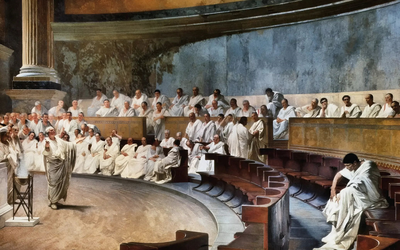

In my opinion, the culture of humour dates back to Saturnalia, an ancient Roman festival in honour of the god Saturn, where people were allowed to briefly forget about their lives and have fun, regardless of social hierarchy. The development of a culture of humour is associated with the emergence of jesters and court fools, alongside the rise of carnivals and other festive events. Of course, the culture of laughter is also part of literature: A Midsummer Night's Dream, Don Quixote, Tartarin of Tarascon, to name a few. For writers, humour has always been, and remains, a tool to address contemporary issues and the needs of society without fear of censorship. Take, for example, in I. Karpenko-Karyi’s tragicomedy Martyn Borulia (1953). In this text, the authour uses satire and irony to highlight the importance of preserving one’s identity and illustrate how his compatriots were forced to renounce their Ukrainian heritage and language due to the colonial policies of the Russian Empire.
Against all odds
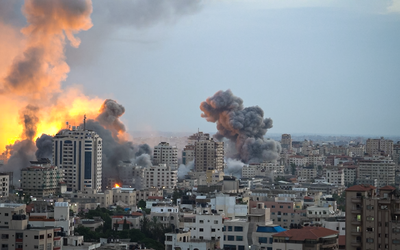
However, humour is not just about fun; it's also about improving the reality around us. Events in modern Ukraine would not seem to coincide or contribute to humorous culture. How is it possible to find the strength to laugh when dozens of Ukrainian cities and towns are being bombed every day? Electricity, water, and heating are often unavailable for several days due to Russian military attacks on energy facilities. Homes are being destroyed, people are dying, and children are losing their parents.
Nevertheless, humour does exist in Ukraine despite its status as a country under siege — it is just changing. Ukraine has two or three television shows — Дизель шоу and Єдиний квартал — with large budgets and teams of people who create content for them. The popularity of these shows has been declining amongst Ukrainian youth during the war. According to a survey by the Opora Civic Network, television use by 18-29-year-olds decreased from 51% in 2022 to 40.5% in 2023. According to my observations, Ukrainian youth are uninterested in these shows due to their failure to address current political and cultural events; around 60% of television jokes on these shows focus on general themes or past events.
The Ukrainian comedy community on YouTube is developing rapidly, as the platform offers more creative diversity and allows comedians to respond more quickly to current events. Having observed comedy content in Ukraine, I can say that stand-up comedy is currently experiencing rapid growth. In my opinion, this is explained by the fact that stand-up is largely based on personal narratives drawn from the performer’s own life. It resembles a frank conversation with a friend — or even a therapy session — interwoven with humour. Comedians often share their experiences of living through the war, which resonates deeply with audiences, like Nastya Zukhvala’s solo stand-up show, “Refined Rage”, told from the perspective of an angry Ukrainian woman.
Why now?
So let's look at five reasons why the culture of humour in Ukraine is actively developing despite the war being fought on its territory:
1.The ability to switch between realities and reduce fear. Every person needs both physical and mental rest. Unfortunately, it is extremely difficult to relieve stress during wartime. Despite air raid warning systems and access to shelters, Ukrainians live with constant background anxiety. Everyday anxiety is compounded by fear for their lives and those of their loved ones. To somehow compensate for the lack of a basic human need (safety), Ukrainians resort to humour. A funny event creates a dual world that exists separately from serious (and, in the case of Ukrainians, dangerous) everyday life. In other words, the growing need for emotional relief has led to an increase in comedic content across various genres and styles.
The emotions caused by laughter help balance cortisol levels and promote the release of dopamine, which is a natural stress reliever. Often during bombings, when people gather in shelters, in places like metro stations, you can hear people singing or laughing. In addition, Ukrainian humour is often based on memories of the past. These can be situations that were funny at the time (memes) or experiences that can be laughed at now. This evokes a sense of nostalgia. Pleasant memories help to reduce fear of the present and the future.
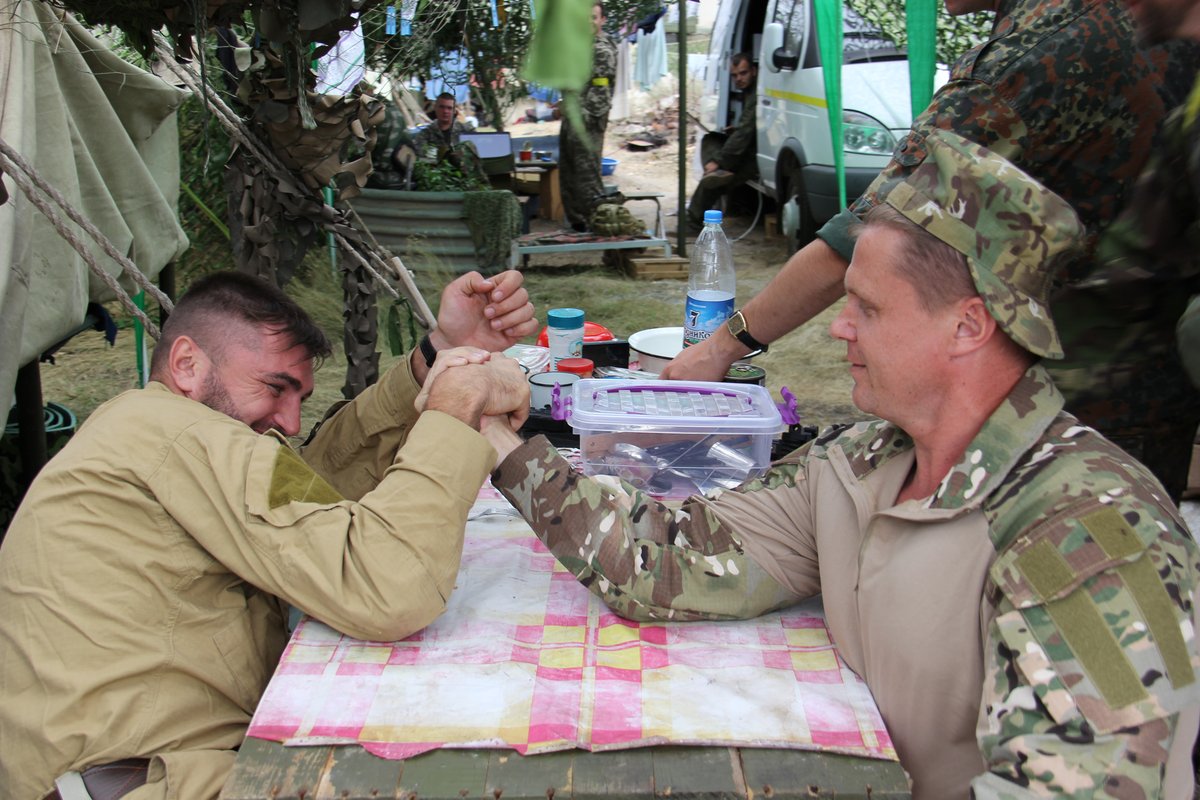
2. Direct threat to life from outside. Many people believe that if you laugh at something scary, it no longer seems so terrible. Because of this, ‘dark humour’ is often heard among Ukrainian soldiers. By laughing at constant danger and possible or real injuries, soldiers make these topics less taboo. In addition, in an environment of constant stress, even ‘dark humour’ helps to reduce fear and anxiety. Take a joke that was met with resounding laughter from Anton Tymoshenko’s show at Palace Ukraine: "I never worried about a nuclear attack because I know it would mean death for rich residents of Kyiv. I live on the outskirts — but the nukes will hit central parts. Before fallout reaches me, it will have to make two changes on the metro.” Although blunt, laughing at the absurdity of the war is a way to cope.
3. The ability of laughter to build social relationships. Millions of Ukrainians are moving to new cities to flee Russian aggression where they have no friends, are forced to change their lifestyle, and experience loss. Therefore, when watching comedy shows on their social media platforms, they seek to join a community of like-minded people, share their thoughts in the comments, and find support. In addition, parasocial interaction can develop, bringing the viewer and the comedian closer together. When a person comes to a comedian's live performance, they find themselves in the company of strangers, but after a few minutes, laughter brings them together. They laugh at the same things, and the hierarchy and inequality of everyday life are briefly erased, because they are outside the bounds of everyday reality.
4. Volunteer work. A strong civic stance, activism, honesty, and transparency are what motivates people to help comedians, support their fundraising efforts for the Ukrainian army, and share their videos on social media. Humour has become a means of providing not only psychological but material support too. Ukrainians are willing to pay for humour as a way to unwind, but they are even more willing to pay if it benefits the Ukrainian army. It is common to see concert posters featuring a note stating that 100 percent of ticket sales will go to the Armed Forces of Ukraine. Ukrainian stand-up comedian Vasyl Baidak raised, according to his November 2025 Instagram post, over 6.5 million hryvnia (more than €125,000) for the Ukrainian army at his concert in Kyiv from ticket sales and a charity auction.
However, this is also a way to support Ukrainians. Ukrainian comedians travel to other European countries, the United States, and Canada to perform. There, they raise staggering amounts of money, which then go to support internally displaced persons, help the Ukrainian army and more. For example, stand-up comedian Anton Tymoshenko went on a major European tour for charity. By combining the money collected from ticket sales and the money received after auctioning off nearly 1,000 lots, he managed to raise more than 20 million hryvnia (€393,000) for our army. Comedians often find amazing, sometimes bizarre items for the auction: a knife and patches from the ‘Sternenko Community’ were sold for 235,000 hryvnias (€4,600). Bizarre items such as a fragment of the Campo del Cielo meteorite and dried fish have also gone to auction.
Most shockingly, the ashes of American stand-up comedian Doug Stanhope's mother also went to auction. This stunt used “dark” humour for a charitable cause, a perfect example of how humour has evolved during wartime for Ukrainians. Auctioning his mother’s ashes transformed his mother’s death into something meaningful by raising a tangible amount for a good cause and lightening the spirits of others who had experienced grief during the war; 53,006 Ukrainians have died since the war’s beginning. Le Monde reports it is now the deadliest war in Europe since 1945.
And why it matters
For Ukrainians, laughter is much more than just a reaction of our brain. Laughter is an opportunity to catch our breath, and an attempt to forget our fears. It is another means of helping us get through difficult, frightening times a little more easily, because we can unite. Humour helps us convert our inner fears and external troubles into financial aid for our citizens who need it most right now. After all, laughter prolongs life, and for Ukrainians, these words have taken on special meaning during the war.