

As we enter the second year of a Labour government, Sir Keir Starmer’s premiership continues to descend into a position of fragility. Despite a historic electoral mandate, the government continues to face ferocious political opposition: Reform UK dominates political discourse, the Greens have surged under Zack Polanski, and the Conservatives gradually rise from the rubble of the last election. As the next general election approaches, the Labour Party must search for policy areas where they can dictate narratives and arrest declining popularity.
Changing tides
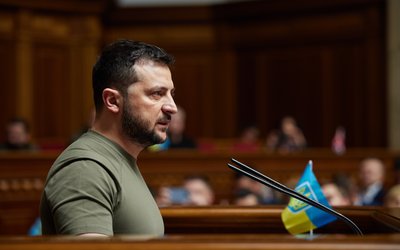
Labour has struggled to grapple with the key domestic issues of immigration, public services, and the cost of living whilst opposition parties have flourished. Contemporary politics has shown that such an environment — low productivity and decreasing real wages — provides fertile ground for populist parties to thrive and incumbents to falter. Nevertheless, there is one key area that may prove pivotal in sustaining Labour’s leadership: foreign policy. Starmer’s handling of Trump, his support for Zelensky, trade deals with India, and renewed ties with Europe have given Labour a rare lead on international affairs. Commentators and analysts consistently note Labour’s more stable and responsible reputation regarding global issues when compared with its competitors — one that may prove valuable in times of instability.
History tells us the premise of external threats can reshape political fortunes. In 2022, then-Prime Minister Boris Johnson was in the midst of the Partygate scandal (in which he and Conservative colleagues had been caught breaching their own lockdown rules on multiple occasions) resulting in a negative approval rating of 30 per cent. When Russia invaded Ukraine just a few months later, Boris Johnson’s approval rating jumped 25 points; voters rallied around his support for Kyiv. From Churchill to Thatcher, British politicians have reaped the benefits of a short-term “rally round the flag” effect. Indeed, comparative experience suggests that ideological moderation on foreign policy often sustains leaders in volatile environments. Giorgia Meloni’s electoral resilience, for instance, rests significantly on her careful management of foreign policy regarding NATO, the U.S. and Western security priorities.
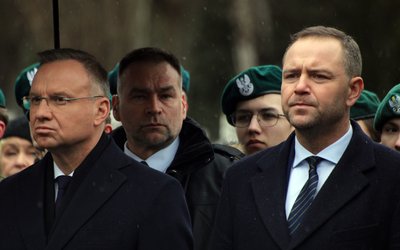
Europe is entering a new security environment to what it is used to; the new post-Ukraine era is defined by hybrid warfare, psychological pressure, and deniable aggression. The Polish prime minister has warned that sabotage, cyber-attacks, and electoral interference are no longer exceptional but routine features of contemporary Russian statecraft; this warning has been supported by British intelligence assessments, Russian naval activity in UK waters, and credible allegations of interference in democratic processes. The ever-evolving situation on Europe’s eastern front presents a strategic opportunity for Labour, in which Starmer’s reputation for caution and procedural competence becomes an asset. Voters prioritise security and stability; as national attention shifts toward external threats, Labour can reposition itself as the only party that still appears capable of governing in an uncertain age.
A unique ability
Other UK parties do not fare as well on foreign policy. Particularly towards Russia, they exhibit significant vulnerabilities. Nigel Farage’s longstanding relationship with Nathan Gill, former leader of Reform in Wales, has attracted much scrutiny. In September 2025, Gill pleaded guilty to eight counts of bribery for receiving pro-Russian payments in exchange for positive public statements when MEP. Farage’s appearances on RT, the Kremlin-backed media outlet, and past statements praising Putin further damaged his credibility. The Greens face structural weaknesses on defence: historic opposition to nuclear weapons, ambiguity on NATO, and pledges to cancel the Trident programme leave the party ill-equipped to answer serious national security questions. Similar vulnerabilities exist for the SNP and Plaid Cymru, whose principled stances on nuclear deterrence and NATO risk alienating moderate voters concerned with defence. Due to a lack of authoritative media presence, the Conservatives and Liberal Democrats currently fail to capitalise on the issue. Against this backdrop, Labour’s competence stands out. In an era of heightened geopolitical anxiety, the party’s ability to project steady, credible leadership positions it as the default choice for voters prioritising security.
The government could exploit these weaknesses. By selectively declassifying Russian naval and air data, explicitly detailing Russian military capability, providing more consistent communication regarding British military preparedness, and opening inquiries into Moscow’s interference in British politics and society, Labour may be able to further shift the conversation and political narrative into an area of their own expertise.
An "ethical” political tool
However, a strategy that places geopolitical threats at its forefront presents inherent ethical questions. It would be immoral to endorse fear as a political tool; one would rather see Labour improve on domestic policy and restore the optimism it carried going into the 2024 election. Indeed, the use of warmongering and exaggerated claims would likely produce backlashes akin to the “Project Fear” accusation against the 2016 Remain Campaign, inadvertently eroding public trust. Internal frictions between the government, the Ministry of Defence, and the Secret Intelligence Services may also complicate this strategy due to reservations regarding the declassification of material.
One could argue that there is an important distinction between manipulation and transparency. The right frequently employs xenophobic, anti-immigration, and culture-war rhetoric that often relies on misleading or false narratives. By contrast, this approach raises awareness of real, verifiable security risks that highlight the weaknesses of opponents. On that basis, this tactic is more politically and morally defensible. To that end, if the government could maintain proportionality, evidentiary grounding, and a sober tone they may be able to navigate the election successfully. Such an approach might reinforce competence, responsibility, and support for the government without falling into the trap of sensationalism. If the government’s poor trajectory persists, they may have to descend into such ethically contentious territory.