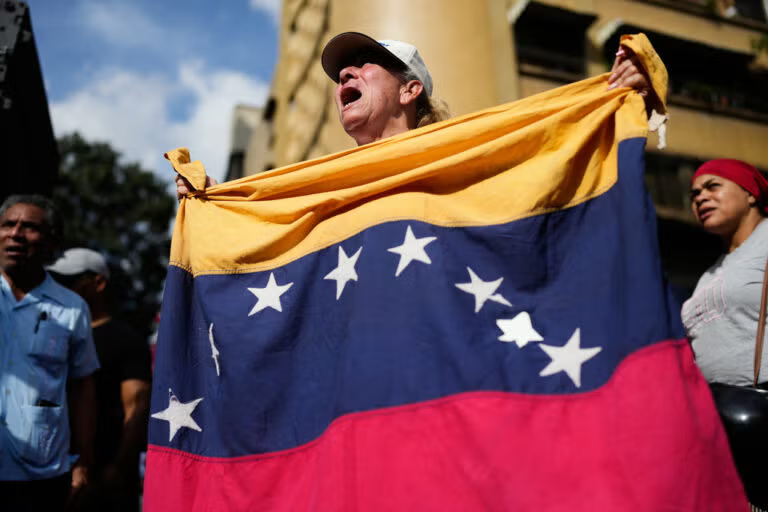
The United States launched airstrikes across Venezuela on January 3, capturing President Nicolás Maduro and his wife, drawing polarized responses over alleged liberation versus strategic oil interests and raising fears of regional instability.
A New Year’s Eve fire tore through the Le Constellation bar in Crans-Montana, Switzerland, killing 47, mainly youths, and injuring dozens as authorities investigate safety breaches.
U.S. administration reignited debate over acquiring Greenland, including possible use of force, drawing condemnation from Denmark, NATO and Nordic states and raising concerns about the alliance stability.
Britain and France pledged that joint forces would deploy to Ukraine if a peace deal is reached, backed by U.S. logistical and intelligence support to deter new Russian offensives.
A new wave of protests hit Iran, driven by economic hardship, currency collapse and desire for more freedom. The brutal regime repression and police violence already brought the death toll to a staggering 12,000.
The International Court of Justice in The Hague began hearings this month on allegations that Myanmar committed genocide against the Rohingya minority.
A World Economic Forum survey released ahead of Davos named economic and geo-economic conflicts the foremost global risk over the next two years, eclipsing armed conflict and extreme weather.
Thousands of demonstrators across the United States took to the streets after 37-year-old Renee Nicole Good was shot and killed by a federal ICE agent during an immigration enforcement operation in Minneapolis, sparking national outrage over use of force and demands for accountability of ICE agents.
Donald Trump urged protesters in Iran to “TAKE OVER” state institutions, promising that “HELP IS ON ITS WAY” as nationwide protests continued. Amnesty International warned of “swift trials and arbitrary executions” of the thousands of Iranians arrested during the unrest. Starlink reportedly made its satellite-internet service free across Iran. Government-imposed internet blackouts have hidden the extent of protests and the authorities’ vengeance.
China’s trade surplus reached a record high of $1.2trn in 2025 according to data from its customs agency. Exports grew by 5.5% from 2024 despite Mr Trump’s aggressive tariff policy choking off demand from America. Instead, China more than made up for the loss in other markets. This has been controversial, however; EU officials have complained about a flood of cheap imports.
Takaichi Sanae, Japan’s prime minister, will call a snap general election next week. Ms Takaichi hopes to capitalise on her high approval rating to secure a stronger mandate for her Liberal Democratic Party, which rules as a minority government. She champions a sweeping economic stimulus programme. The election is expected to be held in February.
BP said it will write down some of its green-energy investments by between $4bn and $5bn in its earnings next month. The British multinational has been moving away from renewables since 2023, abandoning climate targets and focusing instead on its core oil-and-gas business. The firm claims the impairment will not affect its profit figures.
Greenland’s prime minister said the territory would vote to remain part of Denmark rather than join America if citizens had to choose. The island’s foreign minister will meet J.D. Vance, America’s vice-president, and Marco Rubio, its secretary of state, in Washington, DC on Wednesday. Earlier American senators proposed a bill that would prohibit their country from occupying or annexing NATO territories, including Greenland.
America’s Supreme Court signalled that it would uphold state laws blocking transgender athletes who are biologically male from competing on female sports teams. Justices heard arguments concerning two cases from transgender women who argue that the bans are unlawful because they violate the 14th Amendment and anti-discrimination law. The court’s ruling, expected in June, may set a precedent for decisions on military service and access to single-sex toilets.