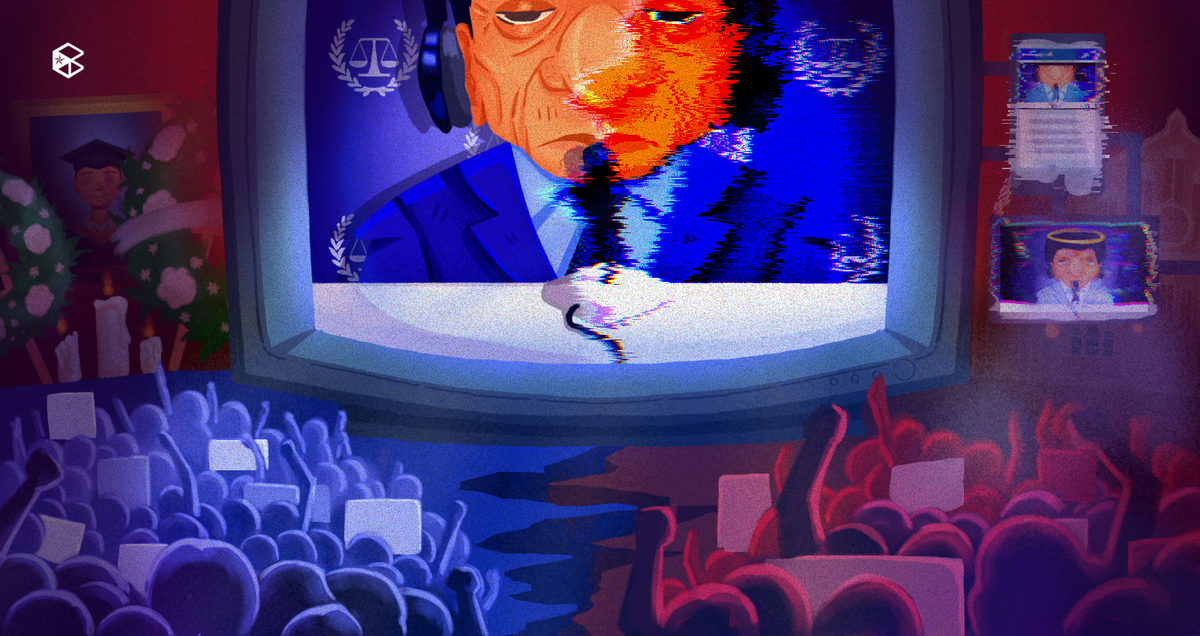
On March 11, former Philippine President Rodrigo Roa Duterte was arrested by the Philippine National Police (PNP) and taken to the Netherlands to face trial in front of the International Criminal Court (ICC). Accused of crimes against humanity resulting from his war on drugs, his reign has led to thousands of deaths across the country. Duterte has attempted to discredit the ICC’s accusations, previously calling the court “bullshit”. The indictment of Duterte will act as a real test of the efficacy of international law and Filipino democracy, demanding Filipino citizens to re-examine political consciousness in light of who they choose to elect next.
Relief vs. defiance
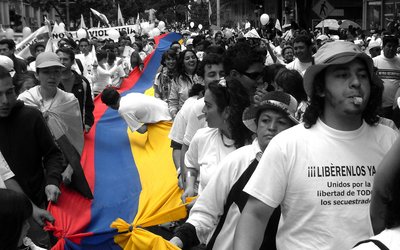
The arrest has exposed the fractured soul of the Philippines. Llore Pasco, mother of two drug war victims, expressed “nervous excitement for potential accountability”, according to an Al Jazeera report. Human rights advocacy group Rise Up described the arrest as “justice delayed but not denied”, hopeful that their years of documenting atrocities have finally yielded results.
Meanwhile, Duterte loyalists portray his arrest as a betrayal. The Iglesia ni Cristo (INC) church deemed the arrest as "short of due process", echoing claims that the ICC had violated national sovereignty. This clear contrast — between victims' cautious hope and supporters' perception of martyrdom — illustrates the deep division in Filipino society.
Fake news in digital battlegrounds
Online spaces have become arenas for historical revisionism and resistance. Pro-Duterte networks have flooded platforms with claims that the ICC arrest was a "kidnapping", amplified by paid Facebook ads and viral posts featuring fictional lawyers defending him. These efforts mirror Duterte's 2016 campaign strategy, creating parallel narratives that challenge factual reporting.
Despite these powerful disinformation campaigns, public sentiment still appears to be shifting against him. A recent WR Numero survey revealed that 62% of Filipino respondents believe it is important for Duterte to face his case before the ICC, while only 20% disagreed, a significant change from the 82-88% approval ratings his drug war once commanded. Yet public opinion is still slow-moving; as victims' families seek justice, they continue to face harassment. Sheerah Escudero, whose brother was killed in 2017, recounted, “I got text messages branding me as a ‘liar’ and ‘drug user’ for pursuing justice”.
This cyberbullying reveals the extent to which Duterte's influence can persist not only in courtrooms but in the digital space of echo chambers.
A test for democracy
The arrest became a critical test for Philippine democracy, further intensifying the rift between current Philippine President Ferdinand Marcos Jr. and the Duterte family. Philippine Vice President Sara Duterte, daughter of the accused President, faced impeachment proceedings over alleged corruption. Marcos’ cooperation with the ICC has positioned him as a champion of the rule of law, though critics note his administration has not been immune to human rights criticisms.
The May 2025 midterm elections, once expected to serve as a referendum on these competing legacies, brought little clarity. Marcos loyalists and Duterte’s base remained firmly entrenched, as expected. The Manila Times predicted that the “real battleground” would be amongst independent voters. These independent voters — who do not subscribe to political fanaticism — would determine whether accountability topples personality politics. The result was a fractured Senate, giving no side a clear winner. In the upcoming election, these independent voters will be called upon again to make a clear choice.
Duterte’s arrest, now cemented in the nation’s history, offered a rare chance for national introspection. The true reckoning lies not in The Hague but in whether Filipinos can transcend polarisation to demand institutions stronger than personalities.
A call to young Filipinos
For those who have come to age during Duterte’s political era, his arrest represents a moment for reflection. It challenges us to reconsider a political culture that has often prioritised strength over moral leadership, immediate results over sustainable governance, and personality over principle.
We hold the key to transforming our political landscape. Digital literacy to combat disinformation and the moral clarity to demand better governance are the powers of our generation. There is an opportunity to reject the cycle of impunity that has characterised Philippine politics for generations. Will we continue to support those who orchestrate violence against the vulnerable? Or will we demand leadership that respects the sanctity of all lives — even those struggling with addiction, who deserve rehabilitation rather than execution?
As we observe this historic trial come to fruition in September 2025, we must ask ourselves difficult questions about the kind of leaders we elect and the values they truly uphold. We once were the nation that overwhelmingly supported violent drug policies. Let us be the nation that embraces accountability and human rights.
The world will watch the next election as Filipinos decide to vote for justice or yet another tyrannical leader with an inhumane agenda. As a nation which has repeatedly rallied for democracy yet fallen prey to authoritarianism, this moment offers a chance to redefine Filipino political identity. We should not be loyal subjects to powerful families, but citizens who demand leadership worthy of their constitutional democracy.
As human rights advocate and Filipino Attorney, Chel Diokno, reminds us, “Let’s make sure Duterte doesn’t just run out of hiding places — let’s run him straight into the arms of justice. The road to accountability is long, but today, it just got a little shorter.” Justice is not only about punishing the guilty, but creating a society where past crimes become unthinkable. That transformation begins not with courts, but with the choices we make at the ballot box and beyond.
For those still defending Duterte’s legacy: your support perpetuates a cycle of violence that betrays democratic ideals. Choose accountability towards Duterte’s actions, or be complicit in a system that sacrifices human dignity for the illusion of order.
Wake up, Philippines!