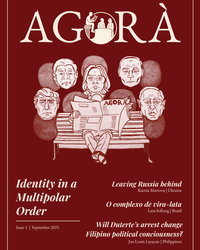
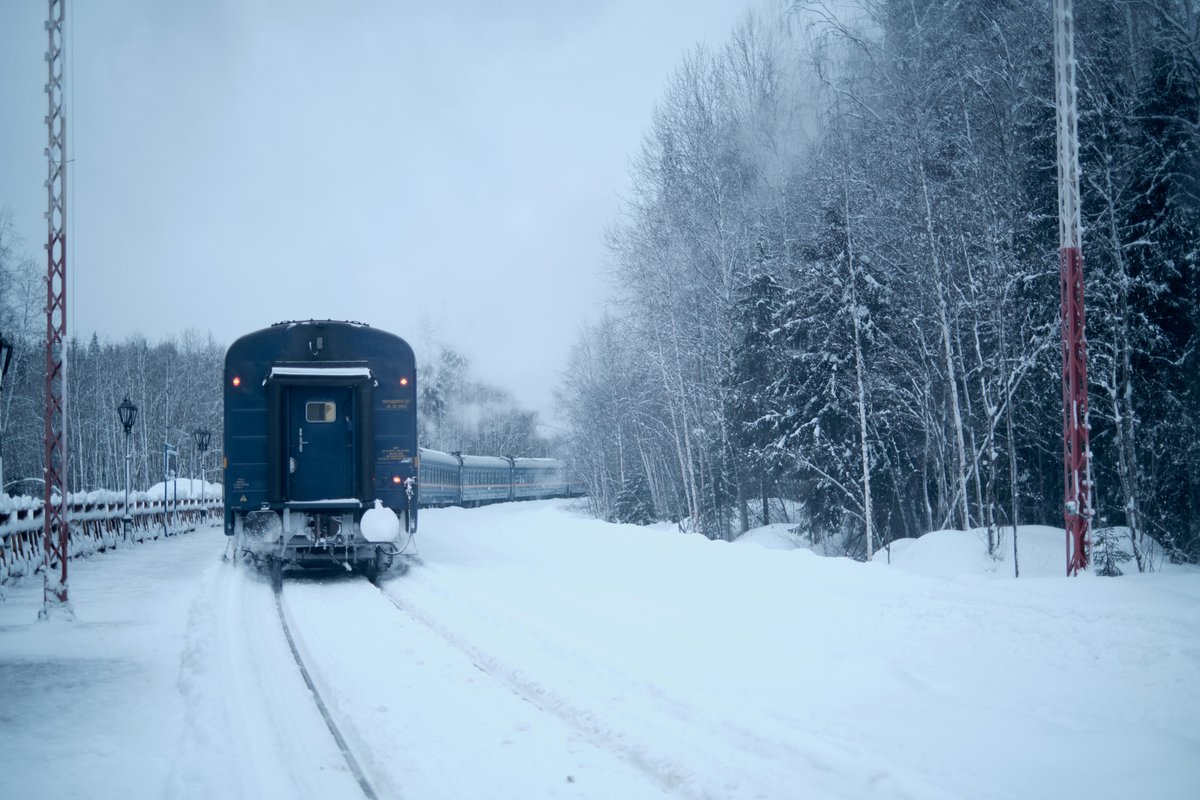
What is the first thing that comes to mind when you hear the word “Russia”? Is it snowy winters, bears, vodka or taiga? Or maybe even gas, or Putin? Chances are, your imagination drifts to Moscow, Saint Petersburg, or to the vastness of Siberia, not somewhere “over there”, to the East. Russia is rarely the first country people think of as Asia, despite 77% of its territory on the continent. Russia’s eastern part would already qualify as the largest country on Earth, and is home to a quarter of Russia’s population.
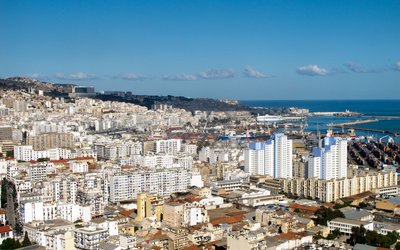
After a one-week journey on the Trans-Siberian train — or an eight-hour flight — from Moscow, you arrive in Vladivostok, on the shores of the Sea of Japan. It is closer to Tokyo and Seoul than it is to Moscow. Ask someone here about local cuisine, and you will not hear pelmeni or borsch. You are more likely to be brought to a place serving noodles or dumplings to chī fàn, or “eat a meal”, in Mandarin. You will only find one or two restaurants with Russian food, but dozens more serving Chinese, Japanese, Korean, Vietnamese, or even Thai. You will hear Chinese or Korean everywhere. Street signs are bilingual — in Russian and Chinese, and occasionally in English. When international sanctions kicked in after the Ukraine offensive in 2022, Vladivostok was perhaps the fastest Russian city to substitute European products with Asian alternatives.
Identity, a driving force
Cars have steering wheels on the right side of the car, like in Japan, but Vladivostokans drive on the right-hand side of the road, like most of Europe. It is closer, and therefore cheaper, for people to import Japanese over European cars, but Moscow has tried to restrict the usage of Japanese right-hand cars on numerous occasions: in 1993, 2005, 2009, and 2011. The restrictive measures have included increasing taxes on imported cars, complication of the registration process, or even outright bans on importing and exploitation. Justification for these measures are valid: to support the national car industry, to unify technical vehicle requirements, and to prevent accidents in an environment designed for left-hand traffic. Each time, these restrictions were removed from legislation at the last minute due to mass protests led by drivers, particularly from Vladivostok. The local car scene is practically worshipped — standard Japanese imports are more admired than German luxury vehicles.
This environment does not just change the taste or the consumption habits of its citizens, but also shapes their identity. It is hard to find anyone who could claim to be “100% Russian”. The city was founded in 1860 on land originally inhabited by the indigenous Udege, Nanai, and Taz peoples. Since then, it has been home to waves of migrants from Poland, Ukraine, Korea, and beyond. This daily coexistence with diversity changes how you see the world; it is layered and identities are in-between, not fully Russian or Asian.
The rest of Russia can feel distant, even though we share the same passport. And diversity and geography are not the only reasons. The Far East is often neglected, or worse, forgotten, by the rest of Russia. Take education: the Unified State Exam, our national high school graduation exam, only became mandatory here in 2009, three years after it had been introduced in 79 other regions.
The hypocrisy of unity
Usually, local interest in politics mirrors the attention politics gives to the region: limited and occasional. Since the COVID-19 pandemic, however, there has been a visible shift in attitude towards the Far East. With Putin’s ongoing “special military operation” in Ukraine cutting off many Western connections, the Far East has been “rediscovered” by Moscow. Domestic tourism is booming, and Vladivostok is seeing an influx of curious visitors from the European side of Russia.
A big part of the Far East is made up of National Republics, including Sakha, Buryatia, Tuva, Altai, and Khakassia. These republics are distinctive from other regions because they are
technically autonomous, with their own constitutions, official languages, and presidents. This autonomy is mostly nominal: the main language in schools is Russian, national languages are optional, history curricula is exclusionary, and of course, all separatist ideas are shut down.
When it comes to Russia’s multicultural background, the personal and unique histories of these regions are left out of the national history taught in schools. The curriculum is the same everywhere, with official narratives still built around Russia’s European centre: its language, its culture, its story. This neglect is intentional; it is meant to keep the country “unified”. Despite the major Asian heritage that the country has, Moscow is still focused on anything Slavic, drawing their attention to Ukraine rather than its own people. The special military operation was justified by claiming that the ethnic Russian population in Ukraine were being severely oppressed by the Ukrainian government. Where is the effort to protect the heritage of the peoples of the National Republics, who are just as Russian as the Slavic population? Where is the effort to preserve their languages and history? The Russian Constitution states that Russia is a multicultural state, where people of all ethnicities are equal before the law. Why in practice is this not true?
It is disheartening to see how Europe-centred policy has become. Russia can no longer be defined solely by what is “Slavic” or “traditional”. Far from Moscow, generation after generation grows up knowing they are on the margins, yet they learn to adapt and cooperate — to bridge Asia and Europe in everyday life. Maybe it’s time the centre looked eastward. Not just for resources and tourism, but to take pride in the diversity of Russia.