I wake up every morning with a severe dread in my heart. I start my day reading an article about yet another killing spree by the government — murdering environmental defenders, human rights advocates, peace protesters, educators, lawyers, doctors, even ordinary citizens showing dissent. Headlines bombarded with lies and deception, of government propaganda to justify their actions, massacring defenders of democracy. For the past few years, Deutsche Welle (DW) reported that the Philippines has remained among the top three worst countries for environmental and human rights activists in the world. I scroll past with an aching heart.
In 2018, at least 4,948 suspected drug dealers, users, and even police officers were killed under President Rodrigo Duterte’s war on drugs — a campaign aimed at cleansing the country of crime and addiction. Though it began as a crackdown on criminal networks, the campaign quickly swept through poor neighbourhoods and disproportionately affected civilians. Among them was Kian Delos Santos, a 17-year-old student whose death became emblematic of the war’s impact on innocent lives. His killing raised national alarm and challenged the government’s narrative, exposing how easily the line between suspect and victim could blur.
Since the Anti-Terror Law took effect in 2020, violence has escalated and no longer confined to the shadows, but carried out in broad daylight, often targeting ordinary citizens. During its discussion in Congress, many human rights advocates across the Philippines criticised the legislation for blurring the lines between activism and terrorism. The law fueled a surge in red-tagging and attacks on activists both online and offline, endangering the safety of community organisers, student leaders, and advocates across the country.
Not even government officials have been spared from public accusations of leftist or communist ties, which were openly broadcasted on national television and amplified by social media. Backed by a ₱17 billion annual budget, the National Task Force to End Local Communist Armed Conflict has reportedly built sprawling troll farms, weaponising the internet to discredit and intimidate Filipinos who dare to demand better from their government.
I woke up at 5 am on February 7th, 2020, to the news that five youth leaders in Tacloban had been arrested under the accusation of being left-leaning. On the way to school, I read the name Alexander. I had the honour of meeting Kuya Alex a few weeks before at a forum to which he was attending with a Police Chief to talk about human rights abuses against farmers and alleged drug users. Now, it looks as if that event was an opening door for the oppressors to plan his arrest. The five youth leaders from Eastern Visayas, taken away from their homes at the dawn of their advocacy careers in defence of the poor and the masses, have been dubbed the Tacloban Five. Five years later, justice for them remains elusive.
On February 23, 2022, Lumad volunteer teacher and climate youth mentor Chad Booc, fellow teacher Gelejurain Ngujo II, and three others — dubbed the New Bataan 5 — were killed in an alleged encounter with government troops, as reported by the Armed Forces of the Philippines (AFP) in New Bataan, Davao de Oro. Five advocates versus tens to hundreds of armed forces. Five human rights defenders, mercilessly murdered by the same people who swore and pledged to protect human welfare and uphold the rights, freedom, and security of the Filipino people. To this day, advocates across the Philippines scream Chad’s name along with the names of the New Bataan massacre victims.
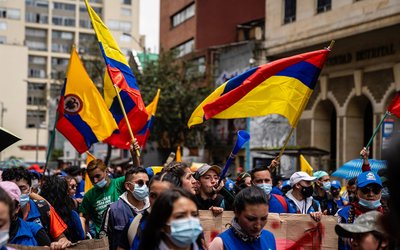
I wake up every morning with extreme fear, scared to look at my phone and see random social media friend requests and messages from troll accounts. Still, I scroll through my feed and see the resistance growing — people refusing to stay silent, refusing to back down. I keep going and observe the willing faces of those who continue to scream on the streets to disrupt normality.
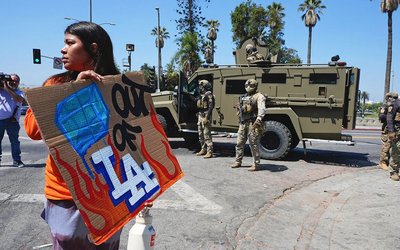
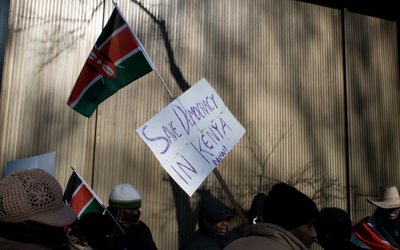
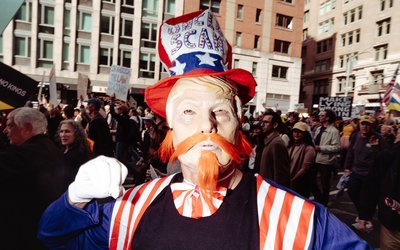
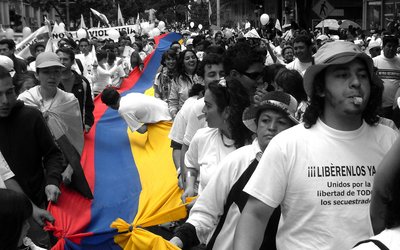
On the anniversary of the declaration of Martial Law on behalf of late dictator Marcos – father of the sitting President Bongbong – thousands across the country have protested in the streets and flooded the corners of cities. They decried the intensified attacks on human rights and the welfare of the masses, from one tyrant to another.
Everyone, especially young people, must continue to resist and scream and cry on the streets, not to beg for rights and change but to demand them, to take it back. It was young people who led the fall of the dictator Marcos in EDSA Uno of 1986, and it was young people on the frontlines who ousted the corrupt Erap in EDSA Dos.
I scroll down more and I get reminded that the voices of the united people are stronger than the oppressive forces trying to cut us down—even when guns are pointed at us. We must continue to stand up, fight back, and resist. I look at the streets filled with a united aim, joy, and disposition to bring oppressors to their knees. I am reminded of my voice and my love when I feel hopeless, and reminded that our voices are powerful. Love has always won revolutions. And I become hopeful when I see love and rage in the eyes of people on the streets, chanting. I look at the invisible ropes tying us all hand in hand, and ask myself, what’s next for us?