

After 2 years of humanitarian disaster in Gaza — labelled a genocide by a UN Commission of Inquiry — U.S. President Donald Trump proposed a new twenty-point “peace plan” between Hamas and Israel. Announced alongside Israeli Prime Minister Benjamin Netanyahu at the end of September, it aims to cement peace and rebuild a battered Gaza. For the two million people living there, the prospect of long-term peace provides the possibility of hope at last. Yet upon closer inspection, the plan raises questions on whether rebuilding Gaza will centre the needs of its population first.
On the 10th of October a ceasefire between Israel and Palestine came into effect. According to Gaza’s media office, Israel broke the ceasefire forty-seven times in its first week. Yet Trump is determined to ensure the ceasefire holds, hoping to make progress in his vision for peace. Israel’s reluctance — and the many questions each point of the proposal raises — fill many with scepticism rather than hope for the long-term sustainability of the plan.
“Apoliticality”
The source of much scepticism lies in what the plan leaves out: any meaningful Palestinian role in shaping Gaza’s future. The proposal diminishes Palestinian inclusion to only a subordinate committee, of which the members must be apolitical. The committee is to maintain a role limited to humanitarian aid, providing daily services across Gaza’s municipalities. And there will be no future role for the current leaders of Gaza, Hamas, in its governance. The plan stipulates their disarmament, with all members who commit to peaceful cooperation given amnesty. Aside from Hamas, there are other notable absences within the committee, with no Palestinian ambassadors or members of the Palestinian National Authority present. On the contrary, political actors for Israel, namely Netanyahu, will dictate the terms of the “peace” process.
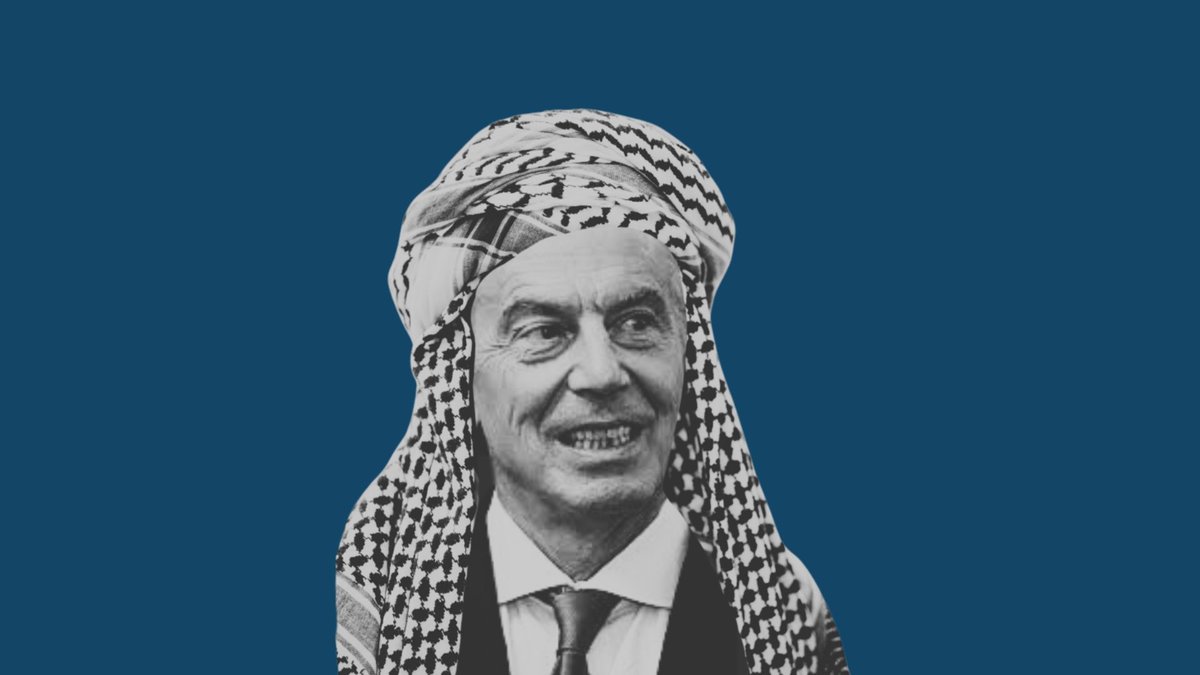
Another issue with the plan is that it positions Western figures at the centre of Palestinian governance, with local Palestinians and Israelis pushed to the periphery. This is most evident in the plan’s point nine: Gaza will be transitionally governed by a technocratic body headed by Donald Trump and others, including the former UK Prime Minister, Tony Blair. This board will oversee the “apolitical Palestinian committee,” with Blair acting as something akin to a modern-day colonial envoy, overseeing Gaza’s rebuilding. The double-standard is stark: Palestinians in governance are explicitly required to be apolitical, but Western politicians are accepted. Consequently, the plans have been deplored by the British organisation Jewish Voice for Labour as “infantilising” to Palestinians.
Blair appears to be a centrepiece of Trump’s plan. His appointment could be attributed to his previous work both in the region and in peace-talk negotiation. Following his resignation as Prime Minister in 2007, he was the peace envoy for the Middle East Quartet, a mission comprising the UN, the EU, the USA, and Russia, aimed at building peace between Israel and Palestine. And in 1998, when serving as British Prime Minister, he was successful in brokering the Good Friday Agreement between Ireland and Northern Ireland. With parallels of the occupational situation of Palestine to Ireland, many believe that he holds the skillset capable of repeating the process again in the Middle East.
Blair’s role as the director of the Tony Blair Institute (TBI) may provide a greater, more recent explanation for his appointment. The TBI, founded in 2016, operates in over 40 countries, devising policies and strategies for governments. The institute's work on programmes of modernisation with some of the Gulf States, has previously generated criticism in the UK, raising ethical questions about providing advice to autocratic governments.
Not political — personal
Blair’s personal relationships with those close to the Trump Administration likely proved pivotal to his appointment. Larry Ellison, the founder of the tech company Oracle, has invested and pledged a total of $250 million to the TBI. As reported widely by several news outlets, Ellison has a decade-long relationship with the Republican Party and a relationship with President Trump that dates to his first term. This relationship has had the institute accused of being a lobbying proxy for Oracle. The Ellison-Netanyahu relationship is not one that has gone unnoticed either; Netanyahu has stayed on Ellison’s island in Hawaii, and Ellison has been a long-term donor to the Friends of the Israeli Defence Forces. While Palestinians must be neutral in their governance, Blair’s connections provoke significant worry over where his interests lie. The foreign ministries of the Middle Eastern nations involved originally put out a statement in support of the proposal; they have since pushed back on the credibility of Blair holding such a position.
Beyond Ellison, Blair’s apoliticality is further called into question by his relationship with Jared Kushner, a current Trump Administration envoy. Kushner, who has described Blair as a “good friend”, played a crucial role in developing the twenty-point plan. The Times reported that Blair and Kushner held several secret meetings in Aspen, Colorado, as far back as 2016 regarding a role for Blair in Trump’s push for peace across the region. Kushner, a real estate developer at his core, has spoken about the potential economic value of Gaza’s redevelopment with Blair — echoing comments made by his father-in-law and Stephen Witkoff, America’s chief negotiator in the conflict.
Rent-seeking aid
The implication of these relationships is that the future direction of Gaza’s governance may be one of extraction. The economic outline in the “peace plan” and the figures involved lay bare the opportunity to exploit catastrophe for profit, a practice coined by Naomi Klein in her book The Shock Doctrine as “disaster capitalism”.The destruction of Gaza provides the necessary fertile ground for extractive redevelopment — something TBI may have considered, as demonstrated by its connections to Israeli businessmen and Boston Consulting Group, reported by The Financial Times in July. The TBI has dismissed this claim, but confirmed that the plans imagined significant flows of private capital into megaprojects across Gaza. The blueprint favours tech-driven megacities modelled on other Gulf states. Underpinning the project are plans of AI and manufacturing zones, including the “Elon Musk Manufacturing Park”. The proposals centre business interests over Gazans, leaving local people with little agency over their land.
We must ask ourselves, when will there be enough Western-inflicted chaos in the Middle East? When will Palestinians be allowed to decide their future? Our colonial and imperial history shows no end. Josh Paul, an adviser to the US security coordinator for Israel-Palestine, provides a damning assessment of the proposal:
“Thousands of Palestinians remain buried under the rubble of Gaza — and yet thousands more yearn to rebuild it. You cannot build a riviera on the bones of the dead. And you cannot build an occupation on the aspirations of the living.”
Blair once again has positioned himself in a seat of power, this time as a “broker of peace” in the Middle East. The irony of his “apolitical” appointment is hard to ignore — at the heart of the plan lies Western self-interest. For all its claims of neutrality, the plan erases Palestinian agency, favouring capitalist actors. True peace cannot emerge without Palestinians at the forefront of a plan, with their voices driving the redevelopment of Gaza. A rebuilt Gaza should be one for the many, not for the few.