

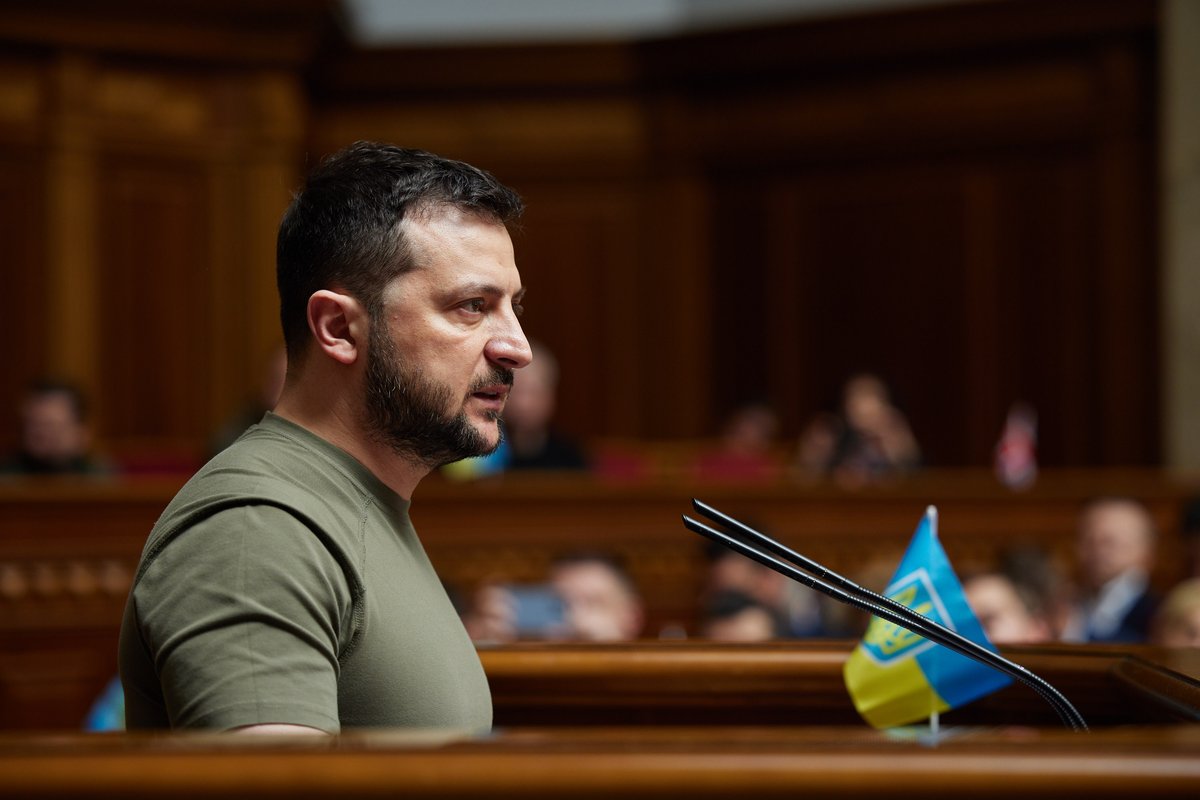
In today’s Ukraine, political debate risks becoming an echo chamber. The presidential party Servant of the People, known as the Ze! Party, currently holds a mono-majority in the Verkhovna Rada. Holding more than half of the seats, it has effectively turned the legislature into a body that performs mostly administrative functions. This has allowed the president to pass almost any law unilaterally, as long as it does not contradict the Constitution. Whilst some may see this as a sign of stability, others view it as a potential threat to democracy.
The rise of the mono-majority
In the spring of 2019, following President Zelensky’s election victory, Ukraine experienced one of the most significant political shifts in its modern history. In the extraordinary parliamentary elections held that July, Servant of the People won 254 out of 450 seats, becoming the largest political force amongst eleven parties in parliament. This marked the first time in the history of independent Ukraine that a single political party succeeded in independently forming a mono-majority in the Verkhovna Rada.
The Ukrainian parliament possesses multifaceted competence: it not only drafts and adopts legislation but also forms the government, exercises oversight of the executive branch, and represents the interests of the people. A mono-majority held by a single party can bring political stability and legislative efficiency, but it also carries certain risks. From 2019–2020, this mono-majority showed its ability to quickly adopt major reform-oriented laws, including anti-corruption measures, simplified tax regulations, and efforts to reduce bureaucracy. In the years that followed, a shift occurred: parliamentary oversight weakened as presidential influence grew. This shift led to internal fragmentation within the Servant of the People faction and a decline in party discipline, gradually evolving the Verkhovna Rada into a body with predominantly formal and administrative functions.
A test of democratic resilience
Legally, the president does not possess the authority to adopt laws, as the Verkhovna Rada remains the sole body in Ukraine endowed with legislative power. The president only has the right to submit draft legislation to parliament. Considering the political dynamics of recent years, however, it can be argued that the head of state has, in practice, gained the capacity to ensure the passage of nearly any initiative introduced to the Verkhovna Rada. Such a system poses a potential risk to any democracy.
A clear example of this dynamic involves Law No. 12414 of the National Anti-Corruption Bureau of Ukraine (NABU) and Specialised Anti-Corruption Prosecutor’s Office (SAPO), passed by the Verkhovna Rada on 22 July 2025. Officially, the law was presented as an amendment to the Criminal Procedure Code, aimed at optimising investigative operations under martial law. Yet its actual effect has been to significantly weaken the independence of NABU and SAPO by increasing the control of the Office of the Prosecutor General. It grants the prosecutor general the authority to reassign NABU cases to other bodies, issue
binding instructions to NABU investigators, and supervise SAPO’s decisions. Many experts and international partners view it as a rollback for anti-corruption reform and an attempt to place independent institutions under executive control.
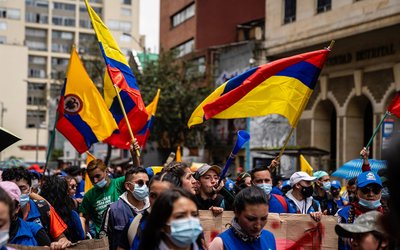
Civil society echoes the same sentiments, viewing the law as more evidence of weakening institutional checks and balances. The adoption of Law no. 12414 sparked large-scale, spontaneous protests across Ukraine, led mostly by students who are determined to use their voices to prevent the rise of autocracy.
People’s willingness to take to the streets reflects a strong democratic spirit within Ukraine, and a genuine desire to bring the country closer to the European Union.
The Union reacted quickly. Ministers of Foreign Affairs from EU member states, alongside representatives of the European Commission, called on Ukraine to reconsider Law No. 12414. They argued that it violates Kyiv’s commitment to preserving the independence of anti-corruption institutions — one of the key conditions for further European integration and accession talks. If left unchanged, the law could reverse anti-corruption progress, weaken democratic institutions, and erode the EU’s trust, ultimately slowing Ukraine’s path toward membership. So far, the parliament has registered only a few initiatives to repeal the law.
The implications of European integration
For Ukrainians, joining the European Union holds deep significance as a symbol of belonging to European rights, freedoms, culture, security, stability, human dignity, and democracy. It represents the opposite of its Soviet past — a vital opportunity for the country to affirm its independence.
Yet the European Commission and other EU institutions have noted clear signs of stagnation in Ukraine’s reform process. According to the European Commission’s 2024 Report on Ukraine, a significant part of the country’s reforms remain unfinished despite its declared commitment to European integration. One preliminary report even pointed out that instead of systemic transformation, there had been only “an imitation of reform”, and in some cases regression, particularly regarding the justice system and anti-corruption policy. Moreover, the European Parliament’s 2023 and 2024 Report has stressed that further integration with the European Union requires large-scale institutional and financial reforms.
This loss of momentum could, in the future, become a major obstacle to Ukraine’s EU accession, particularly in areas concerning the rule of law, judicial independence, and anti-corruption efforts.
Socio-economical effects on Ukrainian society
The Verkhovna Rada lacks a strong parliamentary opposition capable of systematically challenging the Servant of the People party, initiating substantive debate, or effectively contesting individual legislative proposals. This situation reduced the level of political pluralism and limited space for alternative perspectives in parliamentary discourse, exerting a broadly negative influence on Ukraine’s institutional
development.
Weak parliamentary competition and the shifting independence of anti-corruption institutions create a risk of institutional instability. Economically, this is an issue; the International Monetary Fund (IMF) links Ukraine’s macroeconomic stability to the continuity of reforms and its overall quality of governance. When reforms slow down, fiscal and investment risks increase. Governance indicators such as the Worldwide Governance Indicators (WGI) and the Corruption Perceptions Index (CPI) suggest that weaker anti-corruption institutions worsen the investment climate and drive up the cost of capital.
Socially, the weakening of checks and balances undermines public trust and increases social tension. The mass protests in the summer of 2025 against the NABU law illustrated society’s acute sensitivity to institutional independence and the growing political cost of governmental missteps.
An uncertain conclusion
The ongoing erosion of parliamentary autonomy has been negative for Ukraine, posing clear risks to its democratic development. If the Verkhovna Rada continues to operate mainly as a rubber-stamp body, public trust in democratic institutions may decline further. Which could, in turn, destabilise the political landscape. According to the European Commission’s 2024 report on Ukraine (SWD(2024) 699):
“While this paper only covers selected democratic institutions…the best hope for democracy in Ukraine lies in the groundswell of support for democracy in Ukrainian society.”
Democracy relies not only on electoral victories but also on a careful balance of power and institutional accountability. Ukraine’s mono-majority can become an effective instrument for achieving reforms or autocracy. The outcome will depend on how responsibly and thoughtfully President Volodymyr Zelensky and his administration choose to use their authority.