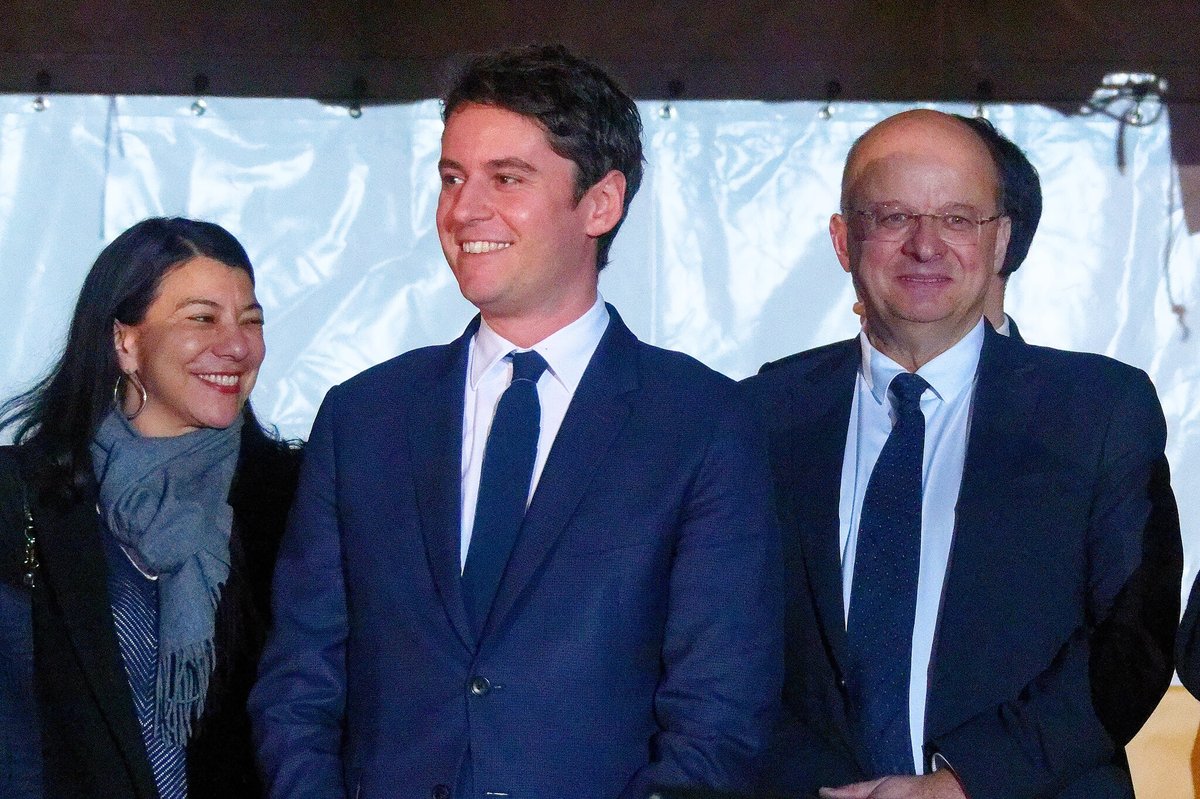
In August 2024, former French Prime Minister Gabriel Attal proposed a participatory tax system that would allow citizens to determine the use of a percentage of their taxes. The plan was part of the Action Pact for the French, an agenda aiming to build legislative compromises around restoring fiscal credibility, strengthening public services, and rebuilding citizens’ trust in government. France has since entered a fragmented political era, marked by short-lived governments and the near impossibility of assembling a parliamentary majority. The Action Pact was one of many attempts to bridge the ever-growing gap between citizens and their political leaders. The concept of participatory taxation, often described as an "old liberal dream," seeks to reconnect citizens with democracy by allowing them to "get what [they] pay for," as Attal put it.
Tax systems become democratic when citizens influence how money is raised and how it is spent; otherwise, participation becomes symbolic. Throughout history, taxes have defined the relationship between citizens and the state. Although it predates modern democracies, its prominence in public debate and the parliament’s control over public spending indicate that it continues to play a central role in democratic and civic engagement.
Forms of Fiscal Participation
The legitimacy of participatory taxation in France has long been contested. Many parliamentarians have described it as a democratic masquerade, a screen for inaction, a public money fair, or an instrumentalisation of citizens. Other democracies instead engage citizens through referendums, consultations, hearings, or stakeholder discussions. These approaches involve citizens in decisions without giving them full control over taxation.
Nevertheless, some of its neighbours already have similar systems, such as Italy with the Otto Per Mille (eight per thousand), voted in 1985. For a long time, participatory taxation has existed mainly through religion. In Italy, the Otto Per Mille allows citizens to allocate 0.8% of their taxes to a "recognised religious institution" or to state-sponsored social and humanitarian efforts. This model highlights both the promise and perils of participatory taxation: citizens naturally support causes that directly relate to them and social causes are placed in competition with religious communities.
However, the notion of a "recognised" religious institution raises concerns of discrimination. In Italy, only certain groups can receive funds, whilst some remain excluded. The unresolved debates over including Jehovah’s Witnesses or Muslim organisations reveal the structural and political limitations of this model.
Across countries, models differ in whether allocations are voluntary or automatic, and whether they direct funds to support religious or social causes. Models such as Italy’s or Spain’s allow taxpayers to allocate part of their income tax to recognised institutions or charities, while Germany, Austria, and Finland rely on automatic church taxes.
Religious participation through taxes remains an exception, and no country has established a "participatory taxation" model comparable to participatory budgeting. Participatory tax systems remain far less developed than participatory budgeting systems, which involve citizens directly in decisions about government expenditures. A participatory tax system would require some level of citizen involvement in decisions about how taxes are structured or collected. This would make Attal's proposal closer to the concept of national participatory budgeting. The difference is subtle but crucial, and it explains why participatory budgeting has been more successful than participatory taxation.
A Model Under Strain
Participatory budgeting first appeared in Brazil before quickly spreading around the world. Porto Alegre created an institutional guide to participatory budgeting in 1989, reforming municipal taxes to reflect local realities: making them more progressive and setting higher rates on rich districts to benefit the poor ones. Since then, participatory budgeting has expanded throughout Latin America and into Europe, where it has been reshaped by each country’s understanding of what it means in practice.
Within the EU, it has been developed as a tool to enhance democracy, foster participation, and strengthen the relationship of trust between the public and institutions. In France, the 2002 Vaillant Law created councils in communes with over 80,000 inhabitants where citizens can see and evaluate the outcome of their choices, which is easier than in a national tax system.
Participatory taxation has been praised for restoring a sense of agency to citizens. By opening the process to those who contribute taxes but lack formal voting rights, such as immigrants or minors, it gives them a space in public decision-making that is usually denied. It also transforms the role of administrators. Rather than imposing decisions, they collaborate with citizens, using their expertise to turn ideas into action.
These participatory agreements, however, are not without flaws. According to the sociologist Yves Sintomer, participatory budgeting suffers from what he calls the Jourdain Street paradox. In this case, residents petitioned to make a street one-way to reduce traffic, only for congestion to move to the next street, which then led to a new petition. This example shows that citizens do not always have the tools to make the right decisions. Another issue is that local representatives may use participatory budgeting to turn their investment budget into a functioning budget. The example of Porto Alegre speaks for itself. All the budget that was allocated to the development of new projects was used by politicians to maintain the quality of pre-existing infrastructure. Politicians can cherry-pick the projects and manipulate them, so strong citizen participation is required, but some citizens facing burdensome circumstances may not participate if it is not made simple and accessible.
National Limits
In 1819, Swiss political philosopher Benjamin Constant argued that direct democracy represented the ideal form of political participation, although limited public education made representative systems a practical necessity. Today, as democratic deficits deepen, with political elites championing "the rule of law", this raises the issue of how much democratic power can be returned to citizens and how these measures would fit within the parliament’s role in approving the budget.
National participatory taxation systems do not seem to be the right path to better democracies. Total participatory taxation is an unrealistic and unsustainable endeavour; and implementing participatory taxation on a small fraction of people’s taxes has severe negative repercussions.
There is a strong possibility of a drift, where the richest would finance the state through a convergence of interests. While voting has the advantage of being the most neutral and equitable means of political expression, participatory taxation gives citizens an unequal political weight. Elites could manipulate public opinion in favour of "positive" actions, knowing that they would be chosen over the rest.
Participatory taxation could also transform citizens into consumers of politics, where their taxes become investments. States have their own logic. As much as these systems may increase transparency and vertical accountability — preventing the misuse of public money — the downside is that people may ask to reduce taxes if they are not satisfied with the state’s actions. Furthermore, states’ financed projects need long-term, constant funding, and people are too inconsistent to guarantee sustained funding.
Participatory systems allowing funding for matters other than religion and social causes have not been tested at a national scale. We cannot say that their effect would be counterproductive, only that, in theory, there are some threats we should be aware of. Understanding these threats will allow us to better implement participatory tax in cases where taxes could truly help democratisation. Contemporary democracies face the dilemma of expanding participatory taxation, attempting to deepen it without undermining the foundations of public action.