

Capital markets do not become trustworthy overnight. Before they grow, they rehearse. They test whether participants believe the rules, the prices, and the system itself. In that sense, a small market like Kazakhstan’s is not something to be dismissed.
This becomes clearer when Kazakhstan’s market is viewed from abroad. Opening a trading app and expecting global markets, many Kazakh investors instead encounter KASE. It looks small compared to dominant global exchanges, but that comparison misses the point. KASE is not trying to be large yet. It is still building the habits and trust that allow a market to function.
KASE is described as small not because it lacks activity, but because it remains early in its development. Trading volume is already substantial: 2024 turnover reached 389.1 trillion tenge (≈$791bn).
Most of that activity remains concentrated in money markets and bonds rather than equities. The equity market is modest in scale, with capitalisation of roughly $64 billion, or about 19 per cent of GDP. These figures describe an early-stage exchange: liquid enough for repeatable transactions and governed by clear rules because it is still building the depth and investor culture required for a broader stock market.
The IPO that felt personal
When KazMunayGas went public in 2022 almost 50% of shares were allocated to retail investors. The IPO entered everyday conversations among students, teachers, and families who had never invested before.
Most debates on investing centre around ROIs. The question surrounding KazMunayGas was not: “Is this profitable?” but: “Is this really trustworthy, and are we ready?” That hesitation mattered. It illustrated how participation, rather than scale, is what turns a market into a shared institution. This is how trust forms before size.
KASE is often mistaken for being only a stock market. In reality, the exchange is dominated by bonds and money-market instruments. “Total volume of new placements of debt instruments on KASE grew 38% to 9.8 trillion tenge,” the Astana Times reported in 2025. Corporate bond trading nearly doubled to 4.3 trillion tenge ($8.3bn) in 2024, while government securities remained the most active segment.
This is a characteristic of early-stage financial development. In young financial systems, debt markets typically deepen before equity markets because bonds are easier to trust: they come with clear terms, maturities, coupons, and repayment; equities, by contrast, require a stronger habit of risk-taking and longer-term confidence.
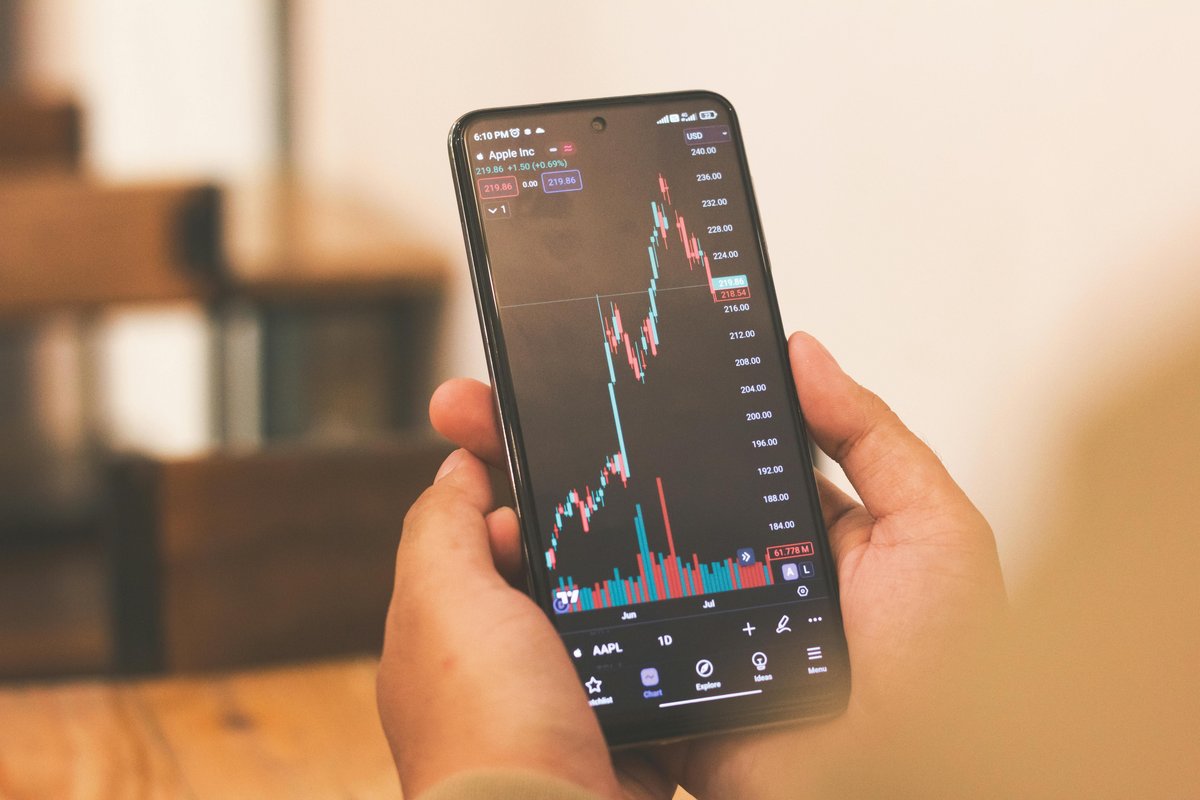
The old stereotype of a Kazakh investor has shifted from a middle-aged finance professional in Almaty or Astana to a younger, mobile-first participant. Today’s investor is often between 19 and 30, investing through a smartphone, quickly, and sometimes faster than research. That shift is visible in the numbers. The Central Securities Depository (KCSD) reported 547,000 retail accounts in early 2023, triple the previous level. By 2024, total accounts had crossed 2 million. Retail investors now account for about 62 per cent of KASE’s free-float market capitalisation.
A retail-dominated market can be noisier and more volatile. Prices tend to react more to sentiment, headlines, and group behavior. Rather than being driven primarily by institutions with slow, predictable capital, KASE is being shaped by millions of individual participants, whose involvement provides liquidity, fosters habits, and gradually reinforces trust.
In 2022, KASE launched its Global segment and now “local investing” no longer means KASE-or-nothing. For Kazakh investors, global access is an identity choice as well as a portfolio choice. For students in the U.S., the American market can feel like the default: it is liquid, always discussed, and embedded into everyday financial culture. For investors who still think in Kazakhstan’s terms, investing abroad can feel like opting out, whilst investing at home can feel like a sense of loyalty that comes with a measurable risk. Do Kazakhs maximise returns in the strongest market, or allocate capital where ownership and impact feel closest? Many end up splitting the difference, building wealth globally while still keeping a stake in the Kazakh market.
Kazakhstan now operates two major exchanges: the KASE and the Astana International Exchange (AIX). In its 2023 Article IV Consultation for Kazakhstan, the International Monetary Fund noted that KASE accounts for the vast majority of trading and liquidity and AIX structures risk fragmentation, regulatory overlap, and additional vulnerabilities in the absence of strong coordination.The issue is structural. When investors and listings are split across venues, each exchange concentrates fewer buyers and sellers in a single marketplace. Trading becomes thinner, spreads widen, prices move abruptly, and execution becomes more difficult without influencing the market price. Over time, fragmented liquidity produces noisier pricing and less reliable execution, turning what appears to be technical inefficiency into a problem of trust. This fragmentation is why Kazakhstan’s plan to establish a single liquidity pool between KASE and AIX by 2030 matters — the country lacks consolidation.
Why KASE matters beyond Kazakhstan
Investors prefer tidy labels: developed, emerging, or frontier. Yet Kazakhstan does not fit neatly into any of them. It exports oil and uranium like a resource economy, yet its price listings and growth narratives sound like a newer consumer market. At the same time, it is still unlearning Soviet-era financial habits whilst adopting fintech at a pace that can outpace parts of Europe. By 2023, over 80 per cent of adults in Kazakhstan were using mobile banking applications, and cashless payments accounted for the majority of retail transactions, placing the country among the region's fastest adopters of digital finance. Institutional trust remains uneven, yet it emerges through personal savings when a national IPO feels meaningful. Economies that grow by imitation tend to produce predictable markets. Economies that grow by necessity produce markets that are imperfect, fast-changing, and harder to categorise. KASE is worth watching from afar because markets are not only systems; they are time capsules. In this case, the exchange reflects a shift larger than finance: saving dollars, trusting banks, testing stocks, and eventually owning capital.
The next test is whether that trust can be made durable. That depends on consolidating liquidity, strengthening disclosure and investor protection, and improving the everyday plumbing of regulation and market infrastructure so participation feels reliable even when prices move. If those steps occur, “small” stops being an apology and becomes an advantage: a market young enough for progress to remain visible, and for each new investor, listing, and trade to shape what the system can become.