Los Angeles — a city long etched with the history of Latin American resistance — has once again become the backdrop for a struggle all too familiar: the fight to belong in a country that profits from Latino labour, capitalises on their culture, and yet too often rejects their presence.
Since President Trump’s inauguration in January, fear has gripped immigrant families across the U.S., after he vowed to launch what he called “the single largest Mass Deportation Program in History”.
Cities in states bordering Mexico, where migrant communities are especially entrenched, were understandably tense. None more so than Los Angeles, home to one of the nation’s largest Latino populations and a Democratic, pro-immigration stronghold.
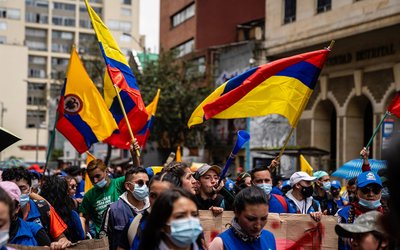
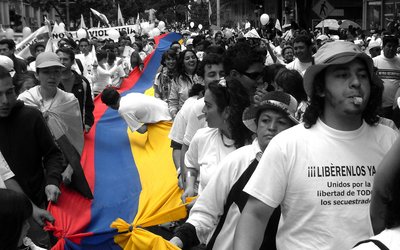
Earlier this summer, as Immigration and Customs Enforcement (ICE) prepared sweeping raids across Southern California, thousands marched through Los Angeles in a show of collective resistance, protesting in solidarity with migrant families and against what was widely viewed as an unjust campaign of mass deportation.
Trump’s escalation, blurry constitutional lines
The protests caused the President to double down. On June 15th — despite clear opposition of state and local officials — he bypassed state authority by federalising the California National Guard and sending U.S. Marines to assert control over the protests. On X, he criticised: “Radical Left Democrats are sick of mind, hate our country, and actually want to destroy our Inner Cities — And they are doing a good job of it!”
The decision to use federal troops, an integral part of U.S international military operations, dramatically shifted the nature of confrontation. Governor Gavin Newsom described Trump’s actions as crossing a “red line”, arguing that deploying military forces trained for foreign incursions against domestic civilians is both unconstitutional and dangerous.
Los Angeles is now swarming with overlapping authorities: the police department, the National Guard, the U.S. Marines, and of course, ICE — a show of force dwarfing the civilian unrest and original “migrant crime” it was meant to suppress. The result is not order. It is fear. Perhaps that is the point: to warn states and communities that defy Trump and resist the GOP’s vision for America.
A visual rebellion
Los Angeles has not been silenced; protests still swell across its streets. Yet what marks this moment is not only resistance, but expression. Murals bloom on freeway underpasses. Songs echo at marches. Art, more than spectacle, becomes survival: a language through which a generation reclaims visibility. Through art, Los Angeles responds with hope and dignity in the face of heartlessness.
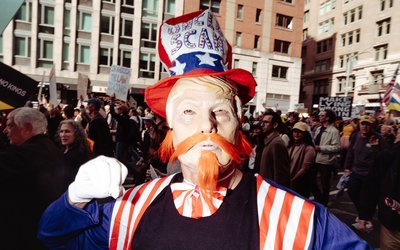
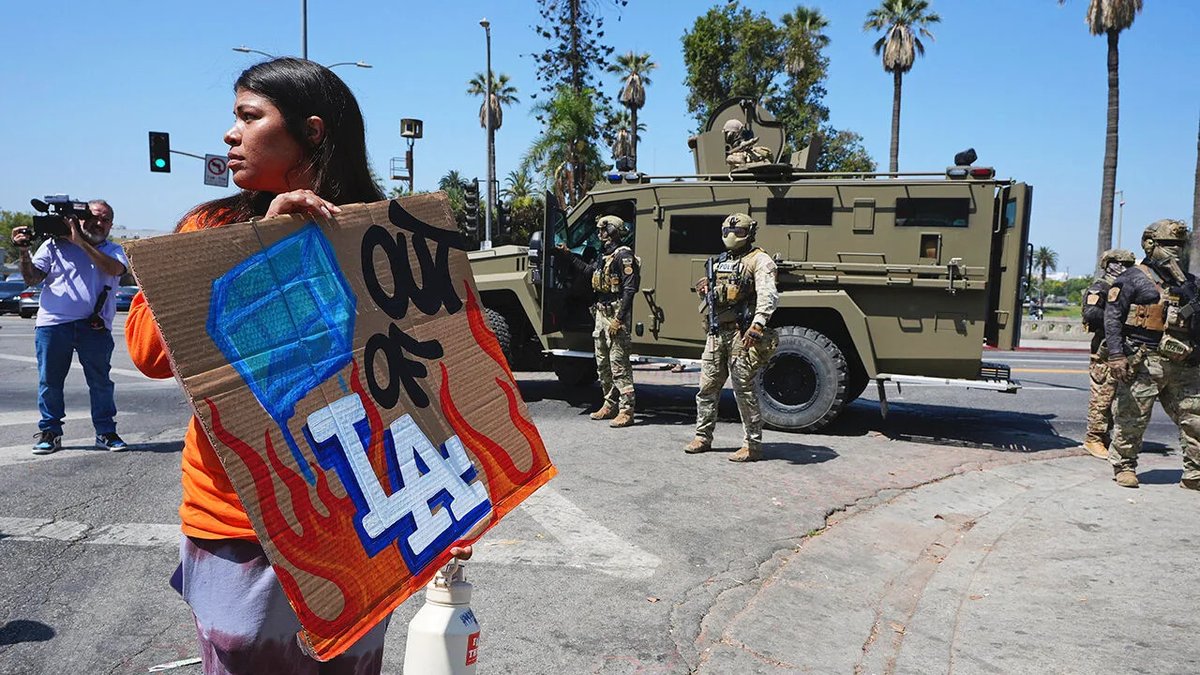
In the face of increasing militarisation, protesters turned to art to reclaim visibility and speech. Protest art emerged across LA streets as a direct response to Trump's decision to federalise the National Guard. Protesters fought to maintain their voice under the intense pressure of military presence through cardboard signs, wheatpaste posters, face paint, and murals.
Photographer Justin L. Stewart captured this dissonance. His work documents the emotional contrast between the forceful posture of the National Guard and the quiet dignity of those fighting to reclaim their rights and visibility.
Another striking visual captures a young woman wearing a black shirt emblazoned with the Virgin of Guadalupe while draping a Mexican flag around her waist. This is particularly meaningful, as the Virgin of Guadalupe and the Mexican flag are present in murals, street art, and shrines, making them recognisable symbols of cultural pride. Protestors repurposed such flags, clothing, and even their bodies as mediums, writing slogans on skin or turning traditional attire into statements of dissent.
A long legacy
Protest art in Los Angeles today follows a long lineage of creative resistance in the city. Especially for Latin American communities, this is familiar ground: they have gathered here for decades to confront the machinery of injustice, from the Zoot Suit riots of 1943 to today’s marches against immigration raids.
In 1942 during World War II, the government passed regulations through the War Production Board (WPB) to limit the manufacturing of certain garments as a way to ration raw materials, with the added benefit of promoting unity during wartime.
Mexican-American youth in Los Angeles defiantly continued wearing their oversized “Zoot Suits”, a style from the Jazz Clubs of Harlem adopted by pachuchos as an expression of cultural pride. Branded “anti-patriotic” by local officials and met with violence during the Zoot Suit Riots, the style later inspired films, murals, and street art celebrating Chicano identity.
Two decades later, the Latin-American fight for equality found roots in schools. In the late 1960s, the East LA walkouts took place as thousands of Mexican-American students left their classrooms in protest of unequal education and oppressive conditions. In doing so, they left behind powerful poster art and imagery that still appears in murals across the city, such as on Judy Baca’s Great Wall of Los Angeles. Around the same period, the United Farm Workers movement created bold, hand-printed graphics that often displayed Aztec imagery and the iconic black eagle to mobilise support for labour rights, building a visual language of resistance that still lives on in the streets of Los Angeles.
In brief, these historical moments form a powerful legacy where fashion, posters, and murals stand as lasting testaments of defiance and serve as direct ancestors to the protest art that now enriches the city with cultural resistance. Art, therefore, is no longer a backdrop to a movement; it is the movement.
In moments of political suppression and constitutional overreach, protest art in Los Angeles reclaims public space where citizens are granted the right to peacefully assemble and challenge the government for its wrongdoings. It has been, for several decades, a mechanism of accountability unique to the people; an inalienable power passed down through generations of protesters.
Whether through the lens of a camera or the stroke of a marker on cardboard, creative resistance nourishes the fundamental voices of the people in a democratic government. It happens in the Los Angeles streets, in the image, and in the voices of those who refuse to be silenced.