
In 2013, former Kyrgyz President Almazbek Atambayev officially forbade ala kachuu, the common national tradition of bride kidnapping. Though illegal since 1994, the offence was rarely punished, and then only by a three-year prison term. Men therefore kidnapped women — often minors — who were forced into marriage, since refusing to wed after abduction was seen as a source of shame for their families. Nowadays bride kidnapping has become a serious crime, but it still persists in rural areas, haunting the popular imagination of Central Asia.
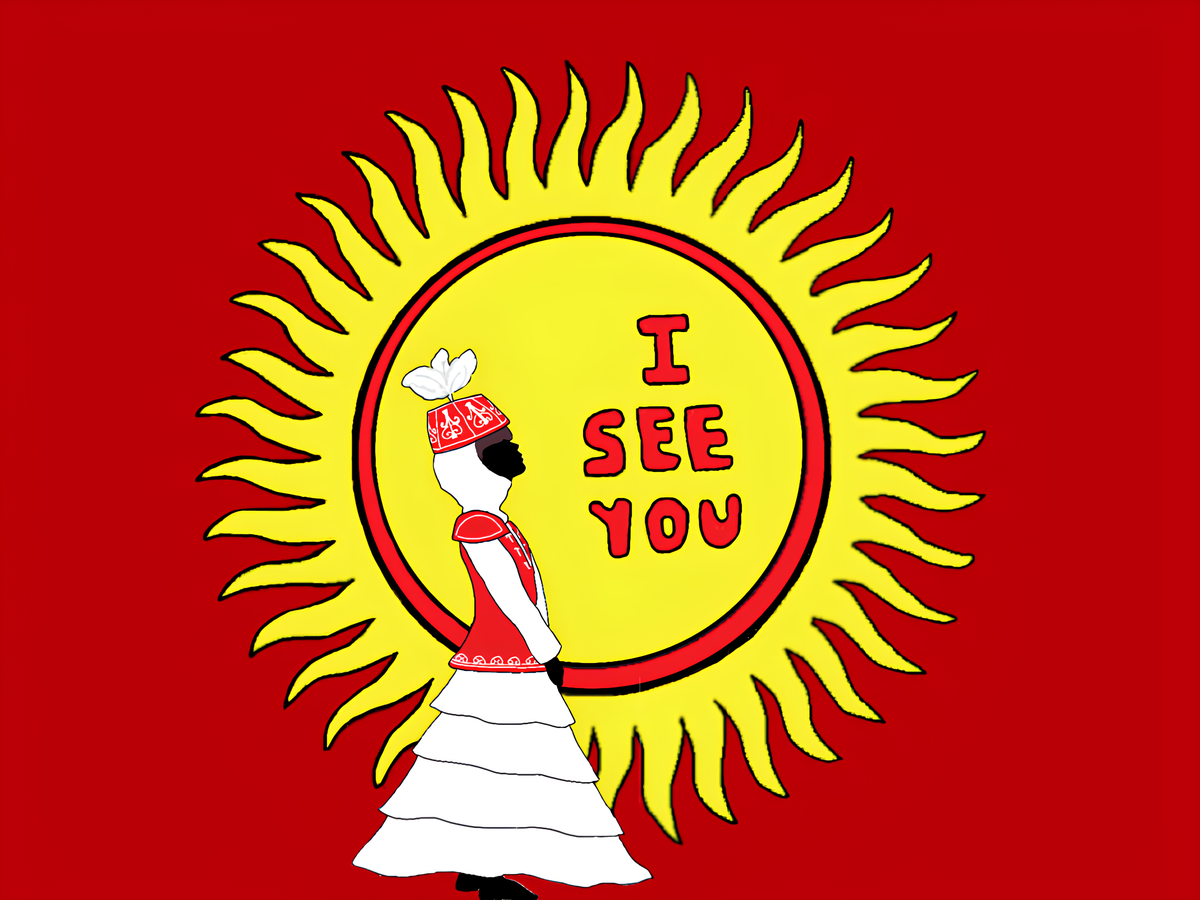
In Kyrgyzstan, love had little to do with marriage for a very long time, just like many countries where arranged marriage was the norm. Yet when Kyrgyz people say “I love you” , they say “I see you”. Hearing the words “мен сени жакшы көрөм” — which translates as “I see you well” — for the first time, I wondered how a country known for its cold marriage tradition could express love in such a beautiful way. It is not surprising to think that devotion and arranged alliances rarely go together. The truth is, marriage traditions in Central Asia remain a sensitive subject, but they do not diminish love as a universal feeling. In fact, its expression in Kyrgyz may be among the most intimate in the world.
An ancestral tradition between abolition and modern reappropriation
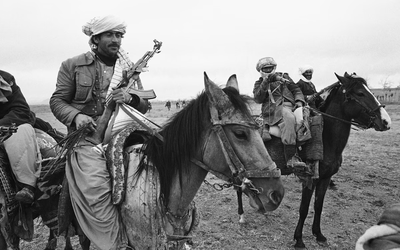
Historically, bride kidnapping was a socially accepted tradition which grew after the fall of the Soviet Union, in order to enhance the independence of each Central Asian country through ethnic nationalism. Intrinsically linked to nomadic life, the origins of bride kidnapping are hard to determine. One theory is that it originates from an old tradition called “kyskuumay”, where a man had to catch a woman during a horserace to kiss her and win the right to ask her hand in marriage.
Whilst most of the older generations still view bride kidnapping as a harmless tradition, a modern reappropriation of the custom has emerged. In an effort to reshape the narrative of bride kidnapping as a mutual act that does not violate women’s rights, the once genuine abduction has evolved into a symbolic, ceremonial capture. The couple dates for a while before asking the bride and her family for consent to “abduct”. Although this approach helps preserve an “ancestral” custom while ensuring free will is exercised, it has raised concern amongst feminist groups and international organisations like the United Nations (UN), which warn against normalising a practice so detrimental to women’s rights.
Kyrgyzstan is a signatory of the UN Convention on the Elimination of All Forms of Discrimination against Women (CEDAW), but there is still much to do for gender equality in the country. On September 30th, a new wave of concern for Kyrgyz women’s rights arose after the discovery of 17-year-old Aisuluu Mukashova’s body, raped and murdered. President Sadir Japarov answered by offering the institution of the death penalty for men committing particularly cruel murder after sexual acts and/or against a minor. Although popular sentiment seems to favour this measure, one can wonder whether instituting the death penalty translates to a real preoccupation for women’s security, or rather instrumentalises a national fear to rally people for the upcoming 2027 presidential election.
“Kyrgyzstan, I see you”
Other Central Asian countries, such as Kazakhstan, chose to fight against gender violence and arranged marriage by reinforcing criminal penalties instead. A new Kazakh law came into effect in September that eliminates any loopholes surrounding bride kidnapping: from now on, guilty perpetrators can be sentenced up to 10 years of prison even if they release the victim.
How to deconstruct a taboo
Ask the Kyrgyz people what they love about their country, and they’ll probably answer “freedom” — something they proved during the revolutions of 2005, 2010 and 2020. Proud of three successful uprisings in less than twenty years, the Kyrgyz equate their patriotism with their definition of love — devoted. Why is the expression of love in Kyrgyzstan so intimate? It is simple: to love someone is to see their true self. Pay attention and free yourself from stereotypes. Past tradition may tarnish its reputation, but love is everywhere in Kyrgyzstan.
Entering a Navat restaurant, I taste lagman eyes closed, relishing a motherly love that overflows, a chef cooking her own mother’s recipe, who inherited it from her mother herself. If I turn my head, perhaps I will see a family sharing plates, the kids’ forks colliding, licking their fingers with delight whilst adults discuss calmly, savouring their favourite tea. I then take the bus to the National Library, standing up, vibrating to the marshrutka’s tremors so that older people may rest on the seats. I dive into The Day Lasts More Than a Hundred Years, written by Kyrgyzstan’s most famous writer, Aitmatov. I’ll read that, “a man is great not because his life is long, but because the moments of his existence are filled with understanding and love.” And I will not think of truer words, because what is love, if not making mistakes and forgiving, again and again?
Then it will be time to return home, to the synchronised breathing of three generations sleeping under the same roof. Common in a country where family is the fundamental social unit. My soul is full from all the love I have seen, treasuring its taste in my mouth until I know it by heart. In the dark, I think once again about the rumours. “Be careful of marriage tradition,” people have repeated. “And do not talk about it, ever.”
“Be careful of prejudice,” I answer — because dear Kyrgyzstan, I see you now more than ever.