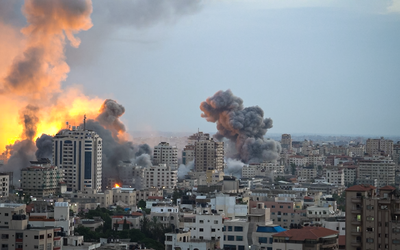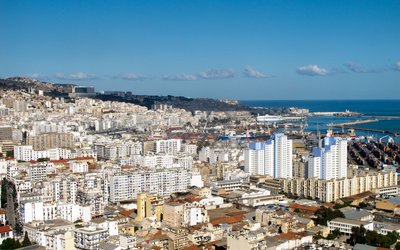

Most mornings in Kirkuk begin under a pale haze from factory stacks and gas flares. The city’s oil wealth is a national asset, but it has also brought serious problems: pollution of the air, soil, and water.
The Kirkuk province has five oil fields: Bay Hassan, Jambur, Avana Dom, Quba Khurmala, and Khabaz. The fields have a total of 720 oil wells, which export 350,000 barrels of oil per day to world markets. In stark contrast, a state area analysis finds green space is just 0.085% of the city, far below international norms.
Higher production, higher pollution
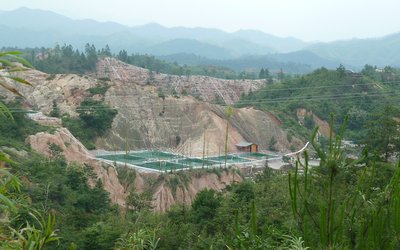
Environmental activist Shokofa Salahi claims that during the rainy season, water collects in the villages of Kochak Yarwali and flows into the northern oil field, where it mixes with the oil spill in the “Oil Valley" towards Kirkuk. Its impact harms agriculture, livestock, and wildlife, cascading onto the livelihood and health of citizens. In addition to this environmental damage, oil waste from Kirkuk feeds into the water of the Tigris River, crippling all Iraqi water.
Yet soil and water pollution is merely the surface of such a pervasive issue. During oil extraction, natural gas is burned and released. The air in Kirkuk is constantly exposed to toxic gas called methane (CH4), which, according to Salahi, is caused by oil companies. The US Environmental Protection Agency has reported that methane is a powerful greenhouse gas, with “28 times more global warming potential than carbon dioxide”. The report continues, “methane emissions from burning release the harmful residue of its organic compound into the air particles, thereby damaging local air quality.”
A greying Kirkuk
The pollution is extremely high compared to other cities similar to Kirkuk in size. Another Kirkuk environmentalist, Hussein Sabah, says, "the gardens and greenery in Kirkuk are very small, but they are constantly facing water shortage and drying up. The government and the relevant authorities do not serve the gardens properly.”
This lack of servicing is also due to the lack of gardeners in the office. According to the Deputy Director of Kirkuk Parks, Engineer Ayub Sabir, 1,200 employees are needed to service the parks. However, the department has only 132, of which, “50% are elderly, retired, or disabled. More than 80% of the gardeners are not certified or illiterate. Only 3% of the employees have agricultural college degrees.” Sabir believes that the solution is to hire more gardeners for the departments because the number is small, and then try to expand the construction of new parks.
(Not) breathing the Kirkuk air
The Kirkuk Environmental Office declined to comment and provide the necessary data and information on the air pollution in Kirkuk in different seasons. However, multiple sources within the office say that there are five air pollution measuring devices in Kirkuk that monitor the amount of environmental pollution in the city.
According to the WHO, it is unhealthy to have more than 5 micrograms per cubic meter (μg/m3) in the air. The number of μg/m3 in the air varies according to the seasons. Devices spread across the area measured 15, 20, and 22 μg/m3 in the air in Kirkuk in different seasons, which is unhealthy and poisonous. Even when nature comes to aid in the winter, with wind and rain reducing the amount of μg/m3 in the air, levels still remain dangerous.
And there is not enough being done to protect Kirkuk’s residents. According to Dr Niaz Ahmad Amin, director of Kirkuk Cancer and Blood Diseases Hospital, “some of the factories in Kirkuk do not have filters or their filters are outdated.” Environmental pollution contributes to the rise of various diseases, particularly respiratory illnesses and cancer. Dr. Amin notes that: “The number of cancer cases in Kirkuk is increasing. From January to August 2025, 600 new cancer cases have been diagnosed in the city.” Hospital data corroborates, showing that between 2016 and 2021, the annual number of diagnosed cancer cases in Kirkuk remained relatively stable, yet rose by 26.7% from 2023 to 2024. This recent upward trend suggests a new increase in cancer incidence, which may be linked to growing environmental pollution levels in the region.
Where is the law?
There is legal protection. The Iraqi parliament’s “Petroleum Dollar Law” (Law No. 21 of 2008) is a special law designed to help: in provinces where the products are produced, one dollar must be spent on each barrel of oil sold to the province where the oil was produced, to compensate for the environment of the area. This law generates $350,000 daily for the Kirkuk area. But according to the data, has this fund truly been used to protect Kirkuk’s environment?