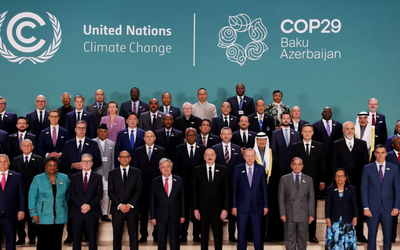


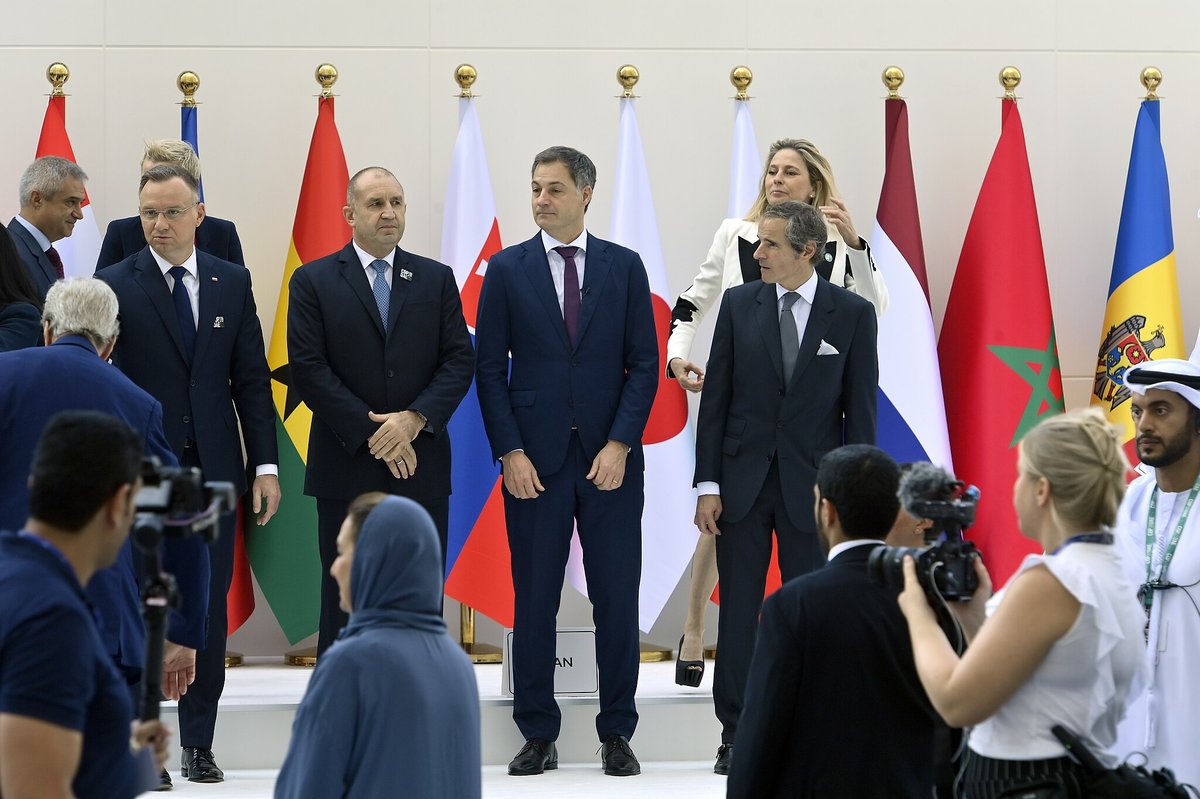
At COP — formally known as the Conference of the Parties to the United Nations Framework Convention on Climate Change — the world is supposed to negotiate its way out of a planetary emergency. Increasingly, it looks like it is negotiating its way into a better photo-op. This conference has an unphotogenic background of questionable hosting locations, debated global effect, and an incomplete and dubious participant list.
A bad cop…
Over the past few years, the locations chosen by host countries have raised eyebrows over their environmental impact during the conference. What started as leading countries discussing climate policy and clean energy has become a space for countries to practise greenwashing — projecting an image of caring deeply about the environment.
This has been the case for the last four years. The choice of location affects COP’s legitimacy in public opinion. The last three COPs were held in countries that make a majority of their wealth through the exploitation of fossil fuels; conferences have taken place in Egypt, the United Arab Emirates, Azerbaijan and Brazil. Azerbaijan and the UAE are especially controversial, given their large-scale oil extraction. When both countries hosted, the president of the COP summit that year was either the CEO of their national petrol company or a government official who had worked in its national oil company for decades. Vital questions were raised about whether these figures were suitable for such a role, subjecting COP to significant criticism from the international community for its slow progress on an issue so imminent and pressing.
Another concern is the growing number of fossil fuel lobbyists. In 2021, 503 lobbyists attended the summit, according to Time Magazine. But data collected by The Guardian shows this was a fraction of the 1,600 lobbyists present in 2025. Fossil fuel lobbyists are now typically the second largest delegation at COPs, just behind the host nation’s. If fossil fuel companies continue to send as many delegates as they have in recent years, they will slow the further discussion of any possible agreement.
Whilst lobbyists have been highly visible recently, one very important actor has not: the United States of America. 2025’s summit, COP30, was the first time the U.S. did not send a delegation. Since Donald Trump’s inauguration in January, words like “climate change”, “clean energy” and “decarbonisation” have clearly been avoided by the White House and Trump’s cabinet. In an Executive Order titled “Putting America First in International Environmental Agreements”, Trump called for the U.S. to leave the Paris Agreement, an action he had already taken in his first term and which President Biden reversed in 2021.
Leaving the Paris Agreement was not the only major move against climate action by this administration. The Intergovernmental Panel on Climate Change (IPCC) is an agency that provides detailed reports outlining effective solutions to fight climate change roughly every six years; these reports are at the heart of the decision-making process that takes place during COPs. According to the federal budget for 2026, the IPCC will not receive any voluntary contributions from the U.S.
With the U.S. previously donating around 25% of the total IPCC budget, Trump’s withdrawal considerably undermines the IPCC’s efforts to provide solutions. Due to restrictions on communication between climate change experts and a mandatory freeze on their research — both of which were put in place by the Trump administration — experts will need even more time to produce these reports.
Or a good cop?
Trump and his administration have repeatedly stated that COPs are useless, ignoring all positive results there have been from ones past. The bright side of COP is it provides a platform for experts to fight climate skepticism and provide important evidence; after thirty editions, the chief pacts agreed upon are the Kyoto Protocol, the Paris Agreement, and the Loss and Damage Fund.
The Kyoto Protocol was an international agreement adopted at COP3 to lower the global greenhouse gas emissions. It placed the burden of change on developed countries, with a decrease of 5% in greenhouse gas emissions per year. The Paris Agreement extended this with a quantifiable endpoint: 2°C above pre-industrial levels, specifying that we should aim to lower the temperature further to 1.5°C. It is the first binding global environmental document ever created.
The creation of the Loss and Damage Fund is also a major step in the right direction. The fund was created to help least-developed countries finance their fight against rising sea levels, climate change, and the increasing number of natural disasters directly linked to it. Institutionalised in 2023, there were some doubts as to whether the fund would be a success: the debate on funding amount made it impossible to agree on a figure that would be sufficient for Small Island Developing States and other developing countries. In 2023, a figure of US$700 million was pledged by nations and individual donors, a tiny fraction of the US$400 billion estimated by the Unitarian Universalist Service Committee to be needed to help developing countries repair damaged infrastructure. The first US$250 million will be spent this year to begin funding projects.
While there was some optimism with the start of the Loss and Damage Fund, the fund and COP itself are falling behind in their goals. Current optimistic estimates by the Climate Action Tracker and Stanford expert surveys are around 2.7°C of global warming by 2100, a far cry from COP’s goal of limiting warming to 1.5°C. Global diplomacy and its practitioners need to step up. There is enough evidence of both the problems and the possible solutions of climate change; it is up to leaders to decide whether they want a liveable future for coming generations.