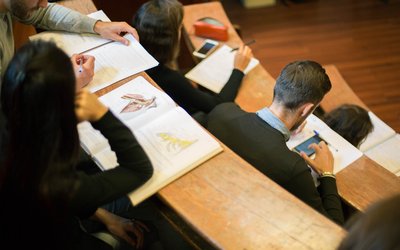

In a sunlit classroom on the outskirts of Freetown, a dedicated teacher manages a group of thirty students. Among them are a child with a hearing impairment, another with limited mobility, and several who have never attended formal school before. There are no aides, no specialized materials, and no formal training in inclusive education — just improvisation, patience, and hope. Scenes like this unfold daily across Sierra Leone, raising a simple yet profound question: What happens when the promise of inclusive education meets the harsh reality of under-resourced schools?
The gap in implementation
On paper, Sierra Leone has made strong commitments to inclusion. The government is a signatory to the United Nations Sustainable Development Goals, particularly Goal 4: Quality Education. In 2018, it launched the Free Quality School Education (FQSE) policy, aimed at providing free basic and secondary education for all. The Education Sector Plan (2022–2026) outlines ambitious goals around equity and support for marginalised students.
But policy is one thing. Practice is another. Schools across the country lack the minimum infrastructure and support systems needed to provide truly inclusive education. Many classrooms do not have ramps or accessible toilets. Teachers are rarely trained to support students with disabilities, and schools often lack adapted learning materials for diverse learners.
These gaps may seem technical at first, but they are actually deeply political. Decisions regarding which schools ultimately receive teacher training, fund allocation, and what aspects of inclusion are prioritised all reflect prevailing power dynamics. For instance, while the FQSE policy has dramatically increased school enrolment, particularly amongst girls, limited resources have been provided for students with disabilities. As a result inclusion efforts have been uneven, with more visibility and support given to gender-based initiatives than to disability-inclusive education.
This imbalance is not accidental. Instead, it mirrors education reforms which are heavily influenced by donors, such as the World Bank, Irish Aid, and UNICEF, and their priorities.
These large donors often prioritise specific indicators such as enrolment, gender parity, and learning outcomes. Consequently, government strategies sometimes focus on what is "fundable" rather than what is holistically needed. The risk is that inclusive education becomes a mere checkbox for reporting, rather than a sustained, systemic transformation.
Underreported and underbuilt
The politicisation of education also manifests in data collection. If children with disabilities are not counted in national education statistics, they are effectively excluded from planning, budgeting, and service delivery. The Annual School Census, a key tool for national education planning, has only recently begun including data to include disability - yet even then, reporting remains inconsistent. The 2021 National Policy on Radical Inclusion in Schools was a positive step forward. It commits to supporting pregnant girls, children with disabilities, and learners in hard-to-reach areas. However, the policy’s rollout has been slow, and many schools have yet to receive the training or materials needed to implement its principles.
A parent visits a local education office weekly to request support for their child with a disability, only to be met with silence. A school social worker must choose between addressing trauma from the post-Ebola/Covid-19 period and advocating for learning accommodations. These are not isolated incidents. They represent the human face of a policy landscape that is still catching up to its ambitions.
So, what might meaningful inclusion look like? It begins with recognising that inclusive education is not a matter of charity or convenience — it is a political choice. That choice requires investment: in teacher training, in accessible infrastructure, in data systems that reflect every learner, and in listening to the voices of students. It also necessitates resisting the temptation to pursue donor-driven shortcuts in favour of building sustainable, community-informed models of inclusion.
Back in that Freetown classroom, the teacher continues their day, improvising a lesson for the student with hearing loss by gesturing and speaking slowly, hoping to be understood. His or her efforts are commendable, but they should not have to rely solely on individual initiative.
It requires a form of politics and policies — inclusive, accountable, and grounded in the realities of Sierra Leonean communities — which must act as part of the solution. Because inclusive education is not a luxury. It’s a necessity. And the time to act is now.