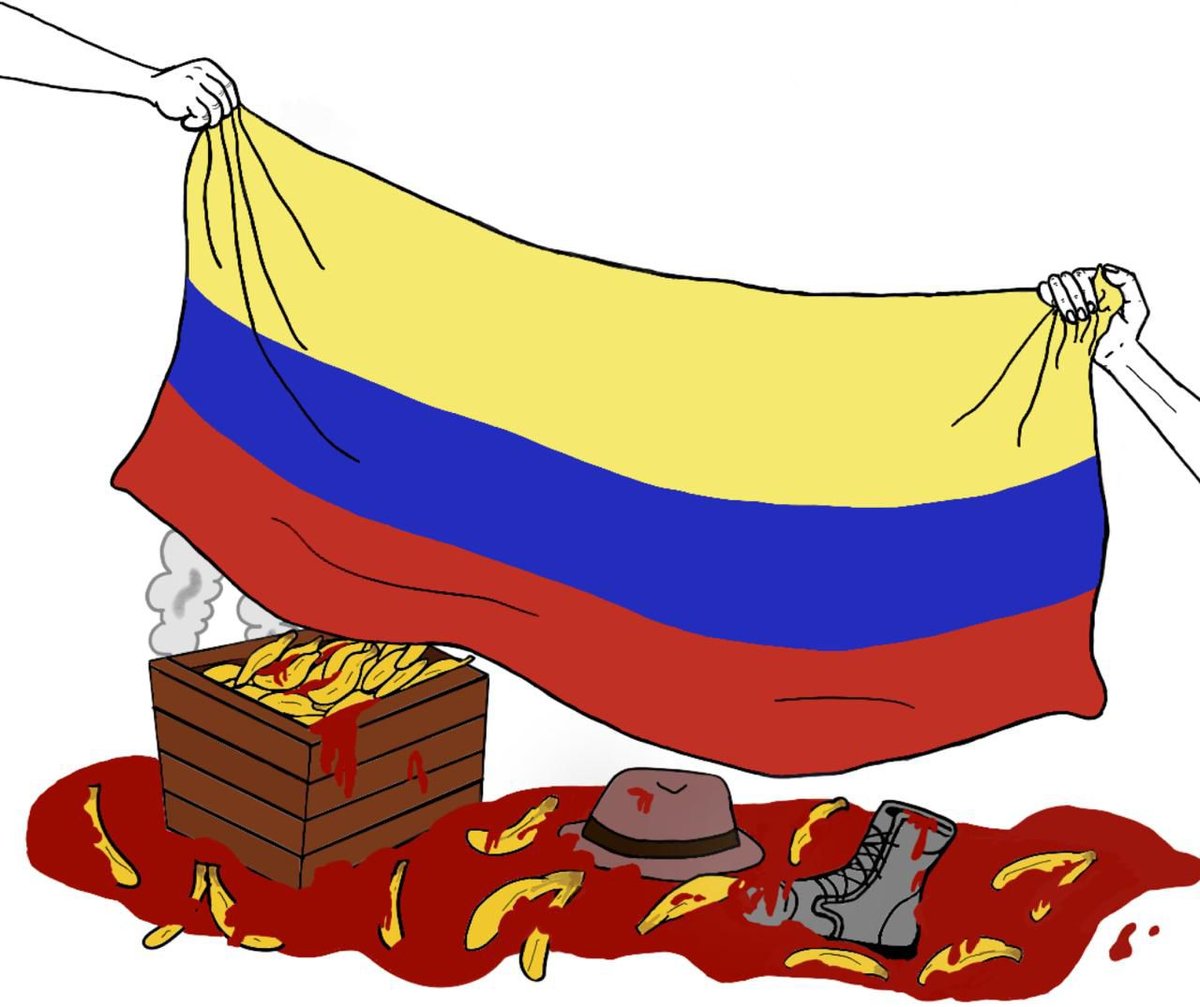
“José Arcadio Segundo dragged himself from one car to another, and... he saw the dead men, the dead women, the dead children, who were going to be thrown into the sea like rejected bananas.” - Gabriel García Márquez, One Hundred Years of Solitude.
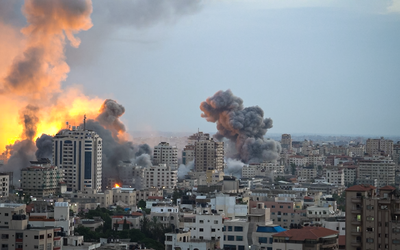
In many communities affected by historical violence, collective trauma remains repressed, like a silent wound. In Latin America, Gabriel García Márquez gives voice to this suffering through his novel One Hundred Years of Solitude, published in 1967. The massacre orchestrated by the banana company and its subsequent omission in One Hundred Years of Solitude brings to light a pattern of omission following historical atrocities. This incident highlights how widespread efforts to hide brutal truths shape our understanding of the past, revealing the lasting impact of trauma on both individual and collective memory.
Trauma often leads to negative psychological impacts, such as repression and distortion of certain events that one wishes to forget. The experience of José Arcadio Segundo, one of the novel’s protagonists, emphasises how going through a traumatic event shapes both people's being and their perception of the past. Segundo, is the sole survivor and witness of the brutal massacre carried out by the United Fruit Company. He is left with an indelible mark on his psyche, which manifests as total social isolation. His experience is not just influenced by personal trauma but also the collective trauma his community is facing. Unlike personal trauma, collective trauma — as defined by Psychology Today — encompasses the psychological and emotional reactions experienced by a group of people who share exposure to a traumatic event. It often manifests as polarisation of communities, cultural shifts, loss of trust, and widespread negative coping mechanisms.
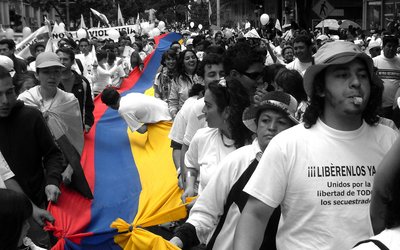
The real-life 1928 Banana Massacre in Colombia is a clear example: nearly a century after the tragic killings, the ambiguity surrounding the death toll, estimated between 13 and 2,000, exemplifies the fragility and manipulation of collective memory as a response to widespread trauma.
Whilst the repression of memory as a coping mechanism certainly contributed to the lack of healing done by the community in One Hundred Years of Solitude, purposeful concealment of atrocities by the government, also played a role in suppressing the community’s memory.
Deliberate strategies known as políticas del olvido, or “policies of forgetting”, are employed to suppress or minimise the memory of certain events or information, often driven by political or social groups’ best interests. These policies can manifest themselves in various forms, such as censorship, manipulation of historical narratives, or the promotion of selectively forgetting certain events. The tendency toward historical revisionism is evident in One Hundred Years of Solitude when the banana company attempts to erase the massacre with incessant rain: “‘It will be when the rain stops…But when Mr. Brown announced his decision, a torrential downpour fell over the entire banana zone…it rained for four years, eleven months and two days.” Four years were enough to erase any trace of the massacre.
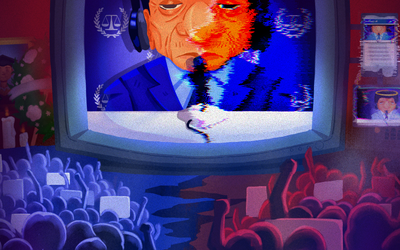
This fictional interpretation echoes the authoritarian regimes in Latin America that have perpetuated a culture of impunity. Under Rafael Videla's dictatorship in Argentina (1976–1983), the regime employed systematic repression and censorship to cover up the atrocities committed during the Dirty War. Videla’s empty speeches throughout his trials demonstrate how those in power try to make people forget or ignore reality. Not only do these actions uphold injustice, but they also influence how future generations will understand their own history.
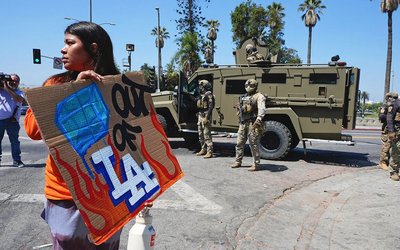
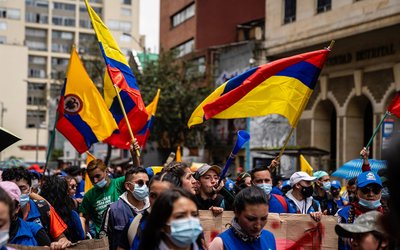
Similarly, in Colombia, the False Positives scandal under Álvaro Uribe Vélez’s administration revealed the government's complicity in extrajudicial executions. Uribe’s policies resulted in 6,402 deaths of innocent civilians who were falsely labelled as guerrillas to increase military success rates. The scandal revealed how far governments are willing to go to maintain their power and reputation; states responsible for mass killings may execute dissidents, fabricate achievements to gain recognition, and murder thousands all in the name of authority. The lack of historical recognition and justice perpetuates collective amnesia, thus precluding reconciliation and masking the truth. Impunity reinforces trauma in Latin American societies, impeding healing.
And what is this ‘generational’ trauma? A lack of justice and recognition, sown with resentment and thirst for revenge, which is then expressed through violence. It is crucial to remember and understand the past, or else we risk getting trapped in resentment, unable to let go of intergenerational scars that weigh communities down. Knowing our history, especially in countries marked by deep state violence, is fundamental.
When coming to terms with personal and collective trauma, the contradictions of memory are revealed, where pain mixes with resilience and truth with distortion. Thanks to social media, which has transformed the way memory is preserved and disseminated, políticas del olvido no longer control narratives. And literature, like One Hundred Years of Solitude, has been and will continue to be a means to shake loose silenced stories, especially in Latin American communities, where forgetting is often easier than fighting for recognition. So it is our duty, both in literature and media, to speak for those who cannot.